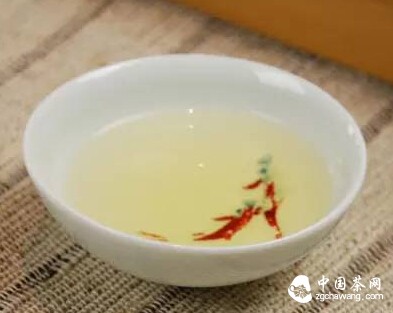
For tea lovers, tea is also a teacher. What have we learned from tea?
1. Tea is not necessarily better the more expensive it is. Good tea must first be well-made and also suit your own taste. (Everything depends on its essential nature.)
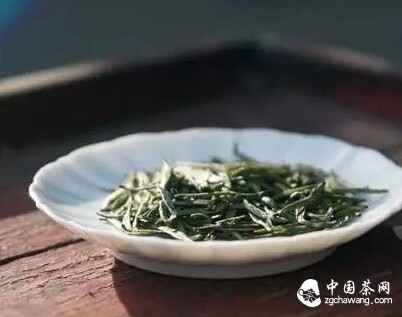
2. Tea made from pure material does not mean it has no blending. Blending is absolute; pure material is relative. (Nothing in the world is absolute; understanding dialectics will help you live better.)
3. Black tea is not Dark Tea, it is Red Tea. Da Hong Pao belongs to Oolong Tea, not red tea. Anji White Tea is a type of Green Tea, not white tea. Beigang Maojian and Weishan Maojian are Yellow Tea, not green tea. Oriental Beauty is heavily fermented and tastes very much like red tea, but it is still a type of Oolong Tea (Green Tea). Matcha is a tea powder made by a special process, not ground green tea. (Seeing the essence through the phenomenon is an essential insight to learn.)
4. Dongting Biluochun is produced in Dongting Mountain, Jiangsu, not Dongting Lake in Hunan. Anxi Tieguanyin is divided by origin into Inner Anxi and Outer Anxi. Although the name is the same, the price and quality differ greatly. (Similar things can have significant differences; learn to treat everything seriously and rigorously.)
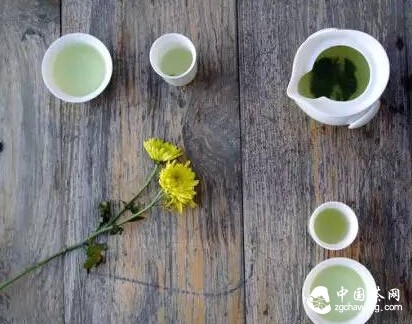
5. For scented Jasmine Tea, more flowers are not necessarily better; after all, it is tea, not flowers. (No matter when, do not let the secondary overshadow the primary; identify the main point clearly.)
6. Oolong tea is also called Blue-green Tea (Qing Cha). (Sometimes there is more than one correct answer to things.)
7. Drinking tea immediately after a meal does not aid digestion; on the contrary, it can affect it. (Master the laws of nature to achieve the results you want.)

8. Tea fears moisture. Different teas have different storage methods: Green tea and yellow tea should be stored in tin canisters; Oolong tea and red tea in iron canisters; White tea and dark tea in ceramic jars. (A person can only maintain their value in the correct position.)
9. Green tea is not better the fresher it is; it needs to be left for a few days to reduce its "coldness". (In all things, remember not to be impatient for success; what suits you is best.)
10. Raw Pu'er tea will not become ripe Pu'er no matter how long it is aged; ripe tea is a result of processing, not time. (Quantitative change does not always equal qualitative change.)
11. A cup of green tea in the morning clears the mind and heart; a cup of red tea at noon refreshes and relieves drowsiness; a cup of lavender tea in the evening soothes the emotions. (Doing the right thing at the right time is best.)
12. Tea has only two postures: floating and sinking; people have only two states: picking up and putting down. (Able to float and sink, then the tea is fragrant; able to pick up and put down, then the person is accomplished.)
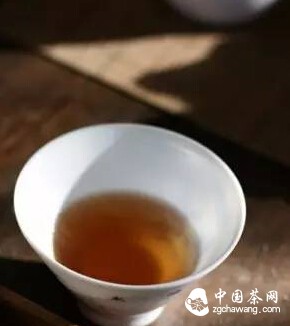
13. Tea requires waiting; it takes refinement to produce good tea; tea requires focus; eliminating distractions is necessary to brew good tea; tea requires tranquility; a calm and peaceful heart is needed to appreciate good tea. (So it is with tea, and so it is with being a person.)
14. Red tea can be drunk plain or blended; it can be blended with milk, honey, fruit, ginger—its compatibility is excellent! (So should we be; able to shine in any environment.)
15. Tea has philosophy.
Green Tea—In its迂回 (circuitousness) comprehend the origin of the universe, with the mind observe the essence of all things; where there is despair, vitality is coming; like calmness containing澎湃 (surging passion); the heart contains the world.
Pu'er—Do not fear the passage of time. Although time is often the enemy of beauty, it can also achieve enduring value.
Matcha—Behind the rich and intense aroma is a付出 (giving) of all, even being ground to pieces.
Oolong—To develop a special character, one must endure the寂寞 (loneliness) of stillness.
Red Tea—Its footsteps can travel the globe because its heart is broad enough, with infinite inclusivity.
16. Tea also promotes health.
Tea fragrance clears the orifices: Brew a cup of tea, the fragrance enters the brain through the nose, and emotions instantly calm down. The heart begets joy, treating both body and mind.
Tea flavor nourishes the skin: Different teas have their own properties and归经 (meridian tropisms). Drinking and using tea correctly nourishes the body, and the skin naturally glows.
Tea nature clears the heart: Drinking tea nourishes the heart. Through savoring tea, the body relaxes, the mind becomes serene,细细品味 (carefully savoring) the true meaning of health preservation.