This year's spring tea, Tieguanyin has shown a very noticeable change in taste—no longer blindly pursuing color, but paying more attention to flavor. In the 1990s, Taiwan's Oolong tea light fermentation and light roasting techniques widely influenced Fujian, particularly causing an overall change in the production of Anxi Tieguanyin. Around the year 2000, the most popular and mainstream type of Tieguanyin on the market was undoubtedly the light fragrance type, mainly including Xiao Qing, Xiao Zheng, and Tuo Suan teas. This was the tea industry actively catering to consumer tastes, which had its rationale in the market environment at the time, but it also lost the most core traditional production process of Tieguanyin.
Traditional tea making is connected to the natural environment. The method of light fermentation using air conditioning has already severed the relationship with external weather changes. This disconnection reduces the natural attributes of Tieguanyin, meaning the air conditioning severs the infinite possibilities inherent in the Tieguanyin leaves as natural objects, possibilities that are open to the surrounding environment and human craftsmanship. Deviating from the traditional dozen or so processes makes it impossible to excavate the plant's inherent nature, only able to display a one-sided aspect of its taste and aroma. Besides human laziness, in order to cater to the domestic market and allow people accustomed to drinking green tea to drink Tieguanyin, teas with floral scents and other deviations from Tieguanyin's traditional authentic taste were created,不惜削足适履 (Note: This idiom "cutting the feet to fit the shoes" means taking misguided measures that ultimately do more harm than good. The original Chinese text uses this idiom, but a direct translation might not flow well. The core meaning is conveyed in the surrounding context about creating inauthentic flavors). This is not advisable.

Returning to traditional methods, tea that doesn't change taste sells better
Returning to Tieguanyin's traditional production process is the most popular notion nowadays. But Tieguanyin shouldn't return just for the sake of "returning." Whether tea leaves made with traditional techniques can better suit consumers' taste demands and the competitive landscape of the tea market is also an issue that requires careful consideration as the industry makes a large-scale "change of course."
Tieguanyin producers collectively show a默契 (tacit understanding/unspoken agreement)—returning to the traditional taste. Traditional style Tieguanyin emphasizes tea fermentation, roasting, and baking. Such tea has a unique subtle fragrance and a more mellow, rich flavor, and is easier to preserve. This change in taste meets the demands of the consumer market.
Returning to traditional production techniques involves, first, heavy shaking and heavy fermentation, and then focusing on controlling the tea's moisture content. To make the dry tea look greener, many people reduced the number of shaking times, lowered the degree of fermentation, and deliberately controlled the moisture content to above 7% during the frying process. This type of tea has a fresh, green color but lacks depth and character. Simultaneously, because the tea leaves have high water content, they easily continue fermentation and aging reactions at room temperature. If not refrigerated for preservation, they can easily develop off-flavors.
Well-made traditional tea, with proper processing, has sufficiently low moisture and is full of character. It can be stored without refrigeration. For tea drinkers, this means they can drink traditional good tea; for affiliated tea merchants, Tieguanyin can finally be displayed directly on counters for sale, like Wuyi Rock Tea and West Lake Longjing, without the need for special cold storage construction. The lowering of the operational threshold also increases Tieguanyin's competitive advantage against other tea types in external sales markets.
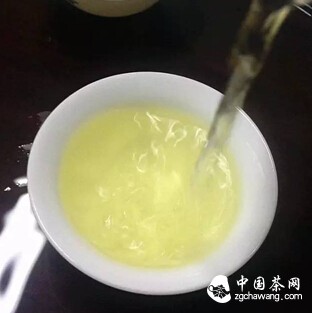
Adhering to the essence of quality, using handcrafting to follow and release the tea's nature
If Tieguanyin's unique orchid fragrance and Guanyin rhythm are its essence, then adhering to the traditional production process to achieve its inheritance and promotion is also the foundation for the long-term development of the Tieguanyin tea industry.
Luo Shaojun, Director of the National Tea Quality Inspection Center, also believes that the traditional processing techniques for special teas like Tieguanyin are a rare resource that must be carefully protected and inherited. They should not be lost in our generation due to fashion and浮躁 (fickleness/short-sightedness). Therefore, both people in the tea industry and tea connoisseurs have gradually realized that traditional tea-making skills are the foundation for Tieguanyin's long-term development.
In modern processes, the humanity and spirituality inherent in the material are being eroded. The natural relationship between Tieguanyin and its surrounding elements, the skill developed by people through years of painstaking consideration to achieve a dance, connection, and symbiosis with it, even to the point of宁愿 (preferring to) leave room for one's own understanding and maintaining a sacred reverence for it, is increasingly threatened by things that harbor human laziness, short-sighted machinery, pesticides, etc. In short, this "tradition" of using handcrafting to follow and release the tea's nature is being replaced by various modern things. This is one of the turning points facing the Anxi tea industry.
Tieguanyin's unique orchid fragrance and Guanyin rhythm are the essence of Tieguanyin. At the beginning of this century, the taste of Tieguanyin began to be modified, mainly by changing the degree of fermentation of Tieguanyin, reducing it to about 5%, thereby altering Tieguanyin's taste. However, this light fermentation method restricted the long-term development of Tieguanyin because the light taste attracted consumer groups accustomed to drinking green tea and scented tea, but at the same time, it abandoned the unique character inherent to Tieguanyin. The orchid fragrance and Guanyin rhythm, unique to Tieguanyin throughout history, are still better presented through traditional techniques. This is the true essence of Anxi Tieguanyin!