Why does high mountain pure material possess such an enchanting original fragrance, mountain rhythm, and vitality? Why is there such a big difference in aroma, rhythm, and energy between high mountain pure material and plain pure material, and between high mountain pure material and blended material?
The most fundamental reason lies in the tea quality formed by the interaction of internal factors (the genetic makeup of the tea plant) and external factors (the soil, climate, and ecology in which it grows) – thus creating a unique taste and physical sensation.
Although they are all precious Zhu Ye variety raw materials for Keemun Black Tea, botanically speaking, the tea plants in Qimen still have eight species and variants: Anhui No. 1, Anhui No. 3, Anhui No. 7, Hongqi No. 1, Huangshan Early Bud, Fuzao No. 2, Bohao, Shifocui, etc.
The plain teas often mentioned by tea friends mainly belong to those cultivated by the Anhui Provincial Tea Research Institute after 1955. Whether it's high mountain ancient tea trees or the later promoted plain teas, although they belong to the small and medium leaf species, their external manifestations are certainly different due to differences in their core genes. This is the internal cause.
And the external causes – the soil, microclimate required by the tea trees, and more importantly, the different ecological environments on which they depend – determine the diverse external manifestations. It is precisely this innate "variability" of Pu'er tea that attracts more and more people to fall in love with it.
Different soils: Tea garden soils include latosol, red soil, lateritic red soil, yellow soil, purple soil, and sandy soil. The pH value and organic matter accumulation differ in various high mountain tea gardens; but the organic matter content in high mountain tea gardens is significantly higher than that in densely planted tea gardens.
Different microclimates: Qimen County belongs to the Huangshan Mountain range, with continuous large mountains and rivers. High mountain ancient tea gardens are scattered among the mountains, rivers, and valleys, each forming its own microclimate.
Different ecological environments: Plain teas are mainly picked from the current densely planted, row-cultivated tea gardens covering 50,000 hectares. Initially, only "continuous high yield" was considered, without building a "harmonious forest-tea-grass ecosystem" based on ecological needs. They rely entirely on pesticides, fertilizers, cultivation, and pruning to maintain their growing environment. In contrast, the high mountain ancient tea gardens are small plots of land developed by ancestors in the high mountains and steep hills, where forests, tea, and grass coexist, and insects and fungi depend on each other, forming a relatively closed, complete, and healthy ecological chain.
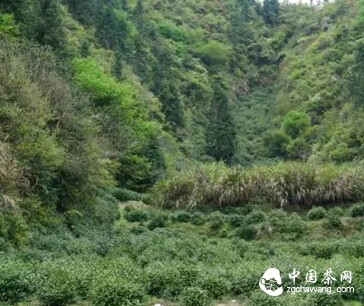
High mountain ancient tea trees have deep roots in fertile soil, absorb the essence of heaven and earth, and are protected by a healthy ecological chain. Compared to plain tea, their drinking value is higher, whether in terms of tea aroma, tea rhythm, or tea energy. Furthermore, different high mountain ancient tree pure materials form their own unique taste and physical sensation characteristics due to differences in tea variety, soil, microclimate, and micro-ecological environment.
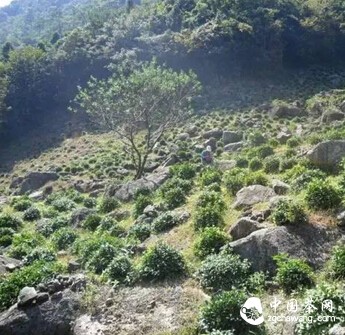
Original fragrance, mountain rhythm, and vitality constitute identification markers.
Original fragrance is the regional identification symbol of high mountain ancient tree pure material.
Internal and external factors determine the unique, sole, and pure fragrance quality belonging to the ancient tree pure material of this specific mountain.
In my not-so-rich tasting experience, high mountain pure material can be completely defined by its aroma type. Wuling tea has a distinctive, long, and elegant honey aroma; Shiji tea is mellow, thick, and fresh; Puling tea has a subtle floral fragrance; Ruokeng tea has a long water rhythm; Guxi tea is full of mountain energy; Sanyuan tea shows an orchid fragrance; Taoshuwu fragrance is called "bewitching fragrance," specifically referring to its aroma being different from the ordinary and often elusive.
Mountain rhythm is the individual identification symbol of ancient tree pure material.
Internal and external factors, especially the harmonious and healthy ecological environment of high mountain ancient tea gardens and the developed root systems of high mountain ancient tea trees, determine the special mountain rhythm of high mountain pure material.
This mountain rhythm is something that densely planted tea trees, i.e., plain tea, cannot give us. When we taste Sanyuan – the authentic Qimen small-leaf species, or Taoshuwu – one of the most primitive preserved Qimen ancient tea gardens' high mountain ancient tree pure material, even if it's new tea just produced a month ago, although the wateriness hasn't receded, the thick texture of the soup, the honey-like sweetness, the moistness sliding down the throat, and even the soup color are all richly oily, directly conveying the most natural, ecological, and leisurely aura and charm from the distant mountains. High mountain ancient tree tea does not bring the bitterness and astringency people often imagine to the mouth. High mountain rhythm is one of the important characteristics that distinguish high mountain ancient tree pure material from plain tea.

Vitality (Qi) is the life identification symbol of high mountain ancient tree pure material.
Tea energy (Qi) refers to the tangible tea acting on relevant parts of the human body through intangible Qi, causing perceptible changes in the human body. Because the internal and external causes of high mountain ancient tree pure material are different from those of plain tea, especially since high mountain tea contains richer trace elements than terrace tea due to absorbing the essence of nature. These trace elements enter the human body with the tea soup, causing strong physical sensations in the drinker. The tea soup enters the stomach from the mouth, and the vital Qi reaches the heavenly gate, earthly gate, energy gate, and sweat gate along the extraordinary meridians, causing obvious human sensations such as burping, flatulence, and slight sweating in the drinker.
From my tasting experience, the higher the mountain and the older the tree age of the ancient tea tree, the lower the stimulation to the taste buds, and the higher the stimulation to the physical senses. If aroma and rhythm are still just drinking tea停留在口腔 (staying in the oral cavity) to drink tea; then, using Qi is drinking tea with the body. Vitality is another important characteristic that distinguishes high mountain ancient tree pure material from terrace tea.
It needs to be clarified that we are not thereby否定拼配茶 (negating blended tea). Some blended teas from large factories can also bring pleasure, but drinking blended tea is actually about tasting technique; it cannot let people receive the uniquely personalized information from the mountains. Secondly, we believe that not all ancient tree teas are suitable for being made into single-origin pure material. When a characteristic of a high mountain pure material becomes the biggest weakness in the drinking taste (such as the bitter base of Wuling tea), its other advantages are反而被边缘化 (marginalized instead).