
When first learning to brew tea, we always ask: How much tea leaves should I use? Does the amount vary for different types of tea? Or is it the same for all? There are no fixed rules for these questions. With more experience in brewing, you will naturally understand. But to give beginners more confidence, let's learn some basic knowledge about the amount of tea leaves to use.
1. Measuring Tea by Ratio
A commonly used tea-to-water ratio is 1:50, meaning 1 gram of tea leaves to 50 milliliters of water (Oolong tea and compressed tea are exceptions, often using a ratio of about 1:30). This helps estimate how much dry tea you need – for example, if your teapot holds 400 ml of water, then using about 8 grams of tea would be appropriate.
However, it's often difficult for tea novices to estimate container volume and tea weight. Without precise tools, try the following volume-based method to calculate the amount (using a gaiwan as an example).
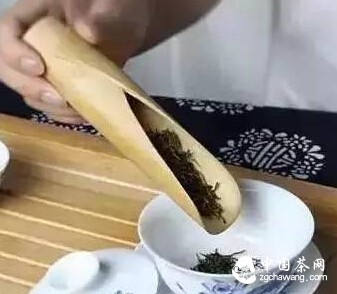
2. Measuring Tea by Volume
1 Green Tea and Yellow Tea
Generally, Green tea and Yellow tea are considered the most tender among all tea categories. They have been rolled, so their contents infuse quickly. When brewing in a gaiwan, use an amount that just about covers the bottom.
Remember two points: first, do not cover with the lid, otherwise you will stew the tea broth; second, water that is too hot will damage the leaves of Green and Yellow teas, making the broth bitter and astringent. But it shouldn't be too cool either, as that won't release the tea's aroma. Commonly used water temperature is 90-95°C, which can be adjusted slightly based on the actual situation.
2 Red Tea (Black Tea)
The amount of Red tea used is similar to Green tea, also roughly covering the bottom of the gaiwan, but you can use a little more than for Green tea.
Red tea is divided into large-leaf variety and small-leaf variety. For example, Keemun Red tea and Sichuan Red tea are small-leaf varieties, while Yunnan Red tea is a large-leaf variety. Large leaves are bigger and take up more volume, so use more tea leaves when brewing large-leaf Red tea compared to small-leaf Red tea.
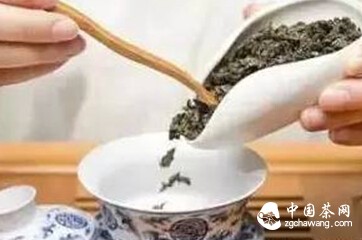
3 Oolong Tea
There are many types and categories of Oolong tea, but they can generally be divided into strip-shaped Oolong and ball-shaped Oolong by appearance. For strip-shaped Oolong, use about 1/5 to 1/3 of the gaiwan's capacity. For ball-shaped Oolong, just cover the bottom of the gaiwan.
Due to their special shape, ball-shaped Oolong leaves unfold relatively slowly, so they usually require a initial "warming rinse" to help the leaves open up. This semi-fermented tea's aroma and flavor are strongly activated by hot water, especially high-mountain Oolong. You must use boiling water to brew it; using lukewarm water is almost a "waste" – be sure to remember this.
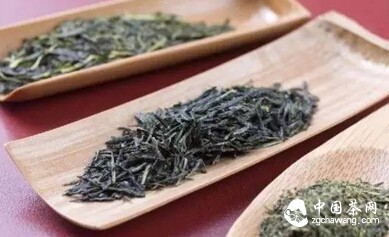
4 Compressed Tea
For compressed tea, use about 1/5 of the gaiwan's capacity. Some compressed teas are very tight and "dense," so you can appropriately reduce the amount slightly.
To help the leaves expand, a warming rinse is often used when brewing compressed tea. Another point to note – there's a saying for compressed tea: "under three years, brew with lid open; over three years, brew with lid closed." The reason is that "younger" compressed teas have a lower degree of fermentation. Covering the lid can stew the tea broth, similar to Green tea. Compressed teas older than three years have undergone self-fermentation and don't have this problem.
5 White Tea
Since White tea is not rolled but simply made from fresh leaves through withering and drying, the dry tea is generally light and fluffy. Use a relatively large amount: for loose leaf White tea, about 3/4 or 1/2 of the gaiwan's capacity; for White tea cakes, about 1/5 of the gaiwan's capacity is sufficient.
White tea is probably the easiest tea to "control"; it's hard to brew it badly. If you lack confidence but need to show your skills, definitely choose White tea!
Brewing tea itself is a process of gradual proficiency. Rich brewing experience doesn't bring rigid rules, but rather a more casual and free way of drinking tea. After some "practice," tea friends will surely figure out the perfect amount of tea leaves for their own taste.