Regardless of our taste preferences, when tasting teas with different style characteristics, we need to use corresponding judgment standards rather than a single standard to distinguish the quality of tea leaves. So, what standards should be used to judge and experience different types of tea? The current national standard categorizes tea into six major types based on processing techniques: dark tea, black tea, oolong tea, yellow tea, white tea, and green tea. Each tea category has its own distinctive features.
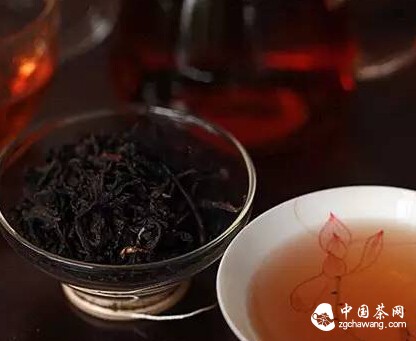
Dark tea is a fully fermented tea. Its processing characteristic is the use of a pile-fermentation process after de-enzyming, where a certain amount of water is added during tea processing, and the leaves are piled together to mature through water and the heat generated by fermentation to meet the technical requirements. The taste profile of most dark teas is mellow, sweet, and sticky, with a unique fermented aroma. Some high-quality dark teas may also have a lingering sweet aftertaste. Examples include Yunnan's Pu'er ripe tea, Hunan's dark tea, Sichuan's Tibetan tea, and Guangxi's Liubao tea. Yunnan's raw Pu'er tea does not undergo the pile-fermentation process during processing but is instead naturally stored for a long time after processing to allow continued transformation, which we refer to as post-fermentation. Compared to other dark teas, raw Pu'er tea has a stronger lingering sweetness and bitterness, along with a natural fresh aroma.

Black tea is a fully fermented tea. Its processing characteristic involves rolling without de-enzyming, allowing the polyphenols in the tea leaves to oxidize into thearubigins under the action of polyphenol oxidase. Although both are fully fermented teas, unlike dark tea, black tea does not require hydrothermal action for fermentation. After fermentation, both the tea leaves and the liquor of black tea turn red, with a sweet and mellow taste, and the aroma transforms from the original fresh tea fragrance to natural scents such as fruity and sweet floral notes. In addition to the raw material grade and processing techniques, the tea plant variety also plays a role in influencing the quality of black tea. High-quality black tea varieties possess unique varietal aromas and flavors. Guangdong's Yinghong No. 9 black tea is an example that highlights the characteristics of the tea plant variety. Besides Guangdong's Yingde black tea, there are also Yunnan's Dianhong, Anhui's Qimen black tea, Sichuan's Chuanhong, Hubei's Yihong, Hunan's Huhong, Jiangxi's Ninghong, Zhejiang's Yuehong, Jiangsu's Suhong, and Fujian's Minhong, among others.