Recently, the editor posted pictures of brewing tea at night on social media, and the comments were overwhelmingly one-sided. Some were gleeful: 'Wow, you're actually drinking tea at night?' Others were earnest and advisory: 'Don't drink tea at night, you'll get insomnia...' At such times, a thousand alpacas run through my mind. Who told you all this nonsense?
To set the record straight about tea, the editor consulted various materials and colleagues from the professional team at Tea Language Network, aiming to debunk those rumors about tea. Hehe, let's see how many you've fallen for?
▎Rumor 1: Drinking tea at night causes insomnia, so you shouldn't drink tea at night.
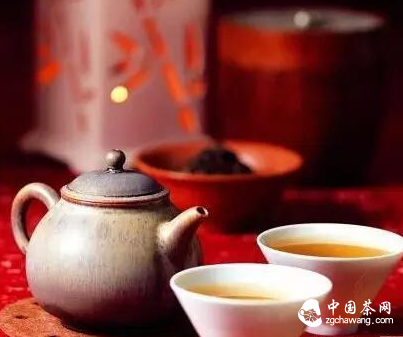
This is absolutely a false proposition. The statement is too absolute; not everyone cannot drink tea at night! For example, me, a seasoned tea drinker, having a light cup of black tea at night is my favorite!
However, there is a group of people who have poor sleep quality at night, or suffer from neurasthenia, or are extremely sensitive to caffeine due to their constitution. Unfortunately, they absolutely must not drink tea at night, otherwise they'll be staring at the ceiling counting sheep.
If you are not among the people mentioned above, congratulations, you can happily enjoy a few sips of tea at night. Considering that tea contains stimulating substances, it's best not to drink highly stimulating teas like green tea or light-scented oolong at night. Instead, opt for some milder types of tea, such as black tea or ripe Pu-erh, and keep the amount small—light tea is best. Having a strong cup of tea is absolutely asking for trouble.
Here, the editor tells you a secret that shouldn't be told: some well-aged good teas can make you feel very relaxed after drinking and are beneficial for sleep. Drink it and then go straight to bed, guaranteed you'll sleep soundly!
▎Rumor 2: Tea can sober you up.
It's unknown where the well-known saying 'tea can sober you up' originated. As early as the Ming Dynasty, Li Shizhen clearly stated the dangers of drinking tea after alcohol in 'Compendium of Materia Medica': 'Drinking tea after alcohol harms the kidneys, causes heaviness in the waist and legs, cold pain in the bladder, and concurrently leads to ailments like phlegm retention and edema, wasting and thirsting, and spasmodic pain.'

From a modern scientific perspective, the master's words still hold true. Drinking tea after excessive alcohol consumption not only affects the normal metabolic function of the kidneys but also increases the burden on the cardiovascular system. Therefore, if you accidentally drink too much, never use tea to sober up. Excessive drinking has already caused some harm to your body; do you really want to experience secondary harm? Go to sleep early, why drink more tea?
If you are too drunk, for instance, unconscious, suffering from alcohol poisoning, or even stomach bleeding, get to the hospital immediately. Follow the doctor's instructions; drinking tea won't save you.
▎Rumor 3: Drinking tea can cure all diseases.
It's said that drinking tea can cure all diseases, and overwhelming advertisements promote tea as a medicine that can counteract all toxins.
But, SORRY!!!! There's no such good thing in the world!
Indeed, when Shennong tasted the hundred herbs, he reportedly said that tea could detoxify. The various effective components in tea are beneficial to the human body. For example, the tea polyphenols in tea leaves can act as antioxidants, and theanine can calm nerves and lower blood pressure, etc.
But in reality, whether tea was boiled fresh and eaten as soup, made into cakes, ground and brewed, or finally brewed from buds and leaves, it has always been used as a beverage. The correct definition of tea has always been: the healthiest drink besides plain water.
So, although tea does have some healthcare value, it is absolutely not medicine. Tea cannot be used as a drug to treat any disease. If you are sick, go see a doctor.
▎Rumor 4: Children cannot drink tea.
'What is a child doing drinking tea? Go play somewhere else.' This was my tea-aficionado father's favorite phrase. Only after growing up did I realize it was a lie! One that lasted over a decade!
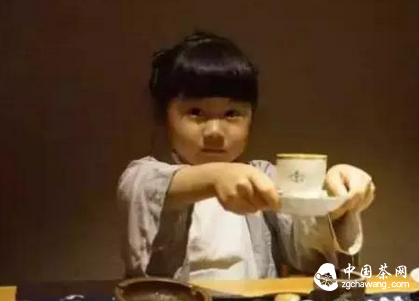
First of all, let it be stated: children can drink tea. Of course, children should not drink excessive amounts of tea, nor should they drink strong tea. Taking it easy is always good.
For children under 12 years old, whose digestive functions are relatively weak, drinking light tea is suitable. Drinking tea has great benefits for children.
Firstly, as a healthy beverage, drinking tea is better than drinking cola or carbonated drinks, and it might even help cultivate a child's appreciation for classical Chinese culture. Secondly, different teas have different production processes, and their flavors and aromas also vary, all of which can bring spiritual pleasure to children. Most importantly, tea contains phenolic derivatives, vitamins, amino acids, sugars, and other nutrients, as well as various trace elements beneficial for a child's growth, such as manganese, fluorine, copper, and zinc.
For children over 12 years old, whose digestive functions are equivalent to adults, you can safely cultivate their appreciation for tasting tea.
You can share the good tea珍藏 (Note: 'zhencang' means 'treasured' or 'collector's') stored at home with your kids. Start cultivating tea connoisseurs from childhood.
▎Rumor 5: The first infusion of tea needs to be discarded.
The editor often sees tea friends discarding the first infusion of tea. It's heartbreaking.
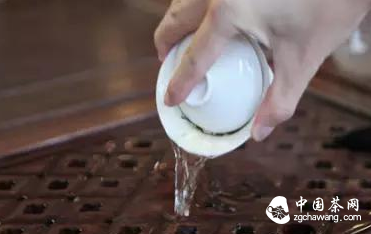
Some say it's for health reasons, that the first infusion can 'wash off' pesticide residues, dust, etc. Unfortunately, most pesticides are fat-soluble substances. Hot water can only dissolve and dilute a very small amount. It's impossible to rely on the first infusion to wash away pesticide residues.
Some say that anyway, the first infusion doesn't have much taste, so discarding it doesn't matter. In fact, except for compressed teas and ball-shaped oolongs that are not easy to unfurl, the first infusion contains many flavors. Moreover, many beneficial substances dissolve into the first infusion. Taking green tea as an example: the first brew of green tea releases over 50% of its beneficial substances.
Others say the first infusion is used to rinse away impurities and dust. This statement, of course, applies to teas that have been stored for a certain period. The first infusion does indeed have a rinsing function. Unfortunately, as the first brew, it is full of quality information about that particular tea and is highly expressive.
Yet others say that in tea ceremony performances, the first brew is always discarded, and the same technique is adopted when brewing. Unfortunately, the tea ceremony performances you've seen are problematic. Don't copy them exactly.
In short, the first infusion contains the essence; it's a pity to discard it! (Regarding the first infusion, you can go to Tea Language Network and search for the article: 'The Lie in the Tea World: The First Infusion You Discard Over and Over Again')