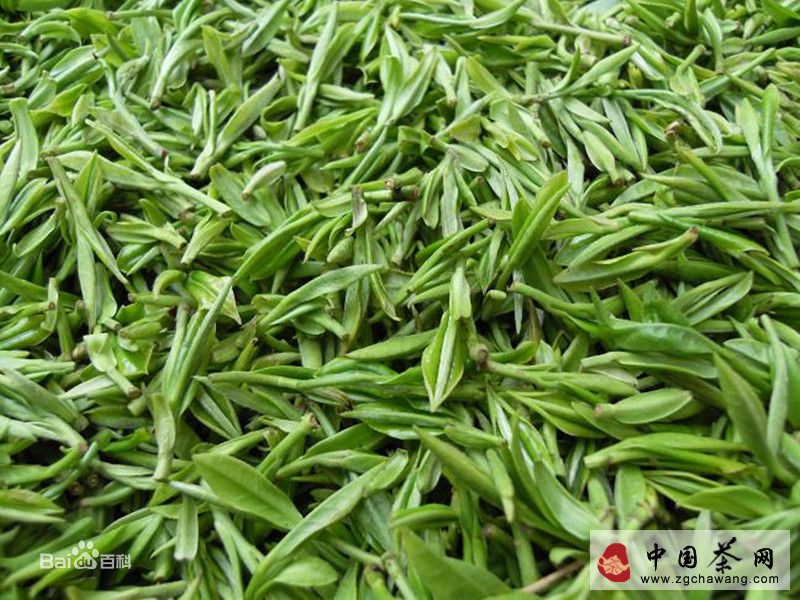
Huangshan Maofeng origin, according to "Anhui Tea Classic" in the article "Nationally Famous Huangshan Maofeng" states: "According to legend, it was during the Guangxu period, about 70-80 years ago. At that time, the Huangshan area originally produced export green tea, while Xie Yu Da Tea House in the area additionally acquired a small portion of Maofeng, which was sold far to the Northeast. Because of its excellent quality, it was very popular among consumers." Also, according to "Anhui Specialties" book, in the "Huangshan Maofeng" article by She County's Ye Zuyin: "Huizhou Chamber of Commerce Materials records: During the Qing Dynasty's Guangxu period, She County's Tangkou Xie Yu Tai Tea House trial-produced a small amount of premium Huangshan Maofeng tea (note: at that time Huangshan Maofeng was not graded), which was sold to the Northeast. It was deeply loved by customers in the sales area and thus became nationally famous." In Professor Chen Chuan's compiled "Tea Industry General History," it specifically points out: "When did Huangshan Maofeng begin to be produced? This is also worth studying." With the approval of the State Council at the end of 1982, Taiping County in Huizhou Prefecture was changed to the county-level Huangshan City, and the Huangshan Commune of She County was placed under Huangshan City, established as Tangkou Town. She County Tea Company, through historical records and field investigations, starting in the spring of 1984, selected sites in Fuxi Township at Xintian and Tianli villages, 13 village groups, to produce premium Huangshan Maofeng. Among them, the premium Huangshan Maofeng produced by Chongchuan group (originally named Chongtouyuan) in Xintian Village had the best quality. As a gift tea from She County, it was sent to Beijing before International Labor Day on May 1st. In 1985, when She County Tea Company purchased premium Huangshan Maofeng, it proposed using the quality of the premium Huangshan Maofeng produced in Fuxi Township's Chongtouyuan as the standard. The products received positive reviews year after year. Therefore, Li Yabei wrote: "National Famous Tea Treasure - Huangshan Maofeng." It points out: "Huangshan Maofeng was created during the Guangxu period of the Qing Dynasty by Xie Yu Da Tea House. The founder of this tea house, Xie Jinghe, was from Caoxi in She County, made tea his profession, and was proficient in planting, picking, and processing... Labeled 'Huangshan Maofeng', it was transported to the Northeast, winning the deep affection of drinkers." Among these, Ye Zuyin's citation of "Huizhou Chamber of Commerce Materials" mentions "Xie Yu Tai Tea House," only omitting the word "Tangkou." Li Yabei's writing "the founder of this tea house, Xie Jinghe..." has since been combined and cited in many of China's tea classics. In fact, Zheng Enpu, Director of the Huizhou Prefecture Commercial Bureau, wrote an inscription in the spring of 1975: "Condensing the essence of Huangshan's clouds and mist, overflowing with the fragrance of Caoxi's rain and dew. Inscribed for the 100th anniversary of Xie Yu Da Tea House's creation of Huangshan Maofeng." Another ten years later, She County Tea Factory senior tea technician Yu Yisheng wrote in "She County Tea Technology": "During the Guangxu period of the Qing Dynasty (1875), Xie Yu Da Tea House created 'Huangshan Maofeng' in Huangshan's Fuxi (note: originally called Caoxi). It has been over a hundred years since its history." This indicates that Huangshan Maofeng began production in the first year of the Guangxu era of the Qing Dynasty (1875).
Huangshan Maofeng, with its unique color, aroma, taste, and appearance, is regarded as a premium tea and designated as a national gift tea.
Xie Zheng'an (1838-1910), also known as Xie Jinghe, devoted his life to the tea business. He successively opened "Xie Yu Da" Tea House and other factories, working diligently and managing affairs with integrity for half a century. In 1875, he pioneered Huangshan Maofeng, which sold well in Europe and Asia. He can be considered a generation of scholarly merchant and was the only red-top merchant in the greater and lesser Huangshan areas at that time.