Yunnan Province has a total of 16 prefectures, cities, and autonomous prefectures, and 129 counties and county-level cities (districts). Among them, there are 8 ethnic autonomous prefectures: Chuxiong Yi Autonomous Prefecture, Honghe Hani and Yi Autonomous Prefecture, Wenshan Zhuang and Miao Autonomous Prefecture, Xishuangbanna Dai Autonomous Prefecture, Dali Bai Autonomous Prefecture, Dehong Dai and Jingpo Autonomous Prefecture, Nujiang Lisu Autonomous Prefecture, and Diqing Tibetan Autonomous Prefecture. There are also 8 prefecture-level cities: Kunming, Zhaotong, Baoshan, Lijiang, Lincang, Pu'er (formerly Simao), Qujing, and Yuxi.
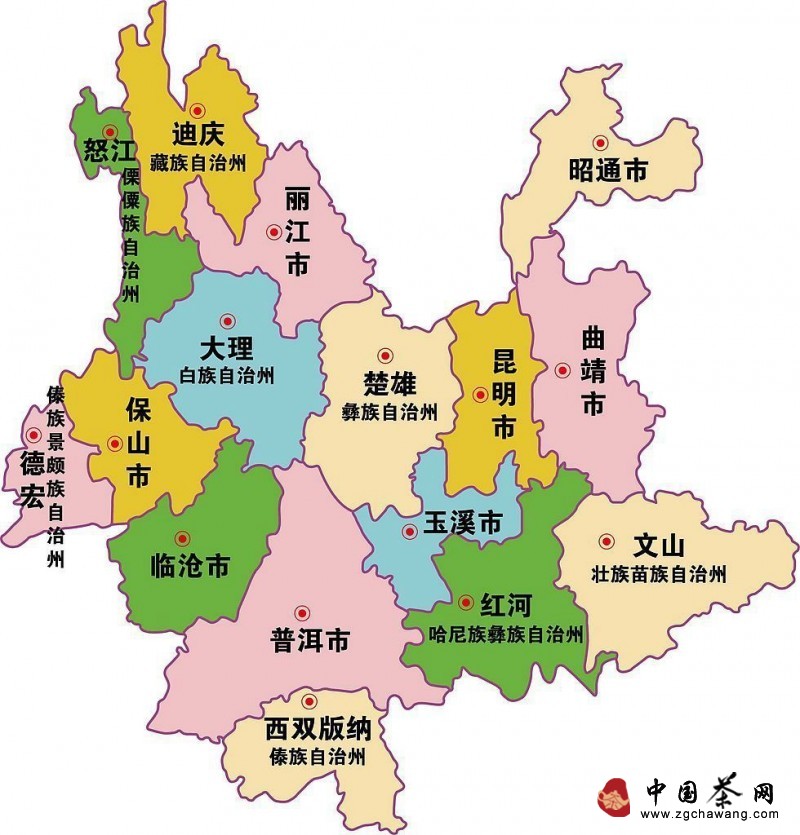
Currently in Yunnan Province, Pu'er tea is mainly produced in four major regions, from north to south: Baoshan City, Lincang City, Pu'er City (formerly Simao City), and the Xishuangbanna Autonomous Prefecture, with average altitudes decreasing from high to low.
Lincang City is located in southwestern Yunnan, comprising eight districts and counties: Linxiang, Yunxian, Fengqing, Yongde, Zhenkang, Gengma, Cangyuan, and Shuangjiang. It is currently the region with the highest tea production in Yunnan Province, originally focusing on Dian green tea, followed by Dian black tea. Since the rise of Pu'er tea popularity, many tea regions that primarily produced green tea have begun producing sun-dried green tea. Cultivated wild tea is currently more well-known in Mengku.
Lincang is the largest tea-producing city in Yunnan Province, the world-famous home of Dianhong black tea, a core area of the world's tea tree origin, and the birthplace of Yunnan Pu'er tea. It is the native habitat of the large-leaf Mengku variety, with a long history of the Tea Horse Road, rich and diverse ethnic tea ceremonies, customs, tea art, and unique ecological conditions for producing organic and pollution-free tea. It boasts a complete range of tea products and processing technologies.
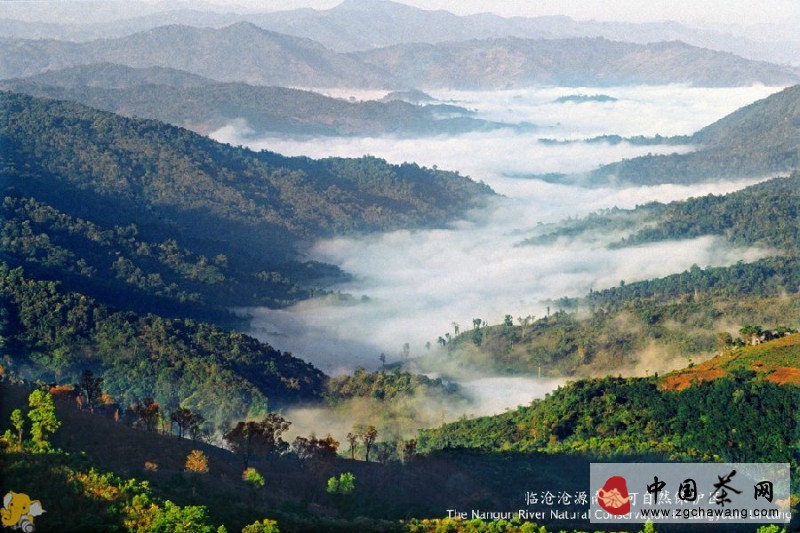
In Lincang, tea is integrated with ethnic culture, forming unique ethnic tea ceremonies, tea art, tea drinking customs, and wedding celebrations, accumulating rich tea culture resources. The aroma of tea lingers by the ever-burning hearth, the campfires where horse caravans rested along ancient post roads, and beside the clear mountain streams. The Blang people's green bamboo tea and sour tea; roasted tea; the Jingpo people's fresh bamboo tube tea; the Lahu people's "roasted tea" and bamboo tube fragrant tea; the Wa people's bitter tea, simmered tea, and iron plate roasted tea—the ethnic tea beverages of Lincang showcase a culture that resembles a long scroll of narrative painting, colorful and enchanting, evoking reverie... Using earthenware pots to roast tea is a tea custom that has been passed down to this day. When entertaining friends and relatives, people take out carefully picked and processed tea leaves, directly place a small handful in an earthenware pot, and roast it over red charcoal from the hearth, shaking and turning it constantly until the tea emits a rich aroma. Then, boiling clean natural mountain spring water is poured into the pot, causing it to immediately bubble and gurgle. Tea brewed this way is strong, bitter, and fragrant, with a unique flavor.
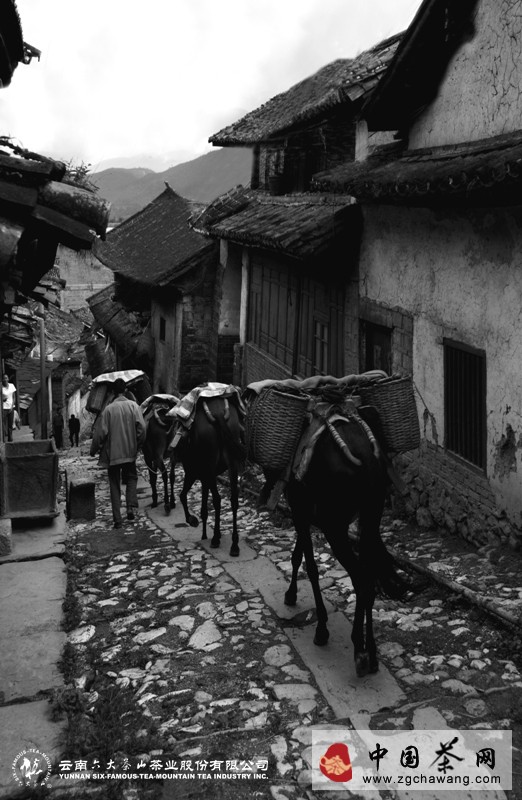
In Fengqing County, Lincang City, there is a beautiful small town called Lushi. Lushi, originally called Alusi, evolved from indigenous languages and is "sandwiched" between the Lancang River and the Black Huijiang River northeast of Fengqing County. It is 800 meters long from east to west and 538 meters wide from north to south, with a total area of only 430,000 square meters. It once served as a vital town on the Yunnan-Burma Tea Horse Road, known as the "First Town on the Tea Horse Road." It was an important post leading to Menghua (now Weishan County), Xiaguan, Kunming, Lijiang, Tibet, and onward to India and Myanmar.
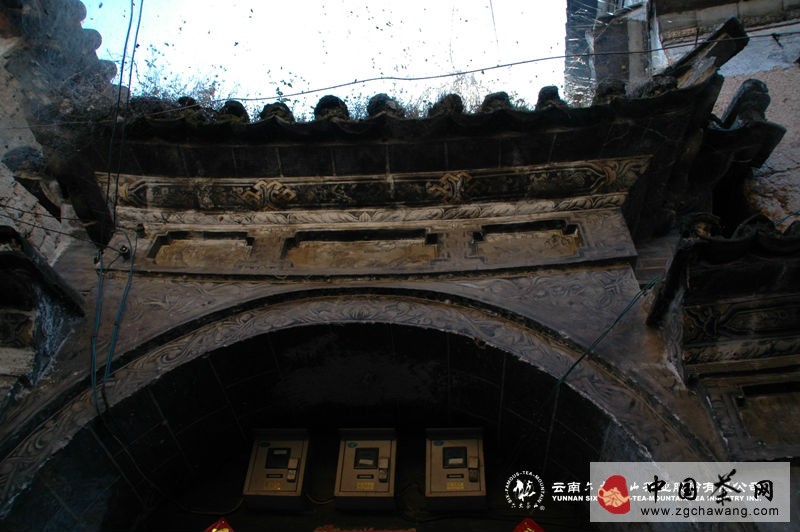
Lushi Ancient Town has a long history and profound cultural heritage. Since the establishment of local administrative agencies and the opening of its market in 1598, it has a history of over 400 years. Today, through dusty spider webs, the intricately carved door heads and golden beams that once cost fortunes still tenaciously display their elegance, reminiscing about the vicissitudes of the ancient road. Lushi Ancient Town is one of the better-preserved ancient architectural complexes in western Yunnan. Overall, the residential architectural style is influenced by Bai culture from Dali and regions like Jiangsu and Zhejiang, exhibiting typical Nanzhao architectural characteristics.
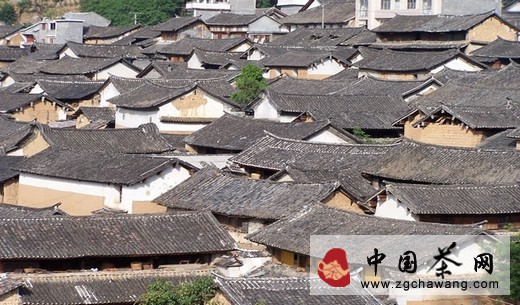
The entire town centers around "three streets (Shangping Street, Xiaping Street, Stair Street) and seven alleys (Zengjia Alley, Huangjia Alley, Cross Alley, Luojia Alley, Kuige Alley, Dongjia Alley, Yangjia Alley) and one square (also called Sifang Street)," distributed in a circular pattern. Lushi still preserves a section of bluestone road imprinted with hoof marks. This three-meter-wide road divides the ancient town into two from east to west. Residential buildings mainly consist of seal-shaped quadrangles and three-sided courtyards with one main hall, one wing, and one screen wall, forming a unique style of "four sides enclosing five courtyards, three sides with one screen wall." The upper and lower floors each have three rooms, with a wooden structure and roofs covered with locally produced blue tiles. The junctions between walls and rafters are sealed with hemp stone or bluestone slabs to prevent fire hazards. The roof ridges curve upward at both ends, and the eaves are equipped with hook tiles, each carved with exquisite patterns—dragons, phoenixes, lions, or tigers—vivid and spirited. The walls facing the streets or roads often feature paintings or poems by literati or the owners themselves to demonstrate elegance. The screen wall is a window fully displaying the owner's status—whether a scholarly family, a wealthy household, or an ordinary home—can be discerned from its shape and the images on it. In the spacious courtyards, people plant trees and flowers, arrange rocks to create scenery, making them elegant, distinctive, and conducive to nurturing one's temperament. Merely from the architecture and furnishings here, everyone who visits Lushi is captivated by its profound culture.