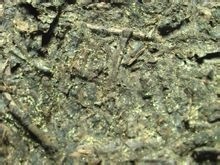
Named for its black appearance, it is called Dark Tea. It is one of the six major tea categories and a fully fermented tea. Main production areas are Sichuan, Yunnan, Hubei, Hunan, and other places. Dark tea uses relatively coarse and old raw materials and is the main raw material for pressing compressed tea. The tea-making process generally includes four steps: fixation, rolling, pile fermentation, and drying. Classified by region, dark tea is mainly divided into Hunan dark tea, Sichuan dark tea, Yunnan dark tea (Pu-erh Tea), and Hubei dark tea.
Dark tea is a type of tea made through microbial fermentation. It first appeared in the Western Han Dynasty, originating from the "Yi Si Tea"—Qujiang Royal Thin Slices unearthed from the Mawangdui Han Tomb in Changsha, with a history of 2300 years, marking the origin of Anhua dark tea. It later appeared in the Tang Dynasty in 1034 AD, with a history of nearly a thousand years. Due to the relatively coarse and old raw materials of dark tea, a longer pile fermentation time is often required during the manufacturing process, causing most leaves to appear dark brown, hence the name dark tea. As one of the six major tea categories and a fully fermented tea, dark tea uses relatively coarse and old raw materials and is the main raw material for pressing compressed tea. The tea-making process generally includes four steps: fixation, rolling, pile fermentation, and drying. Classified by region, dark tea is mainly divided into Hunan dark tea, Ya'an Tibetan tea (the originator of dark tea), Yunnan dark tea (Pu-erh), Shaanxi dark tea, and Hubei dark tea.
Dark tea originated in Sichuan Province, dating back to the early tea-horse trade during the Tang and Song dynasties. The tea in the tea-horse trade started with green tea. At that time, the distribution centers for tea-horse trade were Ya'an in Sichuan and Hanzhong in Shaanxi. The journey from Ya'an to Tibet by porters and horse caravans took at least 2 to 3 months. Due to the lack of shelter from sun and rain, the tea was often soaked on rainy days and dried on sunny days. This alternating wet and dry process caused fermentation under microbial action, resulting in a tea product completely different in quality from when it was first transported. Therefore, the saying "dark tea was formed on horseback" has its reasoning. Over time, people added a pile fermentation step during the initial or refining process, thus creating dark tea. Dark tea is processed and produced in China's Yunnan, Hunan, Guangxi, Sichuan, Hubei, and other regions. Dark tea products can generally be stored for a long time and have the characteristic of improving with age.
The term "dark tea" first appeared in the memorial of censor Chen Jiang in the third year of the Jiajing reign of the Ming Dynasty (1524 AD): "Due to the inferior quality of commercial tea, collect dark tea instead. Production is limited, still graded as superior and medium, stamped on bamboo strips, and inscribed with the merchant's name for inspection. Every ten catties are steamed, sun-dried, and packed into one bamboo container, transported to the tea office, where officials and merchants split it equally. Official tea is exchanged for horses, and commercial tea is sold" ("Gansu General Chronicle"). This tea, steamed and pressed into packages, exhibits fermentation characteristics and is undoubtedly dark tea.
Tibetan tea is the originator of dark tea, also known as Southern Road border tea. Its production process is extremely complex, involving 32 ancient methods. Due to continuous fermentation, it has high collection value and is the most collectible among ancient tea types. Ya'an City in Sichuan Province is the place of origin for Tibetan tea. The originator of dark tea, Ya'an Tibetan tea, has a history of 1300 years. During the Jiajing period of the Ming Dynasty, merchant groups from Jingyang, Shaanxi,陆续 came to Ya'an to engage in the border tea industry. With substantial capital and business acumen, from the Ming to Qing dynasties, they established more than ten tea firms, quickly surpassing the local Sichuan merchants in scale. The annual quota of "Yin" (tea licenses) they recognized accounted for two-thirds of Ya'an's total. The most famous and largest was the Shaanxi "Yixing Tea Firm," which started in the 25th year of the Jiajing reign of the Ming Dynasty. To the modern Yixing Tea Firm, it has a history of over 460 years,堪称 a miracle in ancient Chinese commerce. Tibetan tea is characterized by "red, strong, aged, and mellow." "Red" refers to the tea soup's透 red color, lively and lovely; "strong" means authentic tea taste, refreshing and酣畅 when drinking; "aged" refers to the aged aroma, with older teas having a stronger tea fragrance the longer they are stored; "mellow" means入口 not astringent or bitter, smooth, sweet, and醇厚 in taste. Modern medical research shows that Tibetan tea, made through special prolonged fermentation processes, contains nearly 500 kinds of organic compounds beneficial to the human body, about 700 kinds of aroma compounds, and is also rich in inorganic substances, including no less than 15 minerals such as phosphorus, potassium, magnesium, and selenium.
Green brick tea is a type of dark tea, also known as Hubei dark tea, possessing a natural tea fragrance not found in other ordinary dark teas and Pu-erh. Yangloudong in Chibi City, Hubei Province, is the place of origin for green brick tea, with a production history of over two hundred years. Merchant Lei Zhongwan from Yangloudong established the "Yangloudong Tea Firm" in the first year of the Qianlong reign of the Qing Dynasty (1736 AD) and later renamed it "Dongzhuang Tea Firm." "公 set up a tea firm at the temple market, began making tea bricks" ("Biography of Zhongwan Gong"). The tea firm was located in the middle section of Miaochang Street in the ancient Yanglou town, with the factory situated 60 meters below the Guanyin Spring. Using Yangloudong tea as raw material and drawing water from the Guanyin Spring for production. As the vehicle of Guanyin Bodhisattva is a lotus, the produced brick tea "uses the lotus as the pattern, with the characters 'Dong Zhuang' as the mark." To this day, it has a history of over 200 years, with the saying "the origin of brick tea, century-old Dongzhuang." An ancient poem: "The ancient alley of Yanglou with幽 bluestone, the century-old wooden building of Dongzhuang in autumn, a thousand years cultivates the lingering tea fragrance, the charm of Guanyin Spring washes away the romance," describes the famous Guanyin Spring and the history of Dongzhuang brick tea in Yangloudong. It uses old green tea as raw material, pressed under high-temperature steam. The tea soup is澄 red and clear, rich and aromatic, pure in taste, with a lasting sweet aftertaste. After fermentation, high-temperature steam pressing, and appropriate storage for natural post-fermentation, the catechins and tea polyphenols in green brick tea dissolve more easily in water than in ordinary tea. Drinking green brick tea, besides quenching thirst and promoting salivation, has unique effects such as reducing greasiness and健胃, lowering lipids and weight loss,抵御 cold and提神, sterilizing and止泻, which other tea types cannot match.
Dark tea has effects such as supplementing dietary nutrition, diuresis and detoxification, aiding digestion and reducing greasiness, sterilizing and reducing inflammation, lowering lipids and preventing diseases, lowering blood sugar and treating diabetes,抗氧化 and delaying aging, lowering blood pressure,抗癌, and抗突变.
Life Tips:
1. It has a certain effect on treating habitual constipation.
With spring arriving, it is a season prone to gastrointestinal diseases. Drinking hot dark tea, especially aged dark tea, has a good effect on treating chronic enteritis. Meanwhile, drinking dark tea can eliminate bloating and has the wonderful use of treating indigestion.
2. Washing hair with dark tea can relieve itching and beautify hair.
Dark tea (Chan'er Fuzhuan Tea) is rich in protein, tea polyphenols, tea polysaccharides, vitamins, and minerals. Among them, protein, tea polysaccharides, vitamins, and minerals are essential nutrients for hair growth, while substances like tea polyphenols have antibacterial, anti-inflammatory, and anti-allergic effects. Therefore, dark tea (Chan'er Fuzhuan Tea) tea juice is a natural nourishing hair shampoo,具有祛屑止痒 and hair care功效. Long-term use can make your hair clean and shiny.
3. Soaking feet in dark tea can quickly relieve fatigue, eliminate odor, and inhibit bacteria.
Dark tea (Chan'er Fuzhuan Tea) is rich in tea polyphenols, tea polysaccharides, vitamins, and minerals. Tea polyphenols, tea saponins, etc., have antibacterial and anti-allergic effects; the aromatic substances in dark tea (Chan'er Fuzhuan Tea) also have deodorizing and anti-inflammatory功效. Moreover, dark tea (Chan'er Fuzhuan Tea) has strong compatibility. Alternatively, appropriate Chinese herbs such as safflower and eucommia bark can be selected to mix with it, making a medicinal tea foot soak liquid that acts on the foot meridians to achieve全身调节的目的. According to your needs, brew dark tea (Chan'er Fuzhuan Tea) tea juice at an appropriate concentration (1:25~50) or mix it with Chinese herbs. Soak feet at a water temperature of about 35~40°C to quickly relieve fatigue, restore energy, eliminate odor, and inhibit bacteria.
Storage Method:
Dark tea should be stored under ventilated, dry, and odor-free conditions. If the tea becomes damp due to improper placement, the following methods can be used for处理. However, if black mold, green mold, or gray mold appears, do not drink it, as it indicates the tea has霉变. Maintaining ventilation and dryness is the most important for storing dark tea. As dark tea is deeply fermented (fully fermented tea), a certain humidity is necessary to accelerate aging. If the tea becomes damp and develops white mold due to excessive humidity over time, it should be promptly taken out to a ventilated and dry place. Dehumidification (turning on the air conditioner is sufficient) or sun-drying can also be done. After a few days, the grown mold will naturally disappear. If the white mold situation is severe, use soft textiles like brushes or towels to remove the surface white mold, then use heating appliances like hair dryers to heat for more than ten minutes. However, if there is black, green, or gray mold, the tea is spoiled. Due to the fermentation characteristics of dark tea, if moisture and damp prevention during storage are not done well, white mold will grow on the tea's surface. In the early stages, it does not affect quality or the taste of dark tea, so there is no need to worry excessively. Moreover, the fermentation principle of dark tea involves producing bacteria beneficial to the human body (commonly known as "golden flowers," scientifically named "Eurotium cristatum") to initiate fermentation. After removing the white mold from the surface of dark tea, store it in a ventilated place for a few days before drinking. However, if霉变 is not dealt with promptly and霉变 penetrates the core,出现 black, green, or gray mold, it should not be consumed.