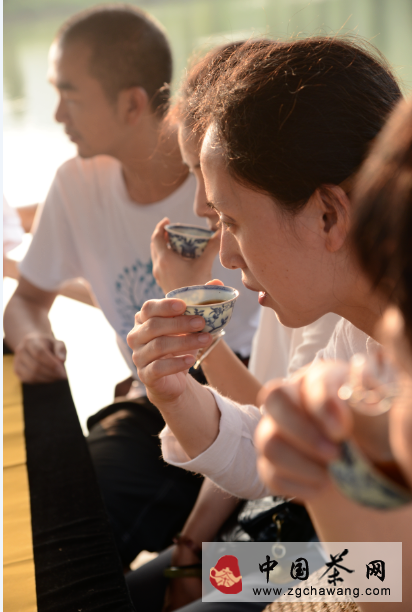
Tea enthusiasts say:
The aroma of Pu-erh tea is not overly pronounced when brewed, but over time, one can discern whether it is a fine tea. The lingering fragrance at the bottom of the cup is another enchanting aspect of Pu-erh tea. Imagining a tea with hints of honey, floral, fruity, or camphor-like scents is enough to make one's mouth water.
Original title: Exploring the Aroma of Pu-erh Tea
Aroma brings pleasure and comfort. Enchanting fragrances can captivate and uplift the spirit. Aged Pu-erh tea boasts the most mesmerizing aroma—if new tea is characterized by a fresh fragrance, long-stored Pu-erh tea develops a delightful aged aroma.
I am unsure how the aged aroma of Pu-erh tea develops. Often, the aromas of other tea types fade within three years, so why does Pu-erh tea retain its fragrance for so long? I believe it may be due to the fact that, aside from the sun-drying process, other teas are not compressed into shapes but remain as loose leaves, causing their aromas to dissipate easily. In contrast, Pu-erh tea is compressed, which slows the release of its internal substances, thus preserving its aroma. I marvel at the wisdom of the ancients, who devised the method of compressing Pu-erh tea. Whether this was intentional or coincidental remains a mystery. The tighter the compression of the tea cake, the more pronounced its aroma will be after years of storage. Loosely compressed tea cakes are less suitable for long-term aging.
The transformation of Pu-erh tea's aroma follows this pattern: the first year brings a green or grassy scent, which may even be described as a green odor. Detecting this scent indicates it is spring tea from that year. By the third or fourth year, the aroma gradually diminishes, making it less noticeable when drinking. Around the fifth or sixth year, the aroma begins to intensify again. By the seventh or eighth year, the aged aroma becomes prominent.
Aromas vary in type. Based on my observations, the aromas of fine and lower-quality teas develop in two distinct directions, aligning with their taste evolution. One develops a beautiful aged fragrance, while the other produces a fishy aroma. Fishy aroma differs from fishy odor—it is fragrant with a hint of fishiness. Any tea that develops a fishy aroma during storage will inevitably have a decline in taste. Therefore, it is important to be cautious when selecting aged tea and avoid those with a fishy aroma.