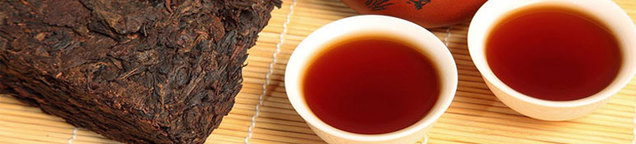
 Fuzhuan tea is a high-grade variety of the ancient tea category dark tea. Records of dark tea first appear in Tang Dynasty's Yang Ye's "Shanfu Jingshou Lu" and the Five Dynasties' Mao Wenxi's "Cha Pu": "Qujiang thin slices, eighty pieces per jin." Dark tea production began in the early 16th century. According to the "Ming Shi · Cha Fa," as early as the third year of the Jiajing reign in the Ming Dynasty (1524), Fuzhuan tea was designated as official tea to be transported to the northwest for ethnic minorities, becoming a daily necessity for people in China's northwestern regions. Since the Jiaqing period of the Ming Dynasty, Hunan Fuzhuan tea has become the mainstream tea in the tea-horse trade, with a history of nearly 500 years.
Fuzhuan tea is a fully fermented tea, featuring the most complex processing, longest production cycle, and most unique techniques among all dark tea products. Through pile-fermentation, fermentation, and 'flowering' processes, it develops golden-yellow Eurotium cristatum fungi. Its appearance is neat like brick slices, with abundant internal 'golden flowers.' The content of these 'golden flowers' is closely related to the tea's taste and aroma, directly affecting the quality of Fuzhuan brick tea. The amount of 'golden flowers' is considered a marker of Fuzhuan brick tea quality, with the saying "good tea grows golden flowers, more flowers mean better tea." It also has a distinctive fungal floral aroma. Its liquor is orange-red, with a pure aroma and mellow taste.
As living standards improve, quality requirements for such products continue to rise, and awareness of product quality and safety gradually strengthens. However, traditional Fuzhuan brick tea faces issues such as coarse raw materials, low water extract content, and relatively high levels of fluoride and heavy metals. For a long time, inferior Fuzhuan tea has flooded the market, disrupting sales and leading many to view Fuzhuan tea as a product "unfit for elegant occasions." If the main quality issues can be resolved and high-quality Fuzhuan tea products developed, it could secure Fuzhuan tea's existing market share while providing new products for domestic and international markets.
Research on the functional components of Fuzhuan tea has attracted widespread attention from both industry and academia in recent years. Hunan Agricultural University, after three years of research, has extracted special functional components, Fuzhuan tea element A and B, from Fuzhuan tea. Its lipid-lowering, blood sugar-regulating, and blood pressure-lowering effects have gained theoretical recognition from the medical and tea science communities, as well as acceptance from consumers, though clinical trial research needs further development. Thus, it can be said that as a new type of natural beverage for lowering lipids, blood sugar, and blood pressure, Fuzhuan tea will play a very important role in preventing and assisting the treatment of modern urban lifestyle diseases. Therefore, it is predicted that Fuzhuan tea will become a special health beverage for urban populations and people in regions with specific dietary structures in the future.
Related link: Efficacy and Effects of Fuzhuan Tea