The duration and number of times tea can be steeped vary significantly, influenced by factors such as the tea type, water temperature, quantity of leaves used, and personal drinking habits, making it impossible to generalize.
For example, when brewing common green tea or black tea in a cup, typically about 3 grams of dry leaves are used with approximately 200 milliliters of boiling water. After covering for 4–5 minutes, it is ready to drink. However, this method has drawbacks: if the water is too hot, it can easily scorch the tea leaves (especially green tea); if too cool, it may fail to extract the full flavor. Moreover, with a large volume, it often cannot be finished at once, and prolonged steeping can cause the tea to cool, affecting its color, aroma, and taste. An improved method is to first add a small amount of boiling water to the leaves in the cup, just enough to cover them, and let it steep covered for about 3 minutes. Then, fill the cup to 70–80% full with more boiling water and drink while hot. When about one-third of the tea remains in the cup, add more hot water to maintain a consistent concentration across infusions. Studies show that in the first infusion, about 50–55% of soluble substances are extracted; in the second, around 30%; in the third, about 10%; and by the fourth, very little remains. Therefore, it is generally recommended to steep tea three times.
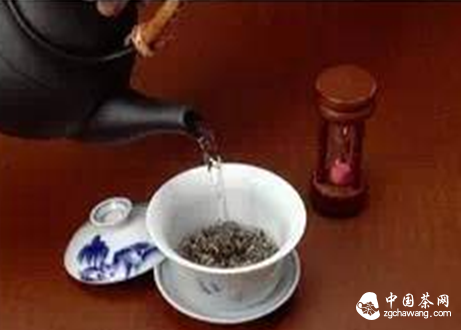
For finely granulated and fully rolled black broken tea or green broken tea, most effective components are extracted after steeping in boiling water for 3–5 minutes, allowing for a single quick brewing. Instant tea is also consumed with a one-time brewing method.
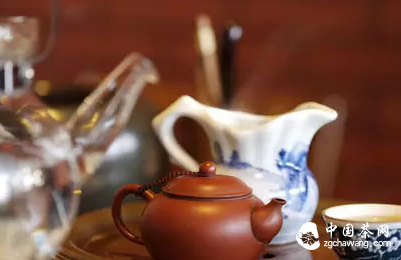
When enjoying oolong tea, small purple clay teapots are often used. With a relatively large amount of leaves (about half the pot), the first infusion should be poured out after 1 minute, the second after 1 minute and 15 seconds (15 seconds longer than the first), the third after 1 minute and 40 seconds, and the fourth after 2 minutes and 15 seconds. This means steeping time should be gradually increased from the second infusion onward to ensure a more uniform concentration across infusions.
The water temperature and quantity of tea leaves also affect steeping time. Higher temperature and more leaves require shorter steeping times, while lower temperature and fewer leaves require longer steeping. Ultimately, the ideal steeping time depends on achieving a tea concentration that suits the drinker’s taste.
Research indicates that after the first infusion of green tea, the extraction rates of various effective components differ greatly. Amino acids, the most water-soluble component in tea, have an extraction rate of over 80% in the first infusion. Caffeine follows with nearly 70%, while tea polyphenols have a lower extraction rate of about 45%. Soluble sugars have an even lower rate, usually less than 40%. Black tea, especially broken black tea, undergoes more thorough rolling during processing, resulting in smaller particles and higher cell breakage. Thus, its first infusion extraction rate is often much higher than that of green tea. Nowadays, tea bags are increasingly popular worldwide. They are not only convenient but also enhance the extraction of effective substances, increasing tea concentration. Studies show that tea bags yield about 20% higher extraction compared to loose-leaf tea.