When it comes to Pu-erh, there are several keywords: investment, speculation, endurance for multiple infusions, aftertaste, ancient tea trees, Yunnan, etc. The attention it receives surpasses that of the other six major tea categories, which is puzzling. Its unique characteristics have also allowed it to break away from the broad category of black tea and establish its own school. The development history of Pu-erh could probably be talked about for days and nights, and its remarkable journey could similarly be discussed for just as long. Naming this collection of articles on various aspects of Pu-erh "The Versatile Pu-erh" is most appropriate.
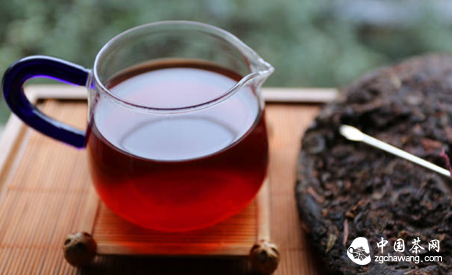
Whether you are someone familiar with Pu-erh tea cakes or a seasoned drinker who enjoys it daily, upon first encountering a Pu-erh tea cake, one can't help but ask: why are Pu-erh tea cakes tightly compressed instead of stored loose? Although modern technology can now produce Pu-erh as loose tea, the compressed form of the tea cake remains unchanged. On the market, it can be observed that Pu-erh tea is mostly found as compressed tea, such as tea cakes or tea bricks, with loose Pu-erh being relatively rare.
Pu-erh tea cakes possess extraordinary longevity and are famously known among tea leaves as "drinkable antiques." The book "Compendium of Materia Medica Supplements" once stated: "Pu-erh tea cakes are black as lacquer, supreme for sobering up from alcohol; the green variety is even better, relieving summer heat, transforming phlegm, clearing the stomach, promoting salivation, its efficacy is particularly strong."
► Why are Pu-erh tea cakes tightly compressed instead of stored loose? This might seem like a trivial question, but it is the most fundamental one. Do you know why Pu-erh is pressed into tea cakes? If you are an experienced tea drinker, you certainly understand this principle. If you are a new tea friend, you likely have a surface-level understanding of this issue. Many tea enthusiasts believe that compressing Pu-erh into cakes is for convenient storage, or simply think the compressed form is better.
Common compressed teas are divided into several types: cake tea, tuo tea, square tea, brick tea, etc. Currently, many people feel cake tea is superior, which is also a misconception. According to past practices, first and second-grade leaves were used for loose tea, third and fourth-grade for tuo tea, seventh and eighth-grade for cake tea, and ninth and tenth-grade for brick tea. However, for today's Pu-erh, its shape has long been unrelated to its quality; bricks, cakes, tuos, and loose tea all have variations in raw material grade.
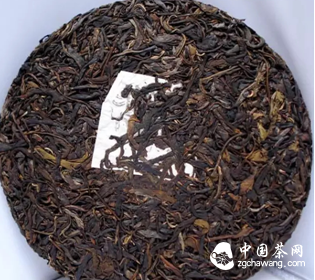
► In fact, initially, the compression of Pu-erh tea cakes was solely to address transportation losses caused by inconvenient traffic during that historical period. Pu-erh was mostly pressed into cake form for storage and transport. Historically, one cake weighed 357 grams, and seven cakes made one load ("tiao"), facilitating calculation and transport by mules and horses. In ancient times, Yunnan's tea was mostly transported to places like Tibet via the Tea Horse Road. The long and arduous journey, for the sake of transport convenience and to carry more tea, led to the creation of shapes like bricks, cakes, and tuos. Furthermore, tea processed this way was somewhat better in terms of aroma, taste, and nutritional aspects.
Loose tea takes up more space, and additionally, the original aroma of some raw teas tends to dissipate. Compressed tea can preserve its aroma for a longer time. Considering Pu-erh's pursuit of the "older, more fragrant" characteristic, collecting compressed Pu-erh tea is more conducive to quality aging, allowing for more ideal results in a relatively shorter time.
► Artistic Chinese people gave compressed tea the name "Seven Sons Cake,"寓意是: 3+5+7 equals 15. Fifteen is a day of reunion, symbolizing togetherness. Regardless of these附加的美称与多好的寓意, why are Pu-erh tea cakes tightly compressed instead of stored loose? Simply because compressed tea, after storage, maintains its aroma, charm, and flavor better than loose tea.
From the perspective of Pu-erh tea's post-production storage and transformation
During later storage, Pu-erh tea undergoes automatic oxidation. The enzymatic oxidation of polyphenolic substances in the tea leaves and transformations driven by microorganisms are the main conversion factors, primarily influenced by moisture, temperature, oxygen, and light.
First, when Pu-erh is compressed into cakes, the absorption and evaporation of moisture have little impact on the compressed Pu-erh. Therefore, microorganisms and aromas can be better preserved.
Second, when Pu-erh is compressed into cakes, the influence of air temperature on the interior of the compressed tea is relatively small, allowing microorganisms within the tea leaves to survive better.
Third, the contact area between oxygen, light, and the compressed Pu-erh tea is significantly reduced, slowing down the oxidation of polyphenols, ketones, and chlorophyll, thereby better preserving the tea's quality.
Of course, the foundation for Pu-erh's later transformation still relies on the inherent quality of the tea leaves themselves. Only with guaranteed quality in the raw tea material, combined with excellent processing techniques and compression into cakes, can high-quality aged Pu-erh be developed.
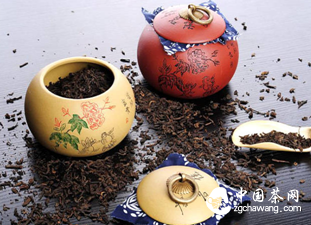
From the perspective of Pu-erh tea collection
If one considers that drinking Pu-erh is a spiritual enjoyment of "savoring history," considers that Pu-erh's value lies in its age and rarity, considers the appreciation pleasure brought by the unique form of compressed Pu-erh tea区别于其它茶叶形制, and considers the storage space limitations of collection enthusiasts, etc., some experts believe that for家庭收藏普洱藏, collecting compressed Pu-erh tea is preferable.
► First, the purpose of collecting Pu-erh tea is to obtain good quality and achieve value appreciation. For Pu-erh tea produced at the same time, whether raw or ripe, after undergoing high-temperature steaming, pressing, and baking, compressed tea, besides being more hygienic than loose tea, offers a much more mellow, sweet, and refreshing taste. Some low-boiling-point astringent and grassy substances also volatilize and减少 due to the high-temperature steaming,烘,焙. This establishes a superior initial quality foundation for compressed tea during收藏 compared to loose tea.
Second, after steaming and pressing, compressed tea is more compact than loose tea. Although its breathability may not be as good as loose tea, it occupies less storage space,有利于较小空间的大量储藏, and reduces藏茶成本. Moreover, the temperature and humidity inside the compressed tea body are more stable, aging is more均匀持久, and it is耐储藏.
► Third, compressed tea, having a certain form, possesses appreciable aesthetics. When drinking, it adds the pleasure of handling and鉴赏 compared to loose tea, which is often called "grass tea." Furthermore, Pu-erh compressed tea mostly comes in "square" and "round" shapes (tuo tea is also round, tea pillars are also round). It cleverly embodies the Chinese traditional cultural philosophical concept of "the sky is round, the earth is square": the "round" cake tea represents the "sky" that孕育世界 in the universe, and the "square" brick tea represents the "earth" that承载万物. Under the交融 and庇佑 of this "sky" and "earth," tea lovers悠然然 find great pleasure, don't they?