Cold-brew tea, a brewing method that has gained popularity among tea enthusiasts in recent years, differs from the traditional hot water method in taste characteristics. What are the specifics and scientific basis behind this brewing technique?
Traditionally, tea is brewed with hot water. Tea leaves, when infused with hot water, fully release their aroma and flavor. It seems that only hot water can bring out the essence of tea. However, this is not entirely true—cold-brew tea offers a unique taste and may even be healthier than hot tea.
Cold-brew tea, this increasingly popular method among tea drinkers, differs from traditional hot water brewing in taste. What are the specifics and scientific principles behind its brewing technique?
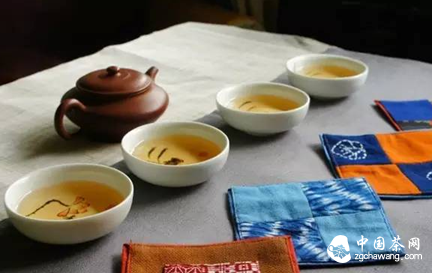
Cold-brew tea offers a unique flavor.
Can cold water extract the richness and aroma?
With hot water brewing, the tea aroma instantly fills the air. This is due to basic physics: higher temperatures increase particle activity, allowing the active components and essence of the tea leaves to dissolve quickly into the water. It stands to reason that with cold water, where particle activity is lower, the tea flavor and aroma won't be extracted as quickly. But can cold water achieve the same effect as hot water over time?
According to experts, it takes about 8 hours for the various chemical elements in tea to fully release in cold water. Based on this principle, I conducted an experiment.
Tea brewed with cold water is essentially comparable to hot tea that has been cooled.
First, I used cold mineral water to brew tea, steeping it for 8 hours before pouring out the infusion. Then, I heated the same mineral water and brewed the same amount of tea leaves following the standard procedure, pouring out the infusion. I compared the two cups of tea. Naturally, the cold-brewed tea lacked a strong aroma. Upon closer inspection, the liquor color of both teas was nearly identical. The cold-brew tea tasted sweet, clear, and mellow. While it didn't have the explosive aroma of hot tea, the tea's essence was still well expressed through cold water steeping. Thus, in terms of flavor, cold-brew tea is largely comparable to hot tea that has been cooled.
Of course, waiting 8 hours is quite lengthy. In practice, after 1–3 hours of cold steeping, the tea already develops a pleasant, mellow taste and is drinkable, though slightly lighter in flavor compared to an 8-hour steep.
Not all teas are suitable for cold brewing. Generally, the longer the fermentation time, the higher the phosphorus content in the tea. For cold brewing, it's best to choose low-fermentation teas with relatively lower phosphorus content, such as green tea, white tea, and some oolong teas. Highly fermented teas like black tea and ripe pu-erh are not ideal for cold brewing.
Additionally, hot water brewing typically uses 5–7 grams of tea per serving. Cold brewing is different—it involves a gradual infusion process. The recommended ratio is about 50 milliliters of water to 1 gram of tea, adjustable according to personal taste.
Cold Water vs. Hot Water: Cold Water is Healthier
Drinking tea properly and choosing good tea benefits health. This is attributed to the active components in tea identified by pharmacological research, which include catechins, caffeine, tea pigments, theanine, tea polysaccharides, various vitamins, and minerals. Many tea drinkers worry that cold water cannot extract these active elements. In fact, cold water not only extracts these healthy substances but also prevents the beneficial elements in tea from being destroyed by boiling water.
The two most important functional components in tea are tea polyphenols and caffeine. First, let's consider tea polyphenols, the most recognized health-promoting substance in tea, whose antioxidant effects have been scientifically confirmed. Tea polyphenols are actually a mixture of various catechins. What is the relationship between temperature and the release of catechins? According to a paper published in the renowned Chinese journal "Food Science and Technology" by researchers Fan Xinnian and four others from the Pharmaceutical and Bioengineering Department of Sichuan University, the distribution coefficient of tea polyphenols in water at different temperatures was measured using the shaking flask-spectrophotometry method. The experimental temperature range was 280K to 320K. The data showed that at a constant pH, as temperature decreases, the distribution coefficient of tea polyphenols in water increases, though not in a regular numerical progression. Through multiple experiments, the researchers concluded that both the extraction of catechins and their hydrolysis and ionization processes are significantly affected by temperature. As temperature increases, the ionization constant and electrolytic constant of catechins increase, while the concentration of catechin molecules in the aqueous solution decreases accordingly.
This set of experiments fully demonstrates that brewing tea with cold or room temperature water can hydrolyze more tea polyphenols compared to using hot or boiling water, clearly adding health benefits. Another paper proves from a different angle that tea polyphenols are highly sensitive to high temperatures. According to the research paper "Effects of Different Temperatures and Time Treatments on the Loss Rate of Tea Polyphenols" by researchers Xu Wei et al. from Qingdao Agricultural University, the loss rate of tea polyphenols is positively correlated with heating temperature. Lower heating temperatures result in lower loss rates of tea polyphenols. At 60°C, the loss rate of tea polyphenols was 102.02%, 150.56%, and 246.64% lower compared to 100°C, 120°C, and 140°C, respectively. Therefore, polyphenolic substances are severely damaged under hot water brewing, significantly reducing their health benefits.
Next, consider caffeine in tea. While it has a refreshing effect, excessive caffeine can lead to adverse reactions such as rapid heartbeat, calcium loss, insomnia, and headaches. What is the relationship between temperature and the release of caffeine from tea? According to Wang Hui from the College of Chemistry and Pharmacy at Qingdao Agricultural University, in the extraction process of caffeine using a sublimation apparatus, if the temperature is too low, the sublimation time is long and the yield is not high. When the temperature is increased, the yield improves significantly. Although it doesn't show a regular incremental pattern, the overall trend is that higher temperatures lead to greater caffeine extraction. It's worth noting that this experiment used chemical catalysts to accelerate the extraction process, which does not directly affect the impact of temperature on caffeine extraction. This proves that hot water brewing extracts much more caffeine than cold water brewing. Some online sources also point out that steeping in cold water for 4–8 hours yields less than half the caffeine of hot brewing. While exact data isn't cited, the general direction is correct.
In fact, drinking tea is more like a process of savoring life. Sometimes, there's no need to follow strict rules—life needs creative touches. In the scorching summer, enjoying your own cold-brew tea is refreshing and thirst-quenching. It's simple, fashionable, and healthy—why not give it a try? Any leftover tea can be stored in the refrigerator, making it hygienic, eco-friendly, and economical. For busy office workers and drivers, cold-brew tea is truly a delightful feature of summer.