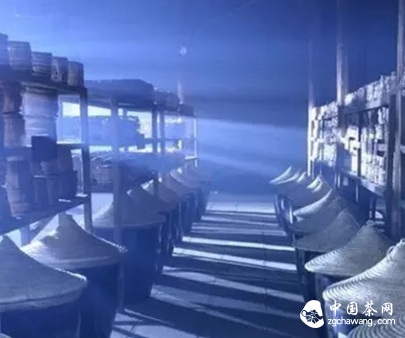
A few years ago, so-called damp storage (or traditional storage) referred to the practice of artificially increasing or maintaining storage temperature and humidity, while storage under normal daily living conditions for humans could be called dry storage (or normal storage, natural storage).
What is "storage"? "Storage" is the warehouse where tea is kept, later extended to mean the tea's storage environment and methods. Tea stored in Hong Kong using traditional methods can be called "Hong Kong storage."
What kind of storage is good storage? One type of storage represents the proportion between microbial fermentation and tea polyphenol oxidation. Different proportions produce different bodily sensations, tastes, aromas, etc. The main factors determining the quality of Pu'er tea storage are: first, the quality of the tea leaves; second, the degree of tea compression; third, storage humidity; fourth, storage temperature; fifth, the presence of beneficial microbial populations in the storage environment; and sixth, time.
[Raw Pu'er Tea Aroma and Storage] A camphor aroma that does not show a noticeable fruity note after six or seven infusions generally indicates damp storage. A light camphor aroma in the first few infusions followed by a noticeable fruity note after six or seven infusions usually indicates southern dry storage with slight dampness. A grassy note in the first few infusions followed by a fruity aroma generally indicates southern dry storage for less than twenty years. A direct fruity aroma from the first few infusions with a rich tea quality usually indicates dry storage for over fifteen years. A medicinal aroma from the first few infusions with a pronounced dissolving sensation indicates old tea over forty years, which is very valuable.
[Ripe Tea Aroma and Storage] If a "wall plaster smell" appears in the aroma (sometimes accompanied by a faint ginseng note), it generally indicates tea stored in damp conditions for over ten but less than twenty years. If a relatively pure ginseng aroma appears with a noticeable dissolving sensation, it generally indicates tea stored in damp conditions for over twenty years. The only ripe tea that produces a noticeable medicinal aroma is the "Seven Three Thick Brick" from the Cultural Revolution brick series.
Check the vitality and fermentation degree of the brewed leaves. After full brewing (generally at least eight to ten infusions), examine the brewed leaves. Based on their color, combined with the dry tea and aroma, one can judge the transformation degree of a tea. The transformation degree, combined with the production time, can roughly indicate the storage conditions. Leaves showing a greenish color indicate insufficient transformation; light brown, brown, etc., indicate a certain degree of transformation; black and shiny leaves that are hard and charred indicate over-transformation. Generally speaking, for the same production period, heavier storage leads to deeper transformation. Conversely, a deeper transformation in a shorter time indicates heavier storage.