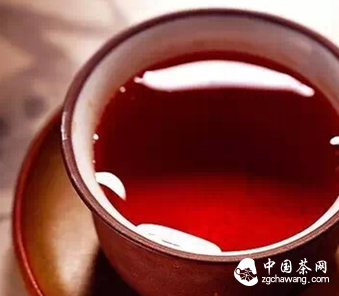
【Black Tea】
Black tea is the opposite of green tea, being a fully fermented tea (fermentation degree greater than 80%). The name "black tea" comes from its red liquor. The main varieties of Chinese black tea are:
Keemun - produced in Qimen, Zhide of Anhui, and Fuliang of Jiangxi, etc.;
Dianhong - produced in Lincang, Fohai, Shunning of Yunnan, etc.;
Huohong - produced in Lu'an, Huoshan of Anhui, etc.;
Yihong - produced in Yixing, Jiangsu;
Yuehong - produced in Anhua (Hunan Anhua Tea Factory), Xinhua, Taoyuan of Hunan, etc.;
Chuanhong - produced in Yibin, Gaoxian of Sichuan, etc.;
Yinghong - produced in Yingde, Guangdong, etc.
Among these, Keemun Black Tea is the most famous.
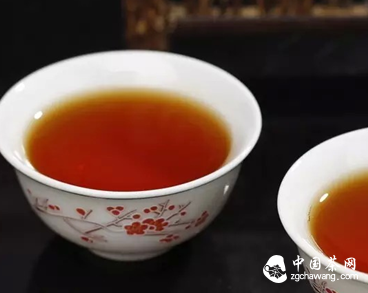
There are many varieties of black tea in the world, and the producing areas are also wide. Besides China, India and Sri Lanka also produce similar broken black tea. Congou black tea is a unique Chinese black tea variety and a traditional export commodity. The world's four high-aroma black teas are: Keemun Black Tea, Assam Black Tea, Darjeeling Black Tea, and Ceylon Highland Black Tea.
The difference between black tea and green tea lies in the processing method. During black tea processing, the fresh leaves are not subjected to enzyme deactivation (杀青). Instead, they undergo withering (losing some moisture), then rolling (kneaded into strips or cut into granules), followed by fermentation. This process oxidizes the tea polyphenols, turning them into red compounds. Part of these compounds are soluble in water, while part accumulate in the leaves, thus forming the red liquor and red leaves.
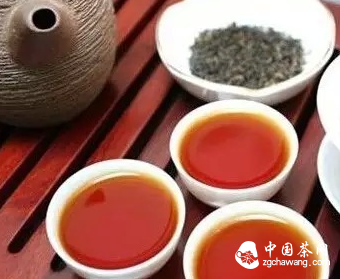
Black tea is mainly divided into three categories: Souchong black tea (Lapsang Souchong, outer mountain Souchong), Congou black tea (Keemun), and broken black tea.
Yingde black tea is produced in Yingde City, Guangdong, and belongs to the small-leaf type black tea. The tea leaves are dark black and shiny, covered with golden tips. After brewing, the liquor is particularly bright red, with a mellow, refreshing taste and endless aftertaste. Yingde black tea is produced in the Yingshan area of Yingde City, Guangdong, which was a black tea producing area as early as the first half of the 19th century.
Ninghong Congou is produced in the Wuning area of Jiangxi. It is one of the earliest Congou black teas in China. It is picked around Qingming Festival, with the standard being one bud and one leaf. The tea has tightly knotted, round, and straight strips, dark color with a reddish tinge, and a glossy appearance; its internal quality features a high, lasting aroma similar to Keemun, a mellow, sweet, and harmonious taste, and a bright red liquor. "Ninghong Golden Tips" is the finest among Ninghong Congou teas.
Huhong Congou has tightly knotted, plump strips, a long-lasting high aroma, a mellow and thick taste, and a relatively strong liquor color. Huhong Congou is produced in Anhua, Xinhua, Taoyuan of Hunan, etc., with Anhua Congou being the best.
Yuehong Congou tea has tight, thin, straight strips, a dark and moist appearance, and an elegant shape. Its internal quality features a pure, high aroma, a light red liquor, and a slightly dark leaf bottom. After brewing, the aroma is pure, the taste is strong and mellow, the liquor is bright red, and the leaf bottom is slightly dark.

Black Tea: Black tea is a tea made through fermentation. It is named for its red leaves and red liquor. Famous Chinese black teas include Anhui Keemun, Yunnan Dianhong, Hubei Yihong, and Sichuan Chuanhong.