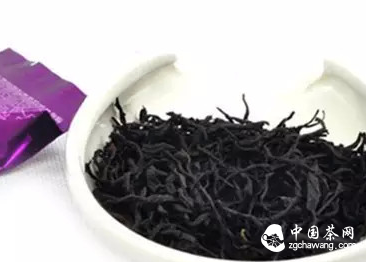
Misunderstandings about Tieguanyin Black Tea
Tieguanyin Black Tea does not mean that Tieguanyin belongs to the category of black tea. Tieguanyin is a type of blue tea (semi-fermented tea). Blue tea is what we commonly refer to as Oolong tea. It is produced from fresh Tieguanyin tea leaves through processes such as sun-withering, indoor-withering, shaking/tumbling, fixation, rolling, and drying.
The production process of Tieguanyin Black Tea is similar to that of Jin Jun Mei and Zhengshan Xiaozhong. However, its taste differs from Jin Jun Mei and Zhengshan Xiaozhong because Tieguanyin Black Tea carries the unique charm of Tieguanyin—the "Guanyin Yun" (Guanyin charm)—which is not found in other tea types.
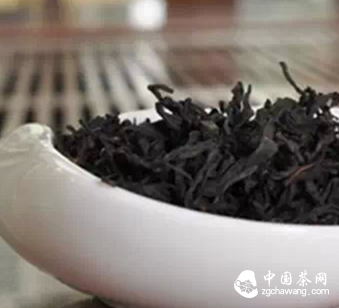
Differences Between Tieguanyin Black Tea and Other Black Teas
1. Different Tea Categories
Chinese famous teas are divided into six major categories: green tea, yellow tea, dark tea, white tea, blue tea (oolong), and black tea. Among these, Tieguanyin is classified as a blue tea (oolong). Tieguanyin Black Tea, however, should be categorized as a black tea.
2. Different Production Processes
The production method of Tieguanyin Black Tea includes the following steps: picking fresh Tieguanyin leaves → sun-withering → indoor-withering → shaking/tumbling → full fermentation → rolling → baking → finished product. Tieguanyin Black Tea effectively combines the production methods of both Tieguanyin and black tea, not entirely following either the Tieguanyin process or the traditional black tea process.
3. Different Raw Materials
Tieguanyin Black Tea specifically uses fresh Tieguanyin leaves as its raw material. Other black teas do not use Tieguanyin as their raw material.
4. Different Fermentation Degrees
Tieguanyin (oolong) is a semi-fermented tea, situated between green tea and black tea. Tieguanyin Black Tea, however, is primarily formed through "full fermentation," making it a fully fermented tea.
5. Different Liquor Color and Leaf Base
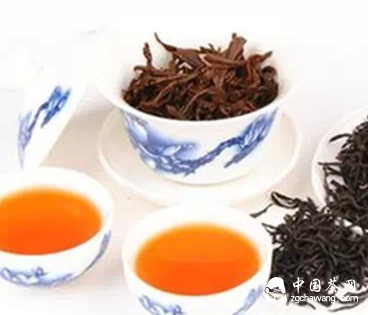
Because Tieguanyin Black Tea undergoes "full fermentation," the originally colorless polyphenolic substances in the tea leaves are oxidized under the catalysis of polyphenol oxidase, forming red oxidation polymers—black tea pigments. Part of these pigments is soluble in water, creating a red tea liquor after brewing; another part is insoluble, accumulating in the leaves and turning them red. This results in a significant difference from the yellowish-green liquor and leaf base of traditional Tieguanyin tea.
6. Different Quality Characteristics
Tieguanyin Black Tea combines the aromatic charm of Tieguanyin with the mellowness of black tea. Although its charm may not match that of traditional Tieguanyin, compared to ordinary black teas, it offers more flavor and a sweeter aftertaste.