In recent years, Pu-erh tea has become a hot topic of social concern. The price of raw materials from ancient large-leaf tea trees in specific "mountain areas" of Yunnan Province has been continuously rising. The spring raw tea from individual famous village ancient trees has climbed from tens, hundreds, or thousands of yuan per kilogram to tens of thousands of yuan. More and more people are beginning to engage in the collection of Pu-erh tea. So, what exactly is the value of Pu-erh tea?
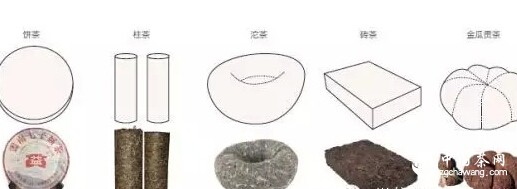
Classification of Pu-erh Tea by Shape
Origin and Classification
Pu-erh tea is a type of loose tea and compressed tea made from Yunnan large-leaf sun-dried green tea within certain regions of Yunnan Province, using specific processes involving fermentation and processing. It mainly uses arbor-type large-leaf tea grown in high-altitude areas of the six major tea mountains along the middle and lower reaches of the Lancang River, such as Xishuangbanna, Simao, and Lincang. Particularly, ancient tree tea several hundred years old from ancient tea mountains like Menghai, Zhenyuan, Jingmai, Yiwu, Jingdong, Jinggu, Nannuo Mountain, and Bulang Mountain is considered superior.
By shape: Divided into cake tea, brick tea, tuo tea, pillar tea, golden melon tribute tea, etc.
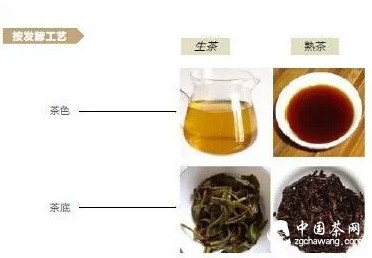
By fermentation process: Divided into raw tea (sheng cha) and ripe tea (shou cha). Raw tea is made from fresh leaves of Yunnan large-leaf tea trees grown under environmental conditions suitable for Pu-erh tea production. It undergoes processes like fixation, rolling, sun-drying, and then steaming and compression to form sun-dried raw tea or compressed tea. Ripe tea is made from Yunnan large-leaf sun-dried raw tea meeting Pu-erh's environmental conditions. It undergoes a pile-fermentation (wo dui) process, an artificial fermentation that accelerates the biological and physical ripening of the tea, resulting in a tea with a mellow taste and thick red liquor. Through processes like oxidative enzymatic hydrolysis, saccharification, and multi-strain biological chain fermentation, ripe tea produces various physiochemical substances beneficial to human health, such as compounds with lipid-lowering effects like lovastatin and simvastatin, as well as tea polysaccharides and tea pigments with anti-tumor effects.
Identifying Tea through Tea Liquor and Tea Leaves
Effects and Suitable Drinkers
The value of Pu-erh tea lies in the resource value and quality value of large-leaf ancient tree tea, as well as its functional value for the human body.
Value Preservation and Appreciation: For commercial purposes, one can store sun-dried raw tea from different "mountain area" ancient trees by year and grade, and then blend and compress or pile-ferment it according to market demand to produce raw or ripe tea of different vintages. For personal consumption, one can directly purchase high-quality pure material from specific "mountain area" ancient trees or harvest from designated trees, then commission a reputable factory for regular, quantitative processing and purposeful collection. Alternatively, one can directly purchase products from research institutions or well-known, reputable brands for regular, quantitative collection.
Differentiated Drinking: From the perspective of traditional Chinese medicine's yin-yang theory, young tree tea tends to be cooling, while old tree tea tends to be warming. Some scholars have compared the content of theine, tea polyphenols, etc., in century-old or even millennium-old ancient tree tea with that in young tree tea (terrace tea). The content in old tree (ancient tree) tea is far lower than in young tree tea, making its nature relatively sweet and warm, suitable for middle-aged and elderly people or those with a cold constitution. Therefore, people with spleen and stomach deficiency-cold will not experience significant gastrointestinal irritation when drinking ancient tree sun-dried raw tea.
Health Effects: The main health benefits of Pu-erh tea for the human body are most notably lowering blood lipids, followed by antioxidant effects (anti-cell aging) and inhibiting tumor cell differentiation and growth. Specifically, raw Pu-erh is beneficial for antioxidants; middle-aged Pu-erh containing statin components is beneficial for lowering blood lipids; and aged Pu-erh with dark liquor, high durability, and rich in tea pigments is beneficial for cancer prevention.
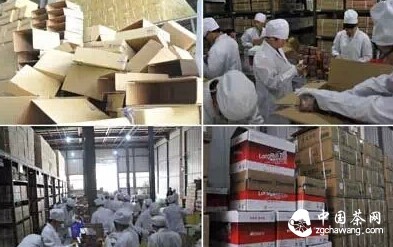
Storage conditions for Pu-erh should be ventilated, dark, with moderate temperature and humidity.
Storage Methods
Different collectors with different commercial purposes all pay attention to the element of storage conditions.
Away from Odors: Set up separate storage spaces according to the type—raw tea or compressed tea. The storage room should be away from areas with heavy pesticide, chemical, or air pollution. Private collections should have a separate storage space to prevent harmful pollution or odor absorption, such as chemical products from indoor decoration like paint, cosmetics with different scents, indoor incense burning, mosquito coils, insecticides, etc.
Mind Temperature and Humidity: Whether raw or ripe tea, storage should involve keeping it off the ground. Raw tea suits environments with higher humidity, while ripe tea suits dry environments. Regions with distinct four seasons and relatively high altitude are more conducive to the periodic, rhythmic aging of Pu-erh tea's biological chain. Excessive humidity or rainy seasons, while promoting rapid fermentation of raw tea, also have drawbacks for its long-term quality. Although certain molds' metabolism, growth, and reproduction are promoted in high-humidity environments, some physiochemical functional substances they produce may not be beneficial to humans, typically manifesting as a damp storage smell or moldy taste. Therefore, storage conditions should be ventilated, dark, with moderate temperature and humidity—avoiding extreme wet or dry storage. Letting it age naturally is best for quality optimization.
Storage Containers: For statin Pu-erh tea produced using modern scientific processes with cultured bacterial inoculation, after standardized data testing confirms its fixed statin content, it can be stored vacuum-sealed to maintain the stability of its lipid-lowering function and taste profile. For both raw and ripe tea, it is best to choose conditions with breathability but not completely anaerobic, such as bamboo baskets, bamboo crates, pottery jars, or pottery pots. For raw tea storage, a basement with moderate temperature, humidity, and good ventilation is ideal. Rock caves are also suitable places for storing Pu-erh tea, but this requires scientific basis, proper design of temperature and humidity control systems, and designated personnel for registration, observation, adjustment, and recording of relevant data.