How to Identify the Quality of Anji White Tea with Pictures and Text Analysis?
Step One: Weighing and Sampling
Weigh 3g of Anji White Tea, taking 3g for each of the 5 samples.
Step Two: Appraising the Dry Leaves
Appraisal of Appearance (Appraise the taken samples in terms of color, strip shape, integrity, cleanliness, etc.).
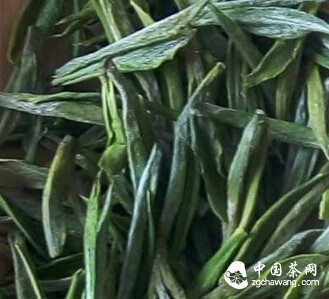
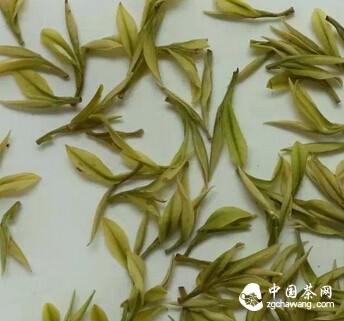
Sample One: The shape is straight and slightly flat, leaf edges are curled, buds and leaves are connected, color is vibrant emerald green, white down is evident, buds are plump.
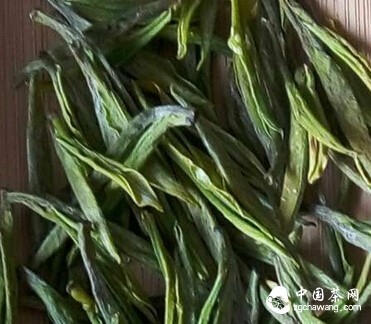
Sample Two: Buds are plump, white down is evident, color is emerald green with golden edges, leaf edges are curled, shape is straight and slightly flat, buds are longer than leaves.
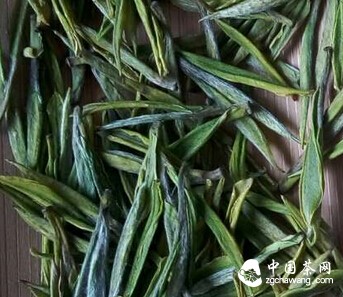
Sample Three: Color is emerald green with golden edges, shape is straight and slightly flat, white down is evident, leaf edges are curled, buds are plump, buds are longer than leaves. (Samples Two and Three look very similar in appearance)
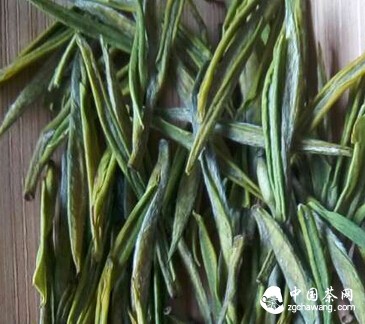
Sample Four: The shape is slender and elegant, color is greenish-yellow with golden edges, shape is straight and slightly flat, leaf edges are curled, buds are relatively thin and small, white down is not obvious.
Sample Five: Color is vibrant emerald green, white down is visible, buds are plump, strip shape is curled.
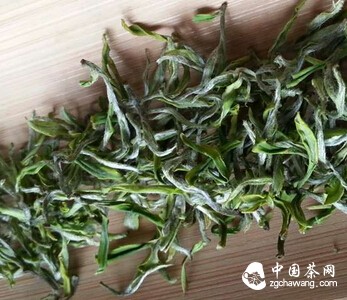
Appraisal standard for Anji White Tea appearance: Tenderness is superior with abundant, plump downy buds and fat, tender leaves; buds that are thin, small, and sparse indicate lower quality. Leaves lying flat and舒展, leaf edges heavily curled, leaf surfaces with raised波纹, buds and leaves connected and slightly gathered, leaf tips upturned and not broken represent the optimal quality.
From this, it can be summarized that Samples One, Two, and Three possess the appearance characteristics of top-grade tea. Sample Four has thinner, smaller buds, so its appearance is slightly inferior. Of course, Sample Five is not made using the traditional Anji White Tea processing technique, so its appearance is not worth detailed discussion.
Step Three: Brewing and Appraisal
First, boil a pot of water to boiling point (This is not a joke; professional appraisal actually requires brewing tea leaves with 100°C boiling water to fully extract the substances from the leaves), then brew the tea leaves with boiling water for 3 minutes.
Sample One: Liquor color is tender green and bright, aroma is clear, high, and持久.
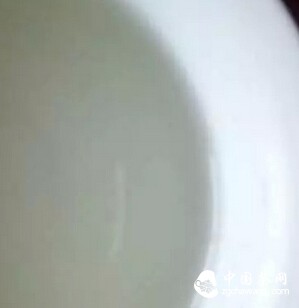
Sample Two: Liquor color is green and bright, aroma is clear but not持久.
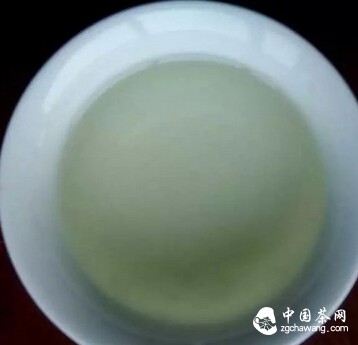
Sample Three: Liquor color is green and bright, aroma is clear with a hint of bean fragrance.

Sample Four: Liquor color is green and尚明亮, aroma is clear with a hint of bean fragrance.
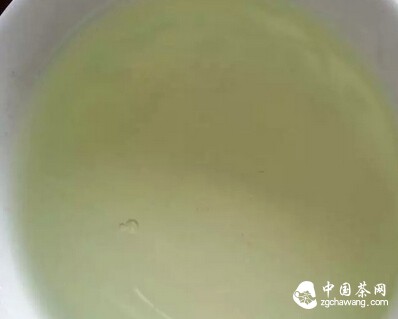
Sample Five: Liquor color is tender green and bright, aroma is tender but带有水闷气 (stuffy/steamed odor).
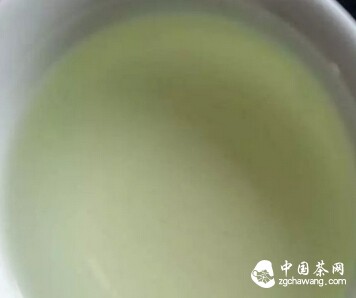
Anji White Tea liquor color is generally superior when it is tender green, tender yellow, clear, and bright. Aroma is better when it is fresh, pure, and correct; the presence of greenish odor, thinness, or a fermented sensation indicates poorer quality.
The taste of the five Anji White Tea samples
Sample One: Fresh, mellow, slightly爽口 (refreshing)
Sample Two: Mellow and harmonious, leaves a lingering fragrance in the mouth
Sample Three: Fresh and mellow, leaves a lingering fragrance in the mouth
Sample Four: Mellow and thick, slightly bitter and astringent
Sample Five: Bitter and astringent
In terms of taste, Anji White Tea is superior when it is fresh,爽口, mellow, thick, and sweet; coarse, astringent, and thin tastes indicate poorer quality.
Step Four: Appraising the Brewed Leaves
Sample One: Leaf flesh is jade white, leaf veins are emerald green, buds are plump, buds are longer than leaves,尚匀整, brewed leaves are soft and bright.
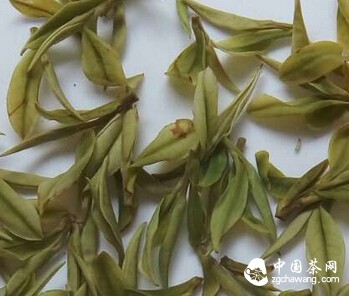
Sample Two: High degree of albinism, leaf flesh is white, leaf veins are emerald green, natural shape, individual pieces visible, has some reddened leaves, relatively匀整, soft and bright.
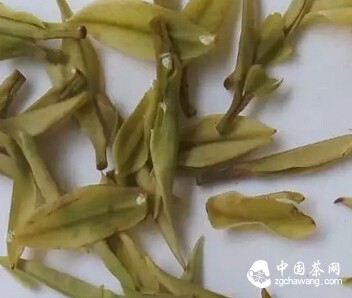
Sample Three: High degree of albinism, leaf flesh is white, leaf veins are emerald green,匀整, soft and bright, buds are plump, buds and leaves are connected, natural shape.
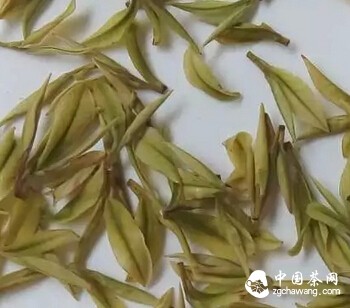
Sample Four: Brewed leaves are green and bright, buds are relatively thin and small, soft,尚匀整, natural shape.
Sample Five: Brewed leaves are tender green and bright, soft, buds are plump,匀整, buds and leaves are connected, orchid shape.
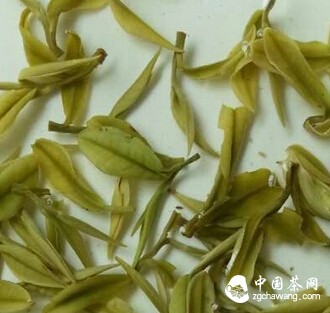
Anji White Tea brewed leaves are generally superior when they are匀整, fat and soft, with many壮多 downy buds, and鲜亮 leaf color; stiff, broken,暗杂,花红 (variegated red),黄张 (yellow leaves),焦叶红边 (burnt leaves with red edges) indicate poorer quality.
Comprehensive evaluation concludes that Sample One and Sample Three have the best tea quality, Sample Two and Sample Four are次之, and the last sample is较差.
Source: Tea Encyclopedia