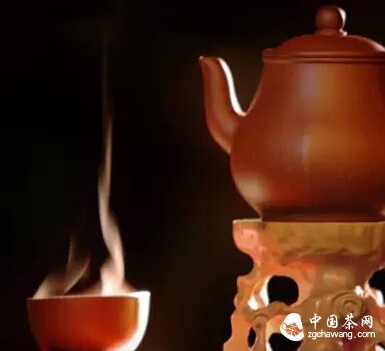
Tea leaves aroma composition is complex, and its formation is influenced by many factors. Variety, region, cultivation conditions, fresh leaf quality, processing methods, and more all affect the aroma of tea. The aroma of finished tea can be summarized into the following nine types. Let's take a look together. What aroma type is the tea in your cup?
【Hao Xiang Type (Pekoe Aroma)】
Dry tea with prominent white pekoe releases a characteristic aroma when brewed, known as "hao xiang." Any fresh leaf with pekoe, tenderness at one bud and one leaf or above, processed normally, may have this pekoe aroma.
Tea examples: Silver Needle teas typically have a classic pekoe aroma. Also, some Maojian and Maofeng teas have a tender aroma with pekoe notes. Examples include Baihao Yinzhen, Junshan Yinzhen, Huangshan Maofeng, etc.
【Nen Xiang Type (Tender Aroma)】
A fresh and tender aroma of tea leaves. When fresh leaves are tender and soft, at the stage of one bud and two initial leaves, and processed promptly, they will carry a tender aroma.
Tea examples: Various Maojian and Maofeng teas, such as Duyun Maojian, Ziyang Maojian, Emei E'rui, Yandang Maofeng, etc.
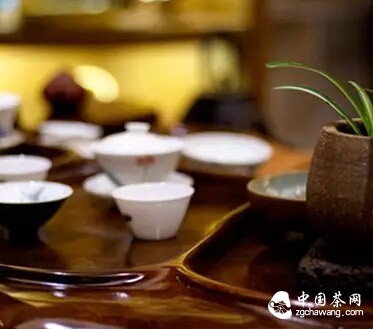
【Hua Xiang Type (Floral Aroma)】
Tea emits aromas similar to various fresh flowers. Based on the character of the floral scent, it can be divided into two types: fresh floral (qing hua xiang) and sweet floral (tian hua xiang). Fresh floral aromas can include orchid, gardenia, chloranthus, aglaia, honeysuckle, etc. Sweet floral aromas include magnolia, osmanthus, rose, and crimson glory vine. There are many varieties. Generally, when fresh leaf tenderness is one bud and two leaves, and processing is appropriate, some floral characteristics may appear.
Tea examples: Teas with floral aroma include oolong tea, scented tea, and some green teas and black teas. Oolongs like Tieguanyin, Baozhong, Fenghuang Dancong, Shuixian, Langcai, and Taiwanese oolongs have distinct floral notes. For scented teas, different teas have their respective floral aromas, with jasmine being a predominant one. Among green teas, Tongcheng Xiaolanhua, Shu City Xiaolanhua, Yongxi Huoqing, and high-grade Shu Green have elegant orchid fragrances.
【Guo Xiang Type (Fruity Aroma)】
Tea emits aromas similar to various fruits, such as peach, pear, bergamot, orange, plum, citron, pineapple, longan, apple, etc.
Tea examples: Northern Fujian oolongs and some varietal teas belong to this aroma type. Black tea often carries an apple-like aroma, such as Bailin Gongfu, Dianhong Gongfu, etc.
【Qing Xiang Type (Clean/Fresh Aroma)】
This aroma type includes fresh (qing xiang), fresh and lofty (qing gao), pure and fresh (qing chun), upright and fresh (qing zheng), and refreshing (qing xian). It is generally found in green teas where fresh leaves are tender at one bud, two or three leaves, and processed normally and promptly. Also, a few yellow teas with lighter pile-fermentation and insufficient drying fire, as well as oolongs with lighter shaking/tumbling and roasting, may have this aroma.
Tea examples: Clean aroma is typical for green teas, such as Zhuyeqing, Enshi Yulu, Mengding Huangya. Additionally, the light-scented Tieguanyin also belongs to this type.
【Tian Xiang Type (Sweet Aroma)】
This aroma type includes fresh sweet (qing tian xiang), sweet floral (tian hua xiang), dried fruit (gan guo xiang), sweet date (tian zao xiang), orange (ju zi xiang), honey (mi tang xiang), longan (gui yuan xiang), etc. When fresh leaf tenderness is one bud, two or three leaves, and processed using black tea methods, these characteristics may appear.
Tea examples: Sweet aroma is the typical aroma type for Gongfu black teas, such as Yihong Gongfu, Dianhong Gongfu, Minhong Gongfu, etc.
【Huo Xiang Type (Fire/Roasted Aroma)】
When fresh leaves are relatively mature, contain more stems, and undergo high and sufficient baking/firing during processing, causing caramelization of sugars. This aroma type includes rice cake fragrance (mi gao xiang), high-fire aroma (gao huo xiang), aged-fire aroma (lao huo xiang), and rice crust aroma (guo ba xiang).
Tea examples: Teas of this type include Huang Da Cha, Wuyi Rock Tea, etc.
【Chen Chun Xiang Type (Mellow Aged Aroma)】
Like Yunnan Pu'er tea, Guangxi Liubao tea, and Hunan dark tea, during long-term storage accompanied by continuous post-fermentation and other changes, they gradually develop a mellow aged aroma over time. The "aging becoming more fragrant" and "aged charm" highly regarded by many Pu'er enthusiasts mainly refer to this aroma type.
Tea examples: Teas of this type include aged Pu'er tea, Liubao tea, etc.
【Song Yan Xiang Type (Pine Smoke Aroma)】
Any tea that undergoes a smoking process during the drying stage using pine, cypress, maple balls, yellow vine, etc., generally possesses a pine smoke aroma.
Tea examples: Teas of this aroma type include Lapsang Souchong (a smoked black tea), Weishan Maojian, Liubao tea, and dark raw tea (hei mao cha). Often, the aroma is a comprehensive presentation of various types, possibly dominated by one or several.