We often say to cherish life, why? Because life is precious to us as it comes only once. But have you ever heard of a living thing that possesses three lives? Yes, that is tea leaves. Below, the editor will discuss the three lives of tea leaves with everyone.
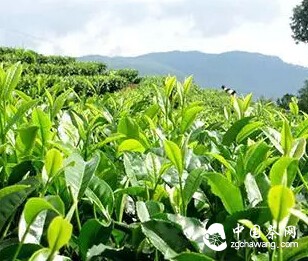
Tea leaves have three lives. The first is when they grow on the tree. The leaves live freely on the tea plant. When the tea tree matures from a young plant and enters formal production, light pruning and deep pruning are used to maintain vigorous growth and stable, high yield. Light pruning stimulates bud germination, facilitating picking and management. Deep pruning removes tangled branches, breaks through nodal obstructions, allowing a new crown to form and restoring or increasing yield.
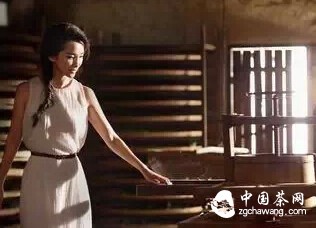
The second life of tea leaves occurs during the process where tea farmers pick, pan-fry, knead, and roll them, eventually shaping them into their unique tea form. Tea production is influenced not only by weather but also by the different techniques of the workers during frying, which affects the tea's flavor. Hence, we often say, "Rely on the heavens for harvest, rely on people to make tea."
Pan-frying tea was an idea proposed by Zhu Yuanzhang, the founding emperor of the Ming Dynasty. In the early years of the Ming Dynasty, tribute tea came from all directions, with the most precious being "Dragon and Phoenix Cakes." This type of tea processing involved steaming and grinding, using rice flour as a binder to press it into a specific shape. When drinking, the tea cake was roasted and then crushed into fine powder, with added ginger, scallions, tangerine peel, salt, etc., and boiled into a porridge-like state before consumption. Zhu Yuanzhang considered this too troublesome and believed it obscured the tea's true fragrance. He instructed tea farmers to use the pan-frying method to produce loose, strip-shaped tea, similar to today's green tea that can be brewed without additives. This green tea primarily uses a combination of techniques for fixation and drying.
A foreign poet once wrote: "From a cup of Chinese green tea, I see the spring of China." If tea leaves were not pan-fired, their life would not be so vibrant.
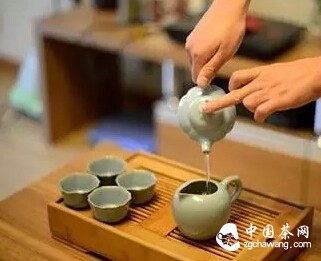
The third life of tea leaves is when the drinker revives them with water, allowing them to stretch fully one last time and repay those who know how to appreciate them with the essence of their life.
"Draw river water to brew new tea; buy all the green mountains as a painted screen." This couplet by Zheng Banqiao describes both a real scene and a genuine feeling. The phrase "buy all" transforms the ordinary into the magical, brimming with boundless sentiment. The life of tea leaves is contained within it. Normal Biluochun has a relatively soft and bright color. After brewing with boiling water, it appears gentle, bright, and vibrant, with small white hairs on the leaves. When tea meets water, it resembles elegant ink painting or vigorous cursive script in the cup. The slender, spiral-curled strands of Biluochun slowly stretch out their graceful posture. The liquor is clear, the leaves are tender green, and a fruity fragrance wafts over.
This is how the life of tea leaves comes to us, adding joy, enhancing moments, making our lives more fulfilling and meaningful.
Tea leaves have three lives. Each life presents itself to us in a different form, each interprets the meaning of life in a different way, and each blooms with the most beautiful brilliance of life.