Da Hong Pao (A Famous Chinese Tea Variety)[dà hóng páo]
Wuyi Rock Tea is a traditional Han Chinese famous tea. It is produced in the Wuyi Mountains of Fujian, renowned for their spectacular scenery. The tea trees grow in rock fissures, earning it the reputation as the 'King of Teas.' Wuyi Rock Tea possesses the fresh fragrance of green tea and the sweet mellowness of black tea, making it the finest of Chinese oolong teas and one of China's Top Ten Famous Teas. Among them, Da Hong Pao has gained worldwide fame.
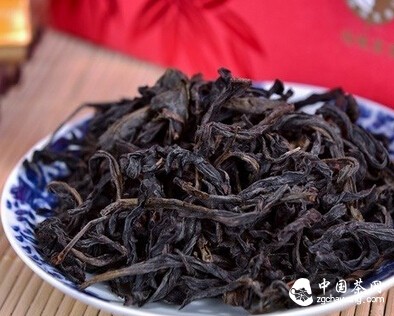
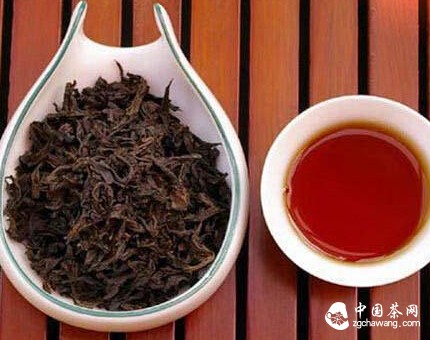
The tea Da Hong Pao, produced in the Wuyi Mountains of Fujian, is of exceptional quality. Wuyi Rock Tea has the fresh aroma of green tea and the sweet, mellow taste of black tea, representing the pinnacle of Chinese oolong tea. As a special famous tea of China, modern scientific research, both domestic and international, has confirmed that Da Hong Pao not only shares the general health benefits of tea—such as refreshing the mind, eliminating fatigue, promoting salivation and diuresis, relieving heat and preventing sunstroke, sterilizing and reducing inflammation, detoxifying and preventing illness, aiding digestion and removing greasiness, and slimming and beautifying—but also demonstrates outstanding special effects in preventing cancer, lowering blood lipids, and anti-aging.
Historical Records
According to the nationally compiled higher agricultural textbook 'Tea Processing Methods of the Ming and Qing Dynasties':
Wuyi Rock Tea has a long history. Historical records indicate that tea was cultivated and processed in the Tang Dynasty, and it was already used as a gift among the Han people. In the Song Dynasty, it was listed as a royal tribute. During the Yuan Dynasty, a 'Roasting Bureau' and 'Imperial Tea Garden' were established in the Wuyi Mountains specifically for harvesting and processing tribute tea. The creation of oolong tea began in the late Ming and early Qing dynasties. The tea tree varieties planted in the Wuyi Mountains are numerous, including the 'Four Famous Bushes': Da Hong Pao, Tie Luo Han, Bai Ji Guan, and Shui Jin Gui. Additionally, there are varieties named after their growing environment, such as Bu Jian Tian (Never See Sky) and Jin Suo Shi (Golden Key); named after the shape of the tea tree, such as Zui Hai Tang (Drunk Crabapple), Zui Dong Bin (Drunk Immortal), Diao Jin Gui (Hooking Golden Turtle), Feng Wei Cao (Phoenix Tail Grass), Yu Qi Lin (Jade Unicorn), and Yi Zhi Xiang (One Branch Fragrance); named after the leaf shape, such as Gua Zi Jin (Melon Seed Gold), Jin Qian (Golden Coin), Zhu Si (Bamboo Silk), Jin Liu Tiao (Golden Willow Strip), and Dao Ye Liu (Inverted Leaf Willow); named after the sprouting time, such as Ying Chun Liu (Welcome Spring Willow) and Bu Zhi Chun (Unknown Spring); and named after the aroma of the finished tea, such as Rou Gui (Cinnamon), Shi Ru Xiang (Stone Milk Fragrance), and Bai She Xiang (White Musk). During the Kangxi period of the Qing Dynasty, it began to be exported to Western Europe, North America, and Southeast Asian countries. At that time, Europeans referred to it as 'Bohea Tea,' using it as a general term for Chinese tea.
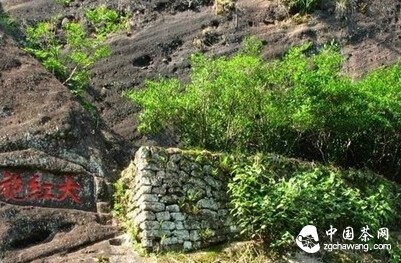
On the stone wall of Jiulongke (Nine Dragon Nest) at Tianxin Rock, there are currently six surviving tea trees. Counting from the first tree at the upper level next to the 'Da Hong Pao' stone carving, they are numbered in sequence: four trees in the upper level (historically called the original plants), numbered 1, 2, 3, 4; one tree in the middle level as 5; and one tree at the bottom level as 6. According to investigation and observation, although these six trees belong to the same type, they have evolved from the sexual population variety of Wuyi Cai Cha through long-term natural hybridization, thus exhibiting individual differences. They can be roughly divided into three different strains.
Trees 3 and 4 mature early, have short internodes, small and long leaves, smooth leaf surfaces, shallow serrations, and flat leaf edges. When made into oolong tea, they exhibit a pronounced 'rock rhyme' (with a palm leaf aroma), relatively strong fragrance, a mellow and not bland taste, and a yellowish-bright but slightly dark brewed leaf. Trees 2 and 6 mature at a medium pace, have short internodes, small oval-shaped leaves, tender leaf texture, fine and indistinct serrations, and flat leaf edges. The oolong tea made from them has a higher aroma, a mellow but slightly thin taste, a yellowish-bright brewed leaf with an appropriate red edge on green leaves. Trees 1 and 5 mature the latest, with coarse and deep serrations and wavy leaf edges. The dried tea made from them has a stronger aroma than trees 3 and 4, but not as strong as trees 2 and 6. The taste is similar to trees 2 and 6, with a yellowish-bright brewed leaf.
Efficacy
Da Hong Pao is the most prestigious tea tree in the Wuyi Mountains, hailed as the 'King of Teas.' It grows on a steep cliff within Jiulongke. On the cliff where the tea trees are located, there is a narrow rock crevice from which spring water drips year-round. The water carries organic matter like moss, making the soil more moist and fertile compared to other places. The rock walls on both sides of the tea trees are upright, resulting in short sunlight exposure and minimal temperature variation. Additionally, with the careful management by tea farmers and the involvement of the most skilled tea masters using specially made tools during picking and processing, Da Hong Pao's finished tea possesses unique qualities and special medicinal effects.
It brightens the eyes and benefits thinking, lightens the body (aids weight loss), resists aging (delays aging), refreshes the mind, invigorates the stomach and aids digestion, promotes diuresis and detoxification, relieves phlegm and treats asthma, quenches thirst and relieves summer heat, resists radiation, prevents and fights cancer, anti-aging, lowers blood lipids, lowers blood pressure, reduces cholesterol, etc.
Functions
1. Stimulating Effect: The caffeine in tea can stimulate the central nervous system, helping to refresh the spirit, enhance thinking, eliminate fatigue, and improve work efficiency.
2. Diuretic Effect: Caffeine and theophylline in tea have a diuretic effect, used to treat edema and fluid retention. The detoxifying and diuretic effects of black tea with sugar water can treat acute icteric hepatitis.
3. Cardiotonic and Antispasmodic Effects: Caffeine has the effects of strengthening the heart, relieving spasms, and relaxing smooth muscles. It can relieve bronchial spasms, promote blood circulation, and is a good auxiliary medicine for treating bronchial asthma, relieving cough and phlegm, and myocardial infarction.
4. Inhibiting Arteriosclerosis: Tea polyphenols and vitamin C in tea both have the effect of promoting blood circulation, removing blood stasis, and preventing arteriosclerosis. Therefore, among frequent tea drinkers, the incidence of hypertension and coronary heart disease is lower.
5. Antibacterial and Bacteriostatic Effects: Tea polyphenols and tannic acid in tea act on bacteria, coagulating bacterial proteins and killing them. It can be used to treat intestinal diseases such as cholera, typhoid, dysentery, and enteritis. For skin sores, ulceration with pus, or broken skin from trauma, washing the affected area with strong tea has anti-inflammatory and bactericidal effects. It also has certain therapeutic effects for oral inflammation, ulceration, and sore throat.
6. Weight Loss Effect: Various compounds in tea such as caffeine, inositol, folic acid, pantothenic acid, and aromatic substances can regulate fat metabolism. Especially, oolong tea has a good decomposing effect on protein and fat. Tea polyphenols and vitamin C can lower cholesterol and blood lipids, so drinking tea can aid weight loss.
7. Anti-caries Effect: Tea contains fluorine. Fluoride ions have a great affinity with the calcium in teeth, forming a substance relatively difficult to dissolve in acid called 'fluorapatite,' acting like a protective layer for the teeth, improving their acid resistance and anti-caries ability.
8. Inhibiting Cancer Cells: It is reported that flavonoids in tea have varying degrees of anti-cancer effects in vitro, with stronger ones including vitexin, morin, and catechins.
9. Helps Lower Lipids and Aid Digestion. Caffeine in tea can increase gastric juice secretion, helping digestion and enhancing the ability to break down fat. This is the principle behind the saying 'long-term consumption makes one slim.'
10. Helps Protect Teeth and Brighten Eyes. The relatively high fluorine content in tea is beneficial for preventing dental caries and protecting and strengthening teeth. Components like vitamin C in tea can reduce the opacity of the eye lens. Regular tea drinking has positive effects on reducing eye diseases and protecting eyesight.