Tea quality includes its innate composition and proportions, aroma, taste, shape, color, and types of chemical changes. Many factors affect tea quality, and the author believes they mainly focus on the following 17 aspects:
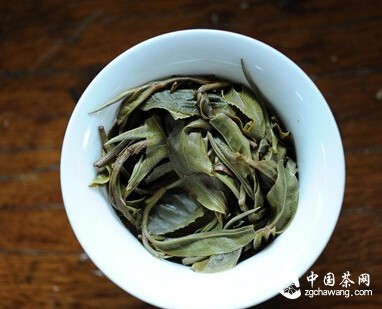
First, the tea variety. Different types of tea leaves have distinct compositions, proportions, aromas, tastes, shapes, and colors. For example, large-leaf tea differs from small-leaf tea; Longjing tea differs from Oolong tea, etc. Besides large-leaf, medium-leaf, willow-leaf, small-leaf, black tea, and purple tea, the Six Great Tea Mountains also produce oval-leaf tea and tender red tea.
Second, soil. Lu Yu's "The Classic of Tea" from the Tang Dynasty states: "As for the land, the best grows on weathered rock, the medium on gravelly soil, and the poorest on yellow earth." The "Products" section of the Qing Dynasty's "Puer Prefecture Records" notes: "Among the many small hills, Mansong produces the best. Generally, tea nature prefers slopes with red soil mixed with sand and stones for more fragrance." Ruan Fu's "Records of Puer Tea" from the Qing Dynasty also states: "It is also said tea grows in six mountains, its aroma varying with soil properties. That grown on red earth or soil mixed with stones is best for digestion, dispelling cold, and detoxification." Even the same tea variety grown in different soils will differ in composition, aroma, taste, and color.
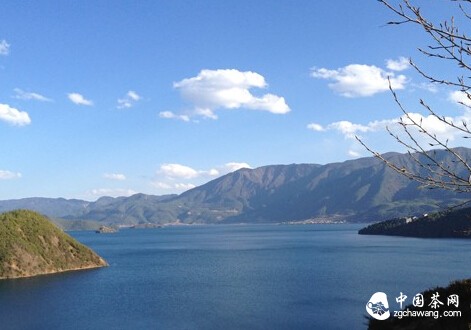
Third, climate. The same tea variety grown in similar soil but under different climates will have different quality. Climate is influenced by latitude and altitude. Under the same soil and latitude, tea grown at higher altitudes is superior to that grown at lower altitudes. Tea from the "Ancient Six Great Tea Mountains" within their specific latitude and longitude generally has a well-balanced and moderate bitterness and astringency, and it is more durable for multiple infusions.
Fourth, tree form and natural growth. For the same tea variety on the same hillside and of the same age, tea from bushes pruned into shrubs differs from that allowed to grow freely as trees in composition, aroma, taste, and color. Seed-propagated tea seedlings are inherently arborescent; vegetatively propagated seedlings are inherently shrubby.
Fifth, degree of sun exposure or shade. All other factors being equal, tea grown in sunny areas is superior to that in shaded areas. Lu Yu's "The Classic of Tea," Volume I, states: "Tea from shady northern slopes and valleys is not suitable for picking; its nature is stagnant and can cause abdominal masses."
Sixth, cultivation management methods and nutrient types. Tea plants spaced widely and growing naturally and harmoniously among various trees receive ample natural nutrients, leading to robust growth and budding. Densely planted tea without intermingling with other trees, or growing among weeds, often suffers from nutritional deficiencies, causing sickly buds and more pests. Lu Yu's "The Classic of Tea," Volume I, states: "Wild-grown is superior, garden-grown is second."
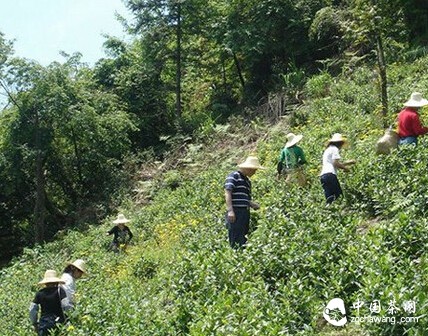
Seventh, tree age. The "Products" section of the Qing Dynasty's "Puer Prefecture Records" notes: "The tenderness or maturity of the tea also distinguishes it." For tea from the same hillside, same variety, same tree form, and same cultivation and nutrient conditions, the taste of older trees is purer, sweeter, and more durable than that of younger trees; younger tree tea tends to be more bitter and astringent.
Eighth, harvesting season. Tea picked on sunny days is better than on cloudy days; tea picked on cloudy days is better than on rainy days. Lu Yu's "The Classic of Tea," Volume I, states: "Generally, tea picking occurs in the second, third, and fourth months... On the day, do not pick if it rains; do not pick if it is sunny but cloudy; pick only when it is clear." All other factors being equal, spring tea is superior to autumn tea ("Guhua" tea) in color and taste, and autumn tea is superior to summer tea ("Xiaoman" tea).
Ninth, ecological aspects, including the ecological nature of nutrients absorbed and plant health care. All other factors being equal, tea that grows naturally mixed with other trees, nourished solely by organic fertilizers composed of various humus, or supplemented with manure or green manure, is inherently superior to tea treated with chemical fertilizers. Tea that relies entirely on birds, parasitic wasps/butterflies as natural pest control, along with leaf pruning during picking, and grows healthily without any pesticide spraying, is far superior to tea from ecologically imbalanced, pest-prone areas requiring pesticide use.
Tenth, the tenderness, length, and health of the picked leaves. For otherwise identical tea, picking younger, shorter buds results in better shape and color but increases astringency and reduces durability for multiple infusions. Picking older, longer leaves worsens shape and color but enhances pureness of taste, especially sweetness, aroma, and durability. Therefore, the tenderness and length of picking should be appropriate, generally one bud with two leaves being ideal to balance taste and appearance.
Lu Yu's "The Classic of Tea," Volume I, states: "Bud-like shoots are superior, sprouting buds are second; curled leaves are superior, unfolded leaves are second."
Eleventh, odors in and around the tea grove. Tea groves surrounded by fragrant plants yield tea with excellent aroma; those near unpleasant odors yield inferior aroma. Therefore, planting rubber trees near tea groves is not advisable.
Twelfth, deactivation (kill-green) and rolling techniques. Deactivation methods include manual pan-firing by farmers, and steaming, oven-drying, and sun-drying at processing factories. Pan-firing is considered the best. The Six Great Tea Mountains have traditionally used manual pan-firing for wilting.
Deactivation intensity refers to whether the initial temperature when fresh leaves meet the pan is below, above, or just at the optimal standard. Too low a starting temperature causes 'smothering'; too high risks scorching and uneven deactivation. Deactivation timeliness refers to the time interval between picking and deactivation. Leaves deactivated after overnight delay turn black; summer leaves deactivated before surface moisture dries also turn black. Leaves sun-dried immediately after deactivation turn yellowish. Lu Yu's "The Classic of Tea," Volume I, states: "Overnight processing turns it black, same-day processing turns it yellow."
Deactivation degree relates to temperature and duration. Under-deactivation not only results in poor shape and color of the dried rough tea, greenish tea liquor, but also a raw, grassy taste. Over-deactivation turns leaves black, hard to separate, even charred with a burnt taste. Therefore, extending frying time at appropriate temperature is advisable.
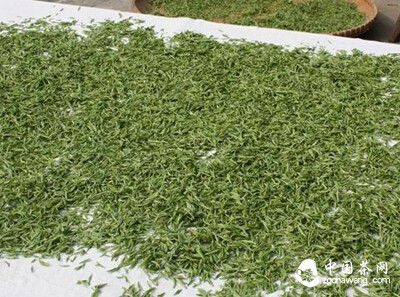
Thirteenth, drying method, timeliness, and hygiene of the drying area. Drying methods mainly include sun-drying, oven-drying, and baking. Sun-drying is far superior to oven-drying; oven-drying is superior to baking. Timely drying is better than delayed drying, but leaves dried after one day age faster than those dried the same or next day. Baking with smoky fire imparts a smoky odor; delayed baking after three days causes sour or spoiled flavors. Oven temperature should not be too high, ideally around 32°C to 36°C.
Commonly referred to "oven-dried green" and "sun-dried green" actually refer not to the deactivation method but to the drying method after pan-firing.
Fourteenth, material selection and production standards. Higher selection and production requirements yield superior final products. Material selection includes purchasing which rough tea and selecting which parts during screening. Production requirements include screening, blending, steaming/pressing, drying, packaging, etc. Screening is a key and labor-intensive step. Low standards require basic removal of yellow flakes and debris, sifting out fine powder. High standards additionally require removal of leaves that are black and dull (from smothering or uneven deactivation), varicolored, brownish, yellowish, reddish, greenish, as well as moldy leaves, clumps, fragments, old stems, etc. Tea cakes should have uniform thickness, moderate tightness, deep central indentation, and smooth edges. Center thickness should be about 23-24mm, edge thickness about 12-13mm. Tightness should be firm without easy shedding, yet surface tea strips remain clearly distinguishable.
Fifteenth, processing and re-drying environment. All other factors being equal, tea processed in pollution-free environments, both inside and outside the facility, is of higher quality.
Sixteenth, storage environment. For otherwise identical tea, storage in a ventilated yet draft-free, lit yet sun-protected, warm yet not baked, moderately dry/humid, and completely pollution-free environment without mold is superior to storage in a stuffy or drafty, sun-exposed or dark, cold/damp, and polluted environment leading to mold. Ideal temperature and humidity are approximately 24°C to 36°C and 50% to 65%, respectively.
Seventeenth, fermentation type and purity. So far, fermentation is broadly divided into artificial fermentation and natural fermentation. Artificial fermentation includes pre-fermentation of rough tea and post-fermentation of finished products. Natural fermentation includes post-fermentation of finished products and also pre-fermentation of finished products, i.e., properly storing rough tea to allow natural, moderate fermentation before pressing into cakes. Under the same conditions, the former is faster. Natural fermentation generally yields higher quality and safer tea than artificial fermentation. Pure fermentation without mold is far superior to fermentation with rot.
Editor: Xiao Qiao from Tea Bubble Network