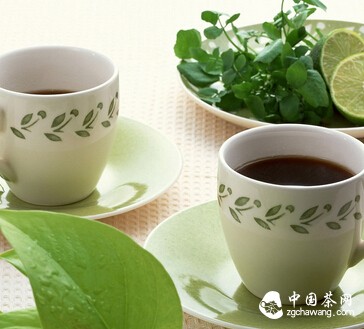
On a winter afternoon, brewing a hot cup of tea brings both warmth and tranquility, soothing the mind and dispelling irritability. To brew excellent tea, selecting premium tea leaves is naturally important, but the water quality, temperature, utensils, steeping time, and ratio all affect the tea's color, aroma, and flavor. Researcher Lin Zhi from the Tea Research Institute of the Chinese Academy of Agricultural Sciences provides a step-by-step guide on how to brew a perfect cup of tea.
Water Quality
Good water is essential for good tea. Water can be classified as hard or soft, which influences the sensory qualities of the tea liquor, such as its color, aroma, and taste. "Hard water" generally contains higher levels of soluble calcium and magnesium compounds, while water with little or no such compounds is referred to as "soft water." For brewing tea, it is best to use "soft water" with low mineral ion content, such as purified water or high-quality mineral water.
Tea-to-Water Ratio
Generally, the ratio of tea leaves to water varies depending on the type of tea and the drinker's preference for strength. For green tea, a ratio of 1:50 is usually appropriate, commonly using 150 ml of water to 3 grams of tea leaves, resulting in a moderately strong brew. The ratio for black tea is similar to that of green tea. For dark tea, the amount of tea leaves is typically double that of green tea, with a ratio of 1:25. Oolong tea requires a larger quantity of leaves, usually filling half or more of the teapot or lidded bowl used.
Teaware
Choosing the right teaware is an essential yet often overlooked step in brewing, appreciating, and tasting tea. When brewing green tea, the choice of cup can depend on the quality of the leaves. For premium, tender green teas like West Lake Longjing or Huangshan Maofeng, transparent glass cups are suitable to appreciate the "tea dance." For ordinary-quality tea, porcelain cups can be used. However, note that when brewing green tea, avoid covering the cup, as this may cause the tea liquor to turn yellow. For black tea, glass cups or white porcelain can be used to highlight its red liquor, but using a lidded bowl (gaiwan) is better for bringing out its rich aroma. Oolong tea is also well-suited for brewing in a gaiwan, making it convenient to appreciate its fragrance and examine the spent leaves. A purple clay teapot can also be used for brewing oolong, as it helps preserve the tea's mellow flavor and aroma. For Pu-erh tea, either a purple clay teapot or a gaiwan is suitable.
Water Temperature
Generally, the suitable brewing temperature for each type of tea is related to its degree of fermentation. Teas with lower fermentation levels require lower water temperatures. This is especially true for non-fermented green teas, such as West Lake Longjing and Biluochun, which should be brewed with water at 80–85°C. These teas are delicate, and boiling water is too hot and can destroy their fresh fragrance. Semi-fermented teas like oolong, such as Tieguanyin and Dahongpao, are suitable for multiple infusions with boiling water. Black tea is fully fermented, and high-temperature water helps extract its beneficial compounds, so it is best brewed with freshly boiled water. Dark tea is post-fermented, with Pu-erh being a representative example, and should also be brewed with 100°C boiling water.