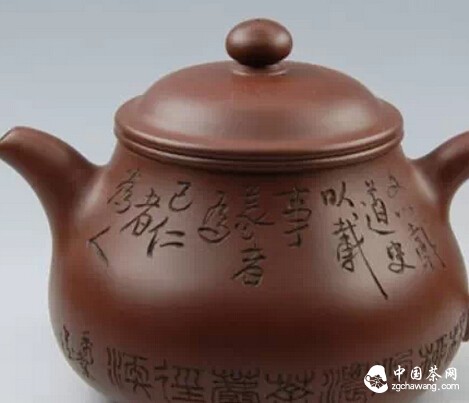
It is widely known that the longer Yixing ware is used, the more lustrous it becomes. This is because tea water itself nourishes the pot during brewing.
Yixing ware has excellent thermal shock resistance. It can be placed on a fire or used in a microwave without cracking. It conducts heat slowly and retains warmth, so it does not feel hot to the touch during use. The body absorbs the aroma of tea. If you occasionally brew water in a Yixing teapot that has been used for tea without adding tea leaves, the water will still carry a tea fragrance.
The color of the clay in a Yixing teapot is related to the type of tea frequently brewed. When brewing black tea, the pot will change from reddish-brown to a deeper reddish-brown. When frequently brewing green tea, the pot will change from reddish-brown to brownish.
How to identify a genuine Yixing teapot?
According to experts, authentic Yixing teapots are made from refined purple clay. The refining process and the blending of raw materials are very meticulous. The fired teapot has high plasticity and good breathability, can withstand sudden temperature changes without easily cracking or breaking, and can even be heated over a high flame without shattering. Moreover, genuine Yixing teapots are unglazed both inside and out. When used as tea ware, they do not have adverse effects on health. With prolonged use, the body of the teapot itself becomes warm and lustrous in color and may even emit the natural fragrance of tea.
The most important aspect when purchasing a Yixing teapot is observing the color and quality of the clay. The uniqueness of Yixing teapots lies in the superiority of their raw material, purple clay. Evaluating the quality of a Yixing teapot first depends on the quality of the clay used. Good purple clay should have the distinctive characteristics of "color not being overly bright and texture not being greasy." Purple clay mainly consists of three types: purple clay, green clay, and red clay. By varying the proportions of the clay mixtures, colors like vermilion purple, chestnut, and crabapple red can be achieved, hence purple clay is also known as "five-colored earth."
Key points for selecting Yixing teapots:
The evaluation criteria for a good Yixing teapot should be the perfect embodiment of three elements: form, spirit, and essence.
"Form": The shape, dimensions, and structural proportions of the pot should be balanced. "Points, lines, and surfaces" must harmonize consistently. The spout, handle, and knob should align in a straight line. The pot mouth and lid should fit closely and rotate smoothly. The rims of the mouth and spout should be evenly thick. Water flow should be long, fast, and rounded. The connections between the spout, lid, knob, and the pot body should be natural, seamless, and integrated. The clay body should have a moist, lustrous color with a faint sheen, feel comfortable and agreeable to the touch, be practical and convenient to use, and easy to lift and hold.
"Spirit": Refers to the overall artistic charm and style of the Yixing teapot. It emphasizes being perfectly round and smooth, pleasing to the eye, exquisite and elegant, with smooth curves and well-defined rises and falls. For square-shaped pots, the design should incorporate roundness within squareness, with clear, clean, sharp, and elegant contour lines. Additionally, consider the pot's distinct style—whether softly elegant, majestic and powerful, or spirited and vibrant.
"Essence": The temperament and connotation of the pot. Through masterful craftsmanship, achieve artistic effects that are rounded yet firm, simple and古朴, stable and dignified, powerful and resonant, possessing strong artistic appeal and visual impact, with鲜明的个性.