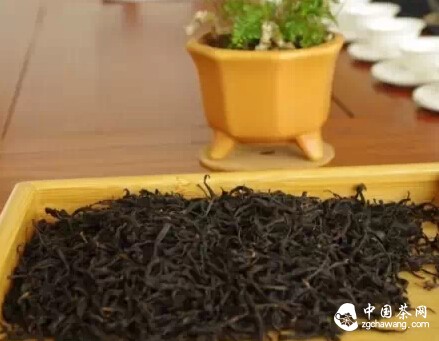
Souchong black tea is the ancestor of Chinese black tea and also the ancestor of black tea worldwide. It was first created in the early 17th century, originating in Tongmu Guan, Chong'an, Fujian (now Tongmu Village, Wuyishan National Nature Reserve). It developed from folk medicinal use, and its initial name was not prominent. It is a specialty of Fujian Province and is divided into Zhengshan (authentic mountain) Souchong and Waishan (outer mountain) Souchong. Zhengshan Souchong is produced in Tongmu Guan, Xingcun, and is called Tongmu Guan Souchong or Xingcun Souchong. Imitations produced in Shaowu, Guangze, Zhenghe, Tanyang, Dongbeiling, Pingnan, Gutian, Shaxian, and Jiangxi's Yanshan using similar methods are of poorer quality and are collectively called Waishan Souchong or artificial Souchong. Some lower-grade black teas are smoked to imitate Souchong Gongfu, called Yan Souchong or fake Souchong.
As for artificial Souchong, there are Tanyang Souchong, Zhenghe Souchong, Shaowu Souchong, Gutian Souchong, Dongbeiling Souchong, etc. The market for artificial Souchong has now been eliminated. Only Zhengshan Souchong has endured for centuries, standing out uniquely in the market. Therefore, Zhengshan Souchong is also called "Xingcun Souchong" to distinguish it from Souchong produced outside the Wuyishan area.
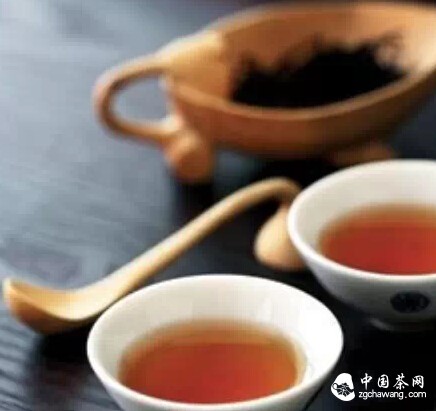
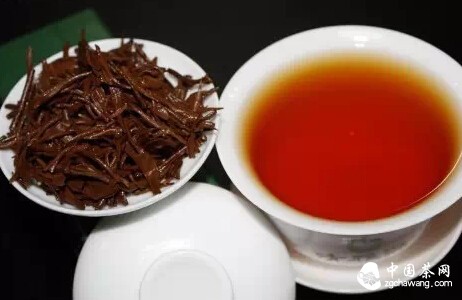
Zhengshan Souchong has a robust, tightly wound appearance with a dark, glossy color. After brewing, the liquor is a rich red, with a high, long aroma carrying pine-smoky notes. The taste is mellow and thick, with a longan (a specialty fruit of Fujian) soup-like flavor. When milk is added, the tea fragrance remains strong, forming a syrupy milk tea with a more绚丽 liquid color. It was highly favored in Europe, particularly by the British皇室.
Japanese black tea brewing expert Kenji Takano commented on Wuyishan Zhengshan Souchong: "Lapsang (Wuyishan) Souchong black tea has its base in Fujian Province. The tea leaves are black, relatively large, and only lightly rolled. The aroma乍闻之下近似征露丸 (a Japanese tea name). Actually, this scent is the熏香 obtained when drying the tea leaves using pine wood as fuel. After drying, they are dried again, completing the so-called Lapsang Souchong. When brewing yourself, you can add a little Lapsang Souchong to Indian or Ceylon tea to enjoy its unique 'aroma.'"
Why is it called Zhengshan Souchong Black Tea?
Answer: The term "Zhengshan Souchong" black tea was最早称武夷BOHEA in Europe, which is the谐音 of the place name Wuyi. In Europe (England), it was a symbol of Chinese tea. Later, due to prosperous trade, locals named it "Zhengshan Souchong" to distinguish it from other假冒的小种红茶 (artificial Souchong or smoked Souchong)扰乱市场. "Zhengshan" refers to Tongmu and surrounding areas at the same altitude; the same region; made using the same traditional工艺; with the same quality, uniquely characterized by the longan soup flavor, collectively called "Zhengshan Souchong." "Zhengshan" means correct and正宗, while "Souchong" refers to the tea plant variety being a small-leaf species, and the production area and yield are limited by the local microclimate. Therefore, "Zhengshan Souchong" is also called "Tongmu Guan Souchong" or "Xingcun Souchong."
What are "Zhengshan Souchong" and "Waishan Souchong"?
Answer: The original production area of Zhengshan Souchong black tea is in the Tongmu Guan area of Xingcun Town, Wuyishan City. According to "The Classic of Chinese Tea," the "Zhengshan" in Zhengshan Souchong indicates that it is truly "produced in high mountain areas." Originally, all tea produced in the Wuyi Mountains was called Zhengshan. Tea produced near Wuyi Mountain or in other regions was called Waishan (artificial工夫烟小种). Therefore, the longan-flavored Zhengshan Souchong stands out uniquely in the market, so it is also called "Xingcun Souchong" and "Tongmu Souchong" to distinguish it from Souchong produced outside Wuyishan. According to the "Regulations on the Administration of Marks of Origin Protection" formulated by the National Quality Supervision and Inspection总局, the preliminary界定范围 of Zhengshan Souchong's origin is东经117°38'6''~117°44'30'',北纬27°41'35''~27°49'00''. An area of 50 square kilometers, east to Mali, west to Guadun, south to Pikeng, Guwangken, north to Tongmu Guan.
Quality Characteristics of Zhengshan Souchong
Made from the local traditional Cai Cha群体品种 using traditional工艺, it is a unique black tea variety with a distinctive high-mountain韵 and dried longan aroma. It is graded into特级,一级, and二级 based on sensory indicators.
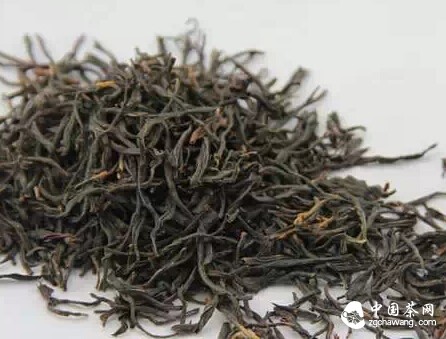
Yan Zhengshan Souchong black tea is made from Zhengshan Souchong raw material经过松茗薰焙后, forming a特有一股浓醇的松茗香和桂圆干香 unique to Zhengshan Souchong black tea. After two or three brews, it exhibits a longan soup flavor, called Yan Zhengshan Souchong. Other毛茶及工夫红茶 from various counties and cities模仿小种制法,熏制而成具有松茗香 after参照烟正山小种的熏焙工艺, are均称为烟小种,外山小种或人工小种. Yan Souchong is divided into three grades:一级,二级,三级 based on product quality.
In appearance, the leaves are robust, tightly wound, even, clean, with a dark, glossy color. Dry leaves have a special pine resin and dried longan aroma.
In terms of inner quality, it possesses a unique high-mountain韵 and dried longan flavor. It is耐冲泡; after four or five brews, its characteristics remain明显. Its liquor is橙红,明亮,清澈, with a醇厚,甘滑爽口 taste, not bitter or astringent, with a持久回甘. It is suitable for drinking plain or with sugar and milk. Especially when纯牛奶和糖 are added to Yan Zhengshan Souchong black tea liquor, the aroma is十分独特, and the taste is极其迷人. It also has耐储藏的特点; under常温 conditions, the quality can remain unchanged for three to five years or even longer, with the taste becoming more醇厚 and the pine aroma more纯爽.
Manufacturing Process of Zhengshan Souchong
The manufacturing process of Zhengshan Souchong is relatively complex, divided into primary processing and refining processes.
1. Primary Processing:
Fresh Tea Leaves → Withering → Rolling → Fermentation → Passing through Red Wok (Guo Hong Guo) → Re-rolling → Smoking and Baking (Xun Bei) → Re-firing → Rough Tea.
Withering: Souchong black tea withering includes日光萎凋 and加温萎凋. In the Tongmu Guan area, during the tea rolling season, there is more rain and fewer sunny days, so室内加温萎凋 is generally used.加温萎凋 is carried out in the "青楼" of the primary processing factory. The "青楼" has three floors. The second and third floors only have横档, covered with bamboo mats, on which the fresh leaves are spread. The bottom floor is used for熏焙 the tea after re-rolling. It is connected to an outdoor firewood stove via a bottom烟道. When松柴明火 is burned outside the stove, the heat enters the bottom floor. While焙干 the tea, the residual heat is used to加温 the fresh leaves on the second and third floors for withering.日光萎凋 is done outdoors on sunny days by spreading the fresh leaves evenly on bamboo mats.
Rolling: After proper withering, the leaves can be rolled.早期 used人工揉捻 until the leaves were tightly wound and tea汁溢出. Now, rolling machines are used.
Fermentation: Souchong black tea uses热发酵. The properly rolled tea is placed in bamboo baskets, pressed tightly, and covered with cloth. The tea ferments under its own enzymes. After a certain time, when the tea turns红褐色 and has a清香, it can be taken out for Guo Hong Guo.
Guo Hong Guo (Passing through Red Wok): This is a unique process for Souchong black tea. Its purpose is to stop enzyme activity, halt fermentation, to preserve the sweet, pure aroma, bright red liquor, and thick taste of Souchong. The method involves putting the fermented leaves into a hot iron wok and stir-frying with both hands. This technique requires strict control; too long leads to excessive water loss and容易焦叶, too short fails to achieve the goal of enhancing aroma and thickening taste.
Re-rolling: Tea that has undergone Guo Hong Guo must be re-rolled to tighten the loosened leaves. The method is to put the hot tea from the wok into the rolling machine immediately until the leaves are tightly wound.
Smoking and Baking (Xun Bei): The re-rolled tea is抖散 and spread on bamboo sieves, placed on the吊架 of the "青楼" bottom floor.松柴明火 is burned in the outdoor stove, directing heat into the "青楼" bottom floor. During drying, the tea continuously absorbs pine aroma, giving Souchong black tea its unique pine resin fragrance.
Re-firing: The dried tea is screened to remove large leaves and coarse stems, then placed on baking baskets and baked again with pine firewood to enhance the special fragrance of Souchong black tea.
The tea after the above processes is the primary rough tea of Zhengshan Souchong black tea.
2. Refining Process:
Grading and Piling → Large Piling of Rough Tea → (走水焙) → Screening → Winnowing → Sorting → Baking → Even Blending → Packing into Boxes → Finished Product.
Grading and Piling: When rough tea enters the factory, it is graded and piled for storage, facilitating拼配 based on origin, season, appearance, inner quality, and previous blending standards.
Large Piling of Rough Tea: Pile the graded rough tea according to blending ratios to maintain consistent product quality.
走水焙 (Water-Removing Bake): During piling, the moisture content of different batches may vary; some tea may regain moisture or have high含水率, requiring baking to standardize moisture content for processing.
Screening: The screening process shapes the appearance, removes stems and flakes, retaining leaves符合同级外形 and净度. Screening methods for Souchong black tea include:平圆,抖筛,切断,捞筛,飘筛,风选. The processing筛路 can be divided into:本身,园身,轻身,碎茶,片茶 5 routes.
Winnowing: Screened tea undergoes winnowing, using wind to separate片茶, leaving等级内的茶.
Sorting: Remove茶梗,不合格外形, and non-tea substances that winnowing cannot eliminate, ensuring整齐美观外形 and符合同级净度要求. Sorting includes machine and hand sorting. Generally, machine sorting is done first to reduce manual workload, then hand sorting ensures净度色泽要求, guaranteeing the tea contains no non-tea impurities and meets safety and hygiene standards.
Baking: After screening and winnowing, the black tea may absorb moisture, increasing含水率过高, requiring re-baking to achieve the required moisture content.
Drying and熏焙: Producing Yan Zhengshan Souchong black tea requires an additional松香熏制工序 after the above steps. The finished Yan Zhengshan Souchong requires a more浓醇持久的松香味 (dried longan aroma). Therefore, during the final drying烘焙 process, a松香熏工序 is added to allow the drying tea to adsorb the aroma.熏焙的 Zhengshan Souchong black tea has a generally浓醇的松香味 (dried longan flavor), with dark, glossy leaves.
Even Blending: After screening and sorting, the semi-finished products from various routes, after baking or sufficient smoking/drying, are blended into small samples according to certain proportions. Moisture content is measured, and adjustments are made对照审评标准 to ensure appearance and inner quality meet本级标准. Then, even blending is done according to the small sample比例.
Packing into Boxes: After even blending and verification that all factors meet requirements, the finished product is packed into boxes, completing the entire refining process of Zhengshan Souchong black tea.
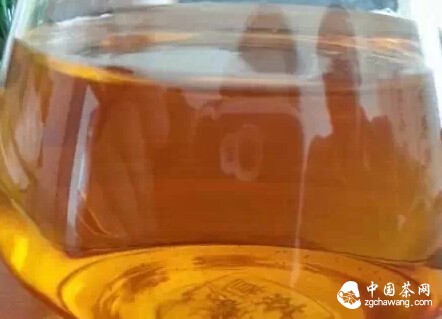
Brewing Method for Zhengshan Souchong
Answer: First, it is recommended to use a large pot or large cup for brewing (like Beijing's大碗茶), which better preserves its fragrance and taste. Some teas may become bitter or astringent when cooled, but Zhengshan Souchong tea liquor becomes sweet and smooth when cooled, with the characteristic of being耐泡 and not bitter even when strong.
Use a black tea pot and cup set, choosing white porcelain cups.
If using the工夫泡法, at least use a porcelain盖碗 and not a紫砂壶. Place 5-10 grams of black tea into a white porcelain cup, pour in boiling water, first smell the aroma, then observe the color, and then taste.
One serving of tea leaves can usually be brewed many times (similar to the工夫泡法 of Oolong tea). This method requires the drinker to focus on "appreciation," sipping slowly, savoring细细, and in the gradual experience and appreciation, discerning the tea's醇味, comprehending the true pleasure of tea drinking, making oneself joyful, transcendent, and achieving spiritual升华.
Can Zhengshan Souchong Be Aged?
Answer: Storing Zhengshan Souchong black tea is very simple and easy; just常规常温密封保存. Because it is fully fermented, generally after one or two years of storage, the pine-smoky aroma further transforms into a dried fruit fragrance, and the taste becomes more醇厚而甘甜.