1. 160 Countries and Regions, 3 Billion People, Nearly 7 Pounds—China Ranks 19th in Tea-Drinking Habits
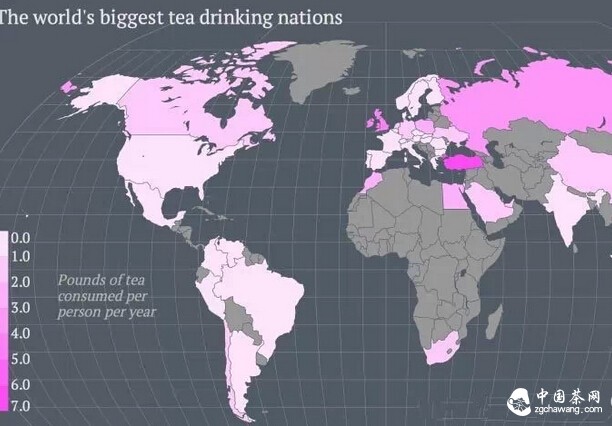
Currently, over 160 countries and regions, with nearly 3 billion people, enjoy drinking tea. China is the largest tea-producing country, but the ranking of tea-drinking nations is as follows: According to Quartz, the country with the highest per capita tea consumption is actually Turkey.

Turkish people not only love drinking tea but also deeply admire tea culture. Their annual per capita tea consumption reaches nearly 7 pounds (about 3.2 kg), followed by Ireland, the United Kingdom, Russia, Morocco, New Zealand, Egypt, Poland, Japan, Saudi Arabia, South Africa, the Netherlands, Australia, Chile, the United Arab Emirates, Germany, Hong Kong (China), Ukraine, and China (19th)...
2. India Is the Largest Tea Producer
China is the birthplace of tea, but it is not our exclusive patent. Currently, over 50 countries and regions cultivate and produce tea. Moreover, in terms of production volume, India ranks first, not China.
3. Lower Cancer Rates After the Hiroshima Atomic Bombing
In the decades following the atomic bombing of Hiroshima, Japan, in August 1945, Japanese statistical authorities found that among populations with lower cancer incidence rates, tea farmers and avid tea drinkers constituted the majority.
4. One Cup of Tea Equals the Antioxidants of 12 Bottles of White Wine
Antioxidant tests confirm that one cup of tea (300 ml) has antioxidant functions equivalent to one and a half bottles of red wine, 12 bottles of white wine, 12 glasses of beer, 4 apples, 5 onions, or 7 glasses of fresh orange juice.

5. Tea Polyphenols: 18 Times Stronger Than Vitamin E
According to Japanese research results, the anti-aging effects of tea polyphenols are 18 times stronger than those of vitamin E.
6. EGCG Effectively Blocks the HIV Virus
British and American scientists reported in the journal Allergy and Clinical Immunology that the polyphenol compound EGCG in tea can effectively block the spread of the HIV virus in the human body. Once immunized, the HIV virus has no opportunity to approach.

7. Over 4,000 Authoritative Papers: EGCG Is the Nemesis of Almost All Cancers
Over 4,000 authoritative papers on "tea and cancer prevention" prove that EGCG, the main component of tea polyphenols, is effective against almost all cancers, particularly uterine cancer, skin cancer, lung cancer, colon cancer, prostate cancer, liver cancer, kidney cancer, and breast cancer. Concurrently, studies have found that consuming tea alongside cancer medications enhances their efficacy.
8. 8,522 People, 419 Cancer Patients: Tea Drinkers Experience Cancer Onset About 7 Years Later
In 1999, the Japanese government launched a two-phase "tea drinking for nationwide cancer prevention" plan, surveying 8,522 people over 10 years. Among them, 419 developed cancer. Women with tea-drinking habits experienced cancer onset about 7 years later than non-tea drinkers, while men experienced a delay of 3.2 years.

9. Regular Green Tea Drinkers Have Over 60% Lower Incidence Rates
Data from institutions such as Japan's National Cancer Center, Case Western Reserve University in the U.S., and Curtin University in Australia on "green tea and prostate cancer" indicate that men who regularly drink green tea have over 60% lower incidence rates compared to those who do not.

10. Among 61,057 Women, Drinking 2 Cups of Tea Daily Reduces Ovarian Cancer Risk by About 46%
Researchers at the Karolinska Institute in Sweden analyzed data from 61,057 women aged 40 to 76 (including 301 diagnosed with ovarian cancer). Compared to women who drank little or no tea, those who drank less than one cup daily had an 18% lower risk of ovarian cancer, those who drank one to two cups daily had a 24% lower risk, and those who drank more than two cups daily had about a 46% lower risk. The more tea consumed, the lower the risk of ovarian cancer.

11. Among 63,257 Individuals, Regular Black Tea Drinkers Have a 71% Lower Risk of Parkinson's Disease
Researchers from the National University of Singapore conducted a 12-year跟踪调查 of 63,257 Singaporean Chinese aged 45 to 75. They found that compared to those without tea-drinking habits, middle-aged and elderly people who regularly drank black tea had a 71% lower risk of developing Parkinson's disease.
12. Drinking 10 Small Cups of Tea Daily Reduces Cardiovascular Disease Risk by 42%
An epidemiological study in Japan showed that drinking 10 small cups of tea daily reduced the risk index for cardiovascular diseases by 42% in men and 18% in women compared to drinking fewer than three cups.

13. Among Cataract Patients, 28.6% Are Tea Drinkers, While 71.4% Are Not
Among cataract patients, 28.6% had tea-drinking habits, while 71.4% did not.
14. Among 1,300 Diabetics, 82% Showed Significant Symptom Improvement
Researchers from Toyama Medical and Pharmaceutical University in Japan discovered that among 1,300 diabetic patients who drank tea steeped in cold water for six months, 82% showed significant symptom improvement, and about 9% had their blood sugar levels return to normal.

15. Drinking 8-10 Grams of Tea Daily Can Shed About 3 Pounds of Fat
Without any dieting or exercise, consuming 8-10 grams of tea daily can lead to a loss of approximately 3 pounds of fat within 12 weeks due to the tea's own effects. In Japan and Western countries, tea products rank first among all weight-loss products.
16. Tea Polyphenols Kill 10,000 Highly Toxic E. Coli Bacteria
A medical research team from Showa University in Japan placed 10,000 highly toxic E. coli O-157 bacteria into 1 ml of tea polyphenol solution diluted to 1/20th the concentration of ordinary tea. After five hours, all the bacteria were dead, without a single survivor.

17. Diseases Thrive in Acidic Bodies; Tea Is a Strong Alkaline Food
Almost all human diseases occur in individuals with acidic constitutions, while most viruses cannot survive in weakly alkaline constitutions. Experts state that only by altering one's physical constitution can disease prevention be achieved. Common strongly alkaline foods in daily life include tea, grapes, and seaweed.
18. Drinking Tea Brings Happiness
Drinking tea can make you inexplicably happy. The amino acids in tea promote the secretion of large amounts of dopamine, a substance that governs human emotions, pleasure, and addiction. The sense of pleasure from drinking tea is involuntary and不受意念控制的.

19. Tea Boosts Immunity
The Tea Research Institute of the Chinese Academy of Agricultural Sciences conducted thousands of experiments on mice regarding immunity, carcinogenesis, alcohol poisoning, weight loss, blood lipids, and mating. The results showed that mice灌服茶水 or injected with tea extracts exhibited significantly better vital signs than those fed normally.
20. Drinking Tea Promotes Longevity
Drinking tea for a minute can quench thirst; for an hour, it offers leisure; for a month, it promotes health; for a lifetime, it fosters longevity. Based on research data from long-lived populations, individuals with lifelong tea-drinking habits tend to live longer. The longevity age of 108 is referred to by longevity research institutions as "tea longevity."

21. One Pound of Bud Tea Requires 60,000-80,000 Buds
One pound of high-quality bud tea consists of 60,000 to 80,000 buds, each plucked individually by tea-picking girls using their fingers. This is one reason for the varying prices of tea.
22. 3,000 Years Ago, $23 Billion—70% of China's Annual Tea Industry Output
China is the homeland of tea, with records of tea drinking dating back to the Xia, Shang, and Zhou dynasties 3,000 years ago. However, today, the world's largest tea brand is British. This tea-producing nation generates $23 billion in annual tea sales, nearly equivalent to 70% of the annual output of China's entire tea industry (with 70,000 tea factories).

23. Centenarians Are Often Tea Enthusiasts
A survey of centenarians revealed that 40% attributed their longevity to a lifelong passion for tea, while 80% had tea-drinking habits.