White Tea is one of the six major tea categories in China, with rare white tea being particularly hard to come by. Perhaps it is this special preciousness that has always maintained an air of mystery around white tea. Today, we invite everyone to rediscover and perceive white tea from the heart!
White Tea
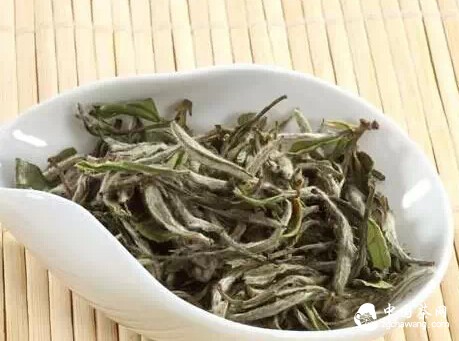
White tea, one of the six major tea categories. It refers to a type of tea that, after picking, does not undergo fixation or rolling but is only processed through sun-drying or gentle heat drying. It is generally uncommon in many regions. White tea is characterized by complete bud and leaf appearance, covered with fine hairs (hao), a fresh and clear aroma, a clear yellow-green liquor, and a light, sweet aftertaste. It is a lightly fermented tea and a special treasure among Chinese tea varieties. It gets its name because the finished tea often consists of buds covered with white hairs, resembling silver or snow. Main production areas include Fuding, Zhenghe, Songxi, and Jianyang in Fujian; Jinggu in Yunnan; Jing'an in Jiangxi; and others. The basic processes include withering, baking (or shade-drying), sorting, and re-firing. Yunnan white tea primarily uses sun-withering, with the advantage of sun-withered tea being that it preserves the original fresh aroma of the tea leaves. Withering is the key process in forming the quality of white tea.
Historical Development
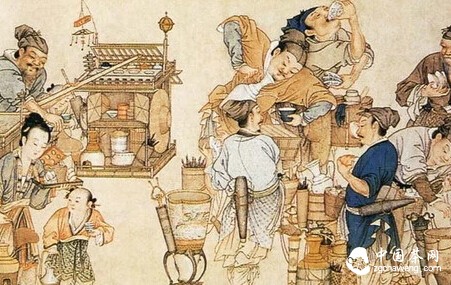
White tea has always been a treasure among teas, with a long history. Its elegant name has appeared for over 880 years.
The name "white tea" first appeared in Lu Yu's Tang dynasty "Classic of Tea" (Cha Jing), in the seventh chapter, which records: "Three hundred li east of Yongjia County, there is a white tea mountain."
Emperor Huizong of Song (Zhao Ji) in "Da Guan Cha Lun" (completed between 1107–1110, named after the era name "Da Guan") has a section dedicated to discussing white tea, stating: White tea is its own kind, different from ordinary tea. The white tea mentioned in "Da Guan Cha Lun" refers to the wild white tea grown on the tea mountains of the early Beiyuan Imperial Tea Gardens. In 1115, Guandi County presented tribute tea silver needles to Emperor Huizong, "delighting the emperor, who bestowed his era name, subsequently changing the county name from Guandi to Zhenghe."
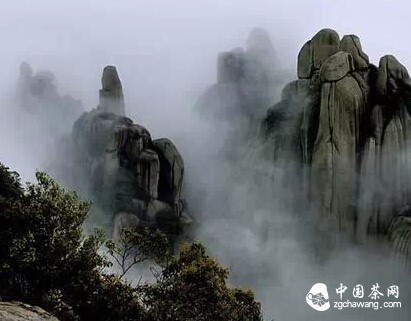
In 1796 (early Qing Jiaqing period), white tea production already existed, using Fujian northern "Caicha" variety leaves at that time. Between 1851–1874 (Xianfeng and Tongzhi periods of the Qing dynasty), people in Zhenghe's Tieshan Township began cultivating large white tea plants. In 1890 (15th year of Guangxu), they successfully trial-marketed silver needles made from large white tea, exporting them the following year. White Peony (Bai Mudan) was first created in Shuiji Town, Jianyang County. In 1922, Zhenghe County also began producing White Peony, exporting it to Hong Kong at prices more than double that of ordinary black tea and green tea.
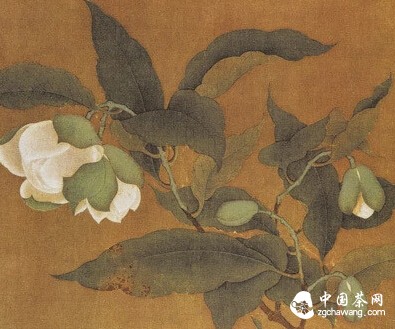
Production Process
The production process of white tea is the most natural. Freshly picked tea leaves are thinly spread on bamboo mats and placed under weak sunlight or in well-ventilated, lit indoor areas for natural withering. When dried to about 70-80%, they are slowly baked over gentle heat. Due to the simple process, it undergoes minimal processing steps.
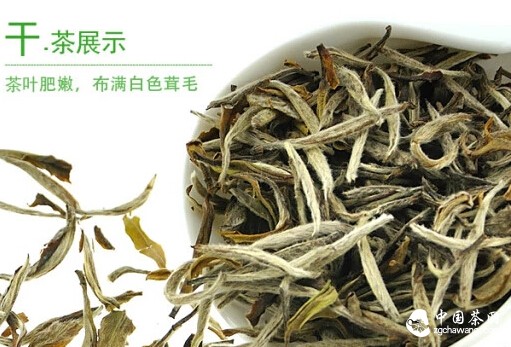
Using single buds as raw material processed according to white tea techniques produces Silver Needle White Hair (Baihao Yinzhen). White tea is generally picked as one bud with one or two leaves from tea plant varieties such as Fuding Dabai, Quancheng Hong, Quancheng Lü, Fuding Dahaocha, Zhenghe Dabai, and Fu'an Dabai. Processed with white tea techniques, these become White Peony or New White Tea. Using one bud with one or two leaves from Caicha (common tea bush) produces Gong Mei. Using leaves after bud removal produces Shou Mei. The white tea production process generally involves two steps: withering and drying, with the key being withering. Withering is divided into indoor natural withering, compound withering, and heated withering. It should be flexibly managed according to climate; indoor or compound withering is best on clear spring/autumn days or non-muggy, clear summer weather. The refining process involves removing stems, flakes, withered leaves, reddish leaves, and dull leaves, then baking over gentle heat until fully dry, using only a hint of fire aroma to complement the tea fragrance. When moisture content reaches 4–5%, it is packed while hot. The characteristic of white tea processing is that it neither destroys enzyme activity nor promotes oxidation, while preserving the visible fine hairs (hao) aroma and a fresh, brisk taste.
Variety Classification
Based on tea plant variety and the standard of raw material (fresh leaf) picking, white tea is divided into: bud tea (Baihao Yinzhen) and leaf tea (such as Bai Mudan, New Craft White Tea, Shou Mei). The main varieties are Bai Mudan, Baihao Yinzhen, Gong Mei, and Shou Mei.
Baihao Yinzhen (Silver Needle White Hair)
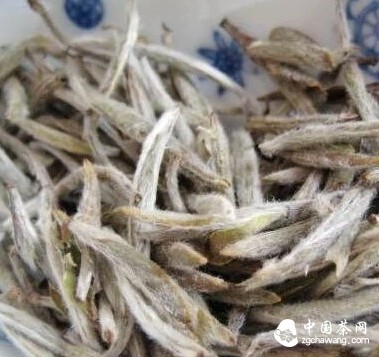
Baihao Yinzhen,简称银针, also called Baihao, gets its name from its dense covering of white hairs (hao), silver-white color, and needle-like shape. With a fresh aroma, pale yellow liquor, and refreshing taste, it is the finest grade of white tea, often hailed as the "king of tea" among teas.
As the raw leaves are all plump buds from large white tea plants, the finished tea is about three centimeters long, with the entire bud covered in white hairs. After brewing, the aroma is fresh, the taste mellow, and the spectacle in the cup is also delightful.
Generally, place 3 grams of Silver Needle in a transparent glass cup rinsed with boiling water, pour in 200 ml of boiling water. Initially, the tea buds float on the surface. After 5-6 minutes, some buds sink to the bottom, some remain suspended in the upper part of the tea liquor. At this point, the buds stand upright,交错上下, resembling stone stalactites. After about 10 minutes, when the liquor turns yellowish, it is ready to drink.
Bai Mudan (White Peony)
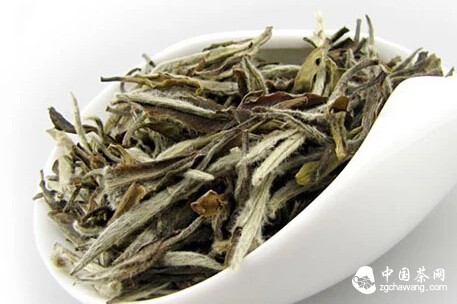
Why is White Peony crowned with such an elegant name? White Peony gets its beautiful name because its green leaves夹带silver-white hairy buds, resembling flowers. After brewing, the green leaves hold the tender buds,宛如buds beginning to bloom. White Peony is made from the short, small buds and leaves—one bud with one or two leaves—of large white tea plants or Narcissus variety shoots. It is a superior quality white tea.
Gong Mei (Tribute Eyebrow)
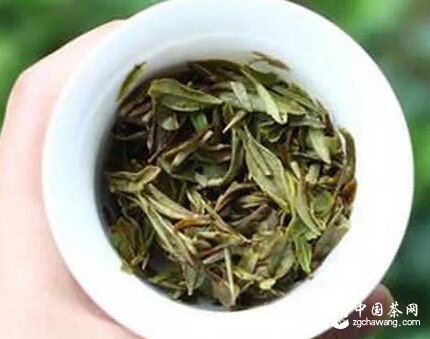
Gong Mei, sometimes also called Shou Mei, is the highest-yielding variety of white tea, accounting for over half of total white tea production. It is made from the buds and leaves of Caicha tea plants. This crude tea made from Caicha buds and leaves is called "Xiao Bai" (small white), to distinguish it from "Da Bai" (large white) crude tea made from the buds and leaves of Fuding Dabai and Zhenghe Dabai tea plants. Previously, Caicha buds were used to make varieties like Baihao Yinzhen, but later "Da Bai" was used to make Baihao Yinzhen and Bai Mudan, while "Xiao Bai" was used to make Gong Mei.
Shou Mei (Longevity Eyebrow)
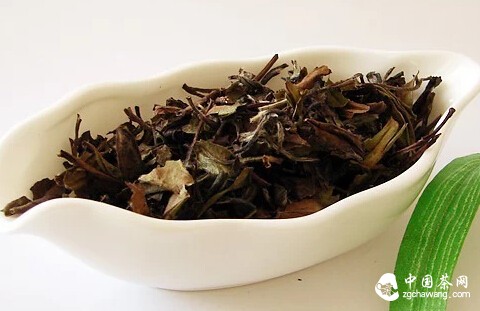
Shou Mei is white tea made from the short, small leaf pieces of Caicha (a common term for ordinary shrub tea plants in Fujian tea regions) and the leaf pieces of large white tea. Usually, "Gong Mei" indicates superior grade, its quality better than Shou Mei. Often only Gong Mei is mentioned, not Shou Mei. The main production area for Gong Mei is Jianyang County in Fujian, with production also in Jian'ou, Pucheng, etc. The picking standard for Gong Mei fresh leaves is one bud with two to three leaves, requiring the tea buds to contain tender and strong buds. The production process of Gong Mei is divided into primary and refining stages,其制作方法与白牡丹茶基本相同. High-quality finished Gong Mei tea has obvious hairy buds, with many white, fine hairs. The dry tea has an emerald green color. After brewing, the liquor is orange-yellow or deep yellow. The brewed leaves are even, soft, bright; when held against light, the main vein appears red. When drinking, it feels醇爽in taste with a pure, fresh aroma.
Value and Efficacy
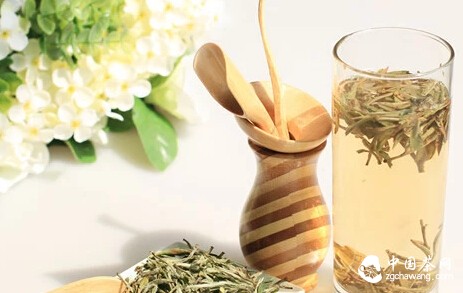
White tea has excellent medicinal properties. It has effects such as sobering up from alcohol, clearing heat and moistening the lungs, calming the liver and benefiting blood, reducing inflammation and detoxifying, lowering blood pressure and reducing fat, and消除疲劳. Especially for discomfort and digestive dysfunction caused by excessive smoking/alcohol, greasy food, and liver fire, it has unique and effective health benefits.
Brewing Method
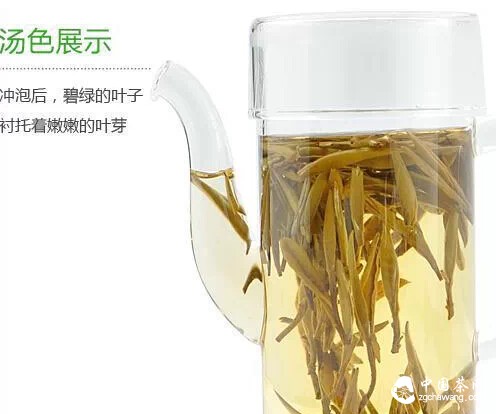
Certain skills must be mastered during the brewing process of white tea to achieve a fresh, sweet, mellow, and richly aromatic tea liquor.
1. Quantity control: White tea tastes better lighter. Generally, use 3 to 5 grams of tea leaves for 150 ml of water.
2. Temperature control: Water temperature should be between 90 to 100 degrees Celsius.
3. Brewing time: The first infusion takes about 5 minutes. After filtering, pour the tea liquor into a cup to drink. The second infusion only needs 3 minutes, meaning it should be brewed随饮随泡. Generally, a cup of white tea can be infused four to five times.