
Drinking tea can supplement the body with various amino acids, especially theanine and glutamic acid, which are abundant in tea soup. After entering the human body through tea drinking, these free amino acids in the tea soup become part of the body's metabolic amino acid pool. Some amino acids (among the 20 that make up proteins) may serve as raw materials for protein synthesis; others are metabolized into fats; many have special physiological functions, such as promoting brain development and maintaining/enhancing brain cell functions (theanine, lysine, glutamic acid), or promoting human development and intellectual development while increasing calcium and iron absorption to prevent elderly osteoporosis (arginine, threonine, histidine).
The amino acid most closely related to tea's health benefits is theanine. Since its discovery, theanine has been widely studied as a main quality component of tea. A large body of research shows that theanine has beneficial health effects in neuroprotection, relaxation, mood regulation, cognitive improvement, and anti-tumor activity.
Theanine is a treasure, do you know that?
1. Sedative function
Tea contains considerable amounts of caffeine, which has a stimulating and energizing effect. However, people often feel calm and relaxed when drinking tea, unlike the hyperactive excitement from drinking coffee. Apart from caffeine being complexed with other substances, slowing its absorption, the main reason is the sedative effect of theanine. Studies have shown that theanine antagonizes the excitatory effects of caffeine. When theanine is administered at a dose of 1740 mg/kg, it can significantly suppress the nervous system excitation caused by caffeine. Recently, researchers used electroencephalogram (EEG) evaluation to further confirm that theanine, at nearly the same molar concentration as caffeine, can antagonize caffeine's stimulatory effects.
The cerebral cortex of both humans and animals generates very weak brain waves, which typically change frequency depending on mental state. These frequencies are divided into four types: α, β, δ, and θ waves, each representing different states. When α waves are the dominant brain waves, the body expends the least energy, while the brain receives relatively higher energy, resulting in a state of physical relaxation and mental alertness. Therefore, the production of α waves is a marker for feelings of comfort and pleasure.
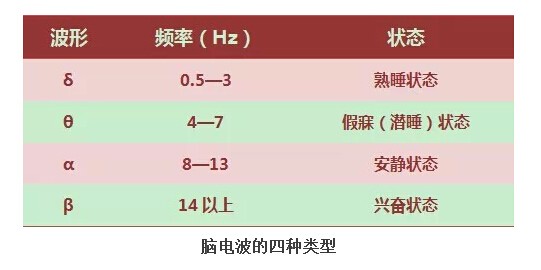
Four types of brain waves
The effect of theanine on mental relaxation can be explained by changes in α waves in the human brain. In an experiment, participants in a sealed environment (room temperature 25°C, illumination 40 Lux) drank 100 ml of water or different concentrations of L-theanine solution (50 mg/100 ml, 200 mg/100 ml), and changes in brain waves were recorded over 60 minutes.
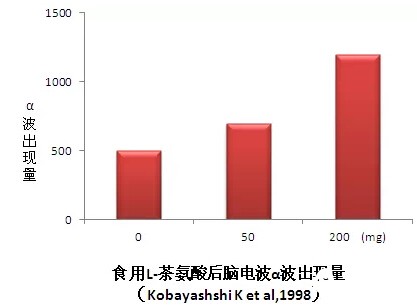
Experimental results showed that participants who drank the theanine solution exhibited an increase in α wave activity. After the test, half of the participants who took 200 mg of theanine reported a warm sensation in their hands and feet, indicating dilation of the peripheral blood vessels. They also felt relaxed, happy, refreshed, and free from anxiety.
2. Influencing changes in brain neurotransmitters
Japanese researcher Yokoyama (1997) and others conducted experiments on rats, demonstrating that L-theanine is absorbed through the intestines, transported via the blood to the liver and brain, and then passes through the blood-brain barrier to significantly increase the production of the neurotransmitter dopamine in the brain.
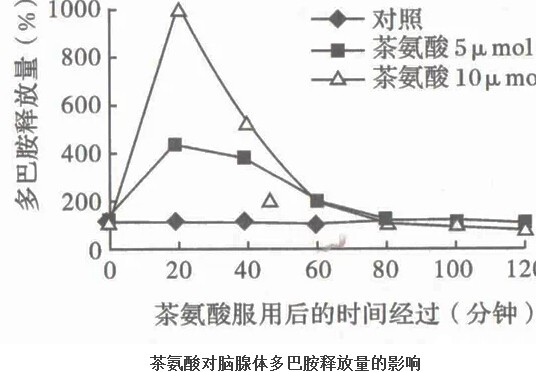
Effect of theanine on dopamine release in the brain
Dopamine (DA) is a central nervous system neurotransmitter that induces feelings of excitement and pleasure. It regulates physical activity, mental activity, endocrine function, and cardiovascular activity. Abnormal dopamine secretion in the brain can quickly lead to mental disturbances. Theanine significantly increases dopamine, a precursor to adrenaline and noradrenaline, in the mitochondria of brain cells. Dopamine is crucial for transmitting the degree of excitement in brain nerve cells, and its release greatly influences mood.
Changes in neurotransmitters also affect learning ability, memory, etc. After taking theanine for 3-4 months, rats showed improved learning abilities, mastering tasks in a shorter time, and exhibited better memory of dangerous situations compared to the control group. Therefore, theanine can improve learning ability and memory by modulating neurotransmitters.

3. Auxiliary anti-tumor effect
Theanine is a derivative of glutamate. Tumor cells metabolize glutamate much more actively than normal cells. As a competitor of glutamate, theanine inhibits the growth of cancer cells by interfering with glutamate metabolism.
Theanine can also enhance the efficacy of various anti-tumor drugs. Although there is no direct evidence yet that theanine itself possesses anti-tumor activity, numerous domestic and international experiments have shown that theanine can promote the anti-tumor effects of multiple drugs. These findings may lead to new developments in cancer treatment, such as using theanine to reduce the dosage of highly toxic anticancer drugs, thereby minimizing their side effects and making cancer therapy more effective and safer.
4. Enhancing immune function
During the SARS outbreak, experts both domestic and international mentioned that drinking tea could enhance resistance and prevent infectious diseases. According to US research, this effect of tea may be related to theanine. A research group led by Professor Jack Bukowski at Harvard Medical School conducted trials on volunteers, demonstrating that theanine can enhance the human immune system by regulating γ-δ T immune cells, thereby resisting invasion by pathogenic microorganisms such as viruses, bacteria, and fungi. It can even increase the body's resistance to disease by up to five times. Scientists predict that theanine may one day be used to develop anti-disease drugs.
In addition, theanine has other benefits such as promoting the growth of beneficial gut bacteria, combating fatigue, and slowing aging. Particularly because of its sedative and memory-enhancing effects, theanine has become a highly sought-after new multifunctional plant-based health product in the international market. Currently, some international companies have begun adding theanine as a functional ingredient to foods, developing functional foods that help relieve nervous tension and improve intelligence.