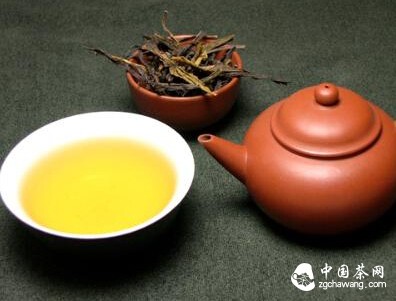
For Chinese people, drinking tea for health preservation is a tradition that has been passed down for thousands of years. In recent years, more and more research has been conducted on the health benefits of tea: anti-cancer, cardiovascular protection, radiation protection... It seems that all health concerns in people's lives can be resolved with a cup of tea. So, what nutrients are in tea? Can it really have a health-preserving effect? How should it be drunk to maximize its health benefits? In this issue, we invite top domestic tea experts to answer these questions that concern everyone the most.
Anti-cancer is the main effect of tea.
Professor Han Chi, a researcher at the Institute of Nutrition and Food Safety of the Chinese Center for Disease Control and Prevention, has been studying tea nutrition and efficacy for decades and is a leading tea expert in China. He told reporters that currently, the more definite health effects of tea include preventing cancer (including lung cancer, esophageal cancer, liver cancer, colon cancer, etc.), regulating blood lipids, lowering blood sugar, enhancing immune function, and preventing smoking damage.
"Drinking tea can repair DNA damage caused by smoking, and the effect is very good. This is a conclusion we reached through human experiments, and it can be considered a relatively leading conclusion worldwide," Han Chi explained. "Currently, there is a lot of research on tea around the world, but most of it is animal experiments conducted using tea extracts. We, on the other hand, conducted human experiments using brewed tea soup, proving that people can obtain such benefits as long as they insist on drinking tea correctly in daily life."
Jiang Heyuan, an associate researcher at the Tea Research Institute of the Chinese Academy of Agricultural Sciences, who mainly studies tea and health, told reporters that the effective nutritional components in tea are diverse, such as the well-known tea polyphenols, as well as theanine, vitamins, caffeine, etc. "According to the production principle, Chinese tea is divided into six categories, namely green tea, black tea, yellow tea, white tea, oolong tea, and dark tea. Later, some reprocessed teas, such as scented tea, were developed based on these six categories," Jiang Heyuan said. The effective components in various teas are different, and their effects also vary.
Green tea protects the cardiovascular system. Green tea is an unfermented tea, represented by West Lake Longjing, Dongting Biluochun, and Huangshan Maofeng. Its main effects are preventing cancer and cardiovascular diseases, as well as antioxidant, enhancing immunity, and inhibiting and killing bacteria.
White tea relieves anxiety. "White tea, according to different classification methods, includes two types," Han Chi said. One is the more familiar Anji white tea, which is actually a type of green tea. Due to its milder taste compared to green tea, it has become very popular in recent years. Jiang Heyuan said that the main effects of white tea include protecting brain nerves, enhancing memory, and reducing anxiety. In addition, theanine in white tea can neutralize some of the effects of caffeine. "People who are afraid that drinking tea will affect their sleep can drink some white tea." Another type is white tea produced in the Fuding area of Fujian. "This tea has a small yield and a stronger taste than ordinary green tea. According to current research, this tea has good effects on regulating immunity and lowering blood sugar," Han Chi said.
Oolong tea and black tea lower cholesterol. Oolong tea is a semi-fermented tea, with representative varieties including Wuyi Rock Tea (Da Hong Pao), Tieguanyin, Dongding Oolong Tea, and Fenghuang Dancong. Black tea is a fully fermented tea, with representative varieties including Qimen Hongcha from Anhui, Dianhong from Yunnan, and black teas from India and Sri Lanka, which are also world-renowned. "Because black tea is fermented, it is less irritating than green tea and has different effects, such as promoting blood circulation and lowering cholesterol," Jiang Heyuan told reporters.
Dark tea helps with weight loss and fat reduction. Dark tea is a post-fermented tea, and the most familiar one is Pu'er tea. It has a high total amount of tea polyphenols, which has a good effect on reducing fat and losing weight. According to reports, Professor Bernard Jacoto of the Henri Mondor Hospital in Paris gave 20 patients with high blood lipids three bowls of Yunnan Pu'er tea a day. One month later, it was found that the blood lipids of the patients were reduced by almost a quarter. Japanese magazine "Health" introduced that Pu'er tea can inhibit weight gain and reduce cholesterol and triglycerides in the blood.
"Some famous tea varieties, such as Mingqian tea from Longjing, have the same types of effective components as ordinary tea, but the content may differ," Jiang Heyuan explained. Mingqian tea, because it is picked early, has higher content of theanine and vitamin C, but lower content of tea polyphenols. "For health purposes, people don't need to buy particularly expensive tea," Han Chi reminded. So which tea is the most nutritious? The two experts believe that in terms of the total amount of polyphenols, each type of tea is similar. However, because the processing technology of green tea is the simplest, its nutritional components are better preserved.
How to drink tea for the best health benefits?
After choosing the tea that suits you, how to maximize its effects is also a subject of study. Han Chi said: "Different teas have different methods of storage, brewing, and drinking."
Storage: Tea is most afraid of moisture and strange smells. The best containers for storage are tin cans, porcelain jars, and colored glass bottles; followed by iron cans, wooden boxes, bamboo boxes, etc.; plastic bags and paper boxes are the least suitable. The container should be dry, clean, and free of any odor. The stored tea should be placed in a dry and ventilated place, and should not be placed in damp, high-temperature, unclean, or exposed places. These places should not have items with strong odors such as camphor, medicine, cosmetics, cigarettes, or detergents. New green tea of the current year can also be sealed and placed in the freezer compartment of a refrigerator, which can be stored for 3 to 6 months.
Brewing: Rinsing tea should be at most 15 seconds. "Nowadays, people like to rinse tea before drinking, but I don't approve of excessive rinsing," Han Chi said. In our experiments, we found that the leaching rate of effective components in green tea after two rinses was over 70%, and for black tea, over 60%. That is to say, if you rinse too much, a lot of nutrients will be lost. Jiang Heyuan reminded that if tea must be rinsed, the rinsing time should not exceed 15 seconds. Green tea and white tea are best not rinsed. "But there is an exception. People who are sensitive to caffeine can rinse it once before drinking, because caffeine leaches faster than tea polyphenols, and a quick rinse can remove some caffeine."
Drinking: 12 grams per day is the most suitable. Jiang Heyuan suggested that for ordinary people, drinking about 12 grams of tea per day, divided into 3 to 4 infusions, is appropriate. People who eat a lot of greasy food or have high alcohol and tobacco consumption can appropriately increase the amount of tea. Pregnant women, children, people with neurasthenia, and those with tachycardia should reduce their tea intake appropriately. Han Chi reminded that with the popularity of Gongfu tea, people's tea drinking has become "increasingly hot," which is very wrong. "People drink tea for health, but drinking hot tea increases the incidence of esophageal cancer and other cancers, which is more harm than good. The best temperature for drinking tea should be around 60 degrees Celsius, not exceeding 70 degrees."
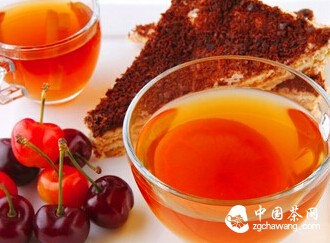
In addition, you can drink different teas at different times of the day: drink a cup of light green tea in the morning to refresh the mind; drink jasmine tea in the morning, which is fragrant and pleasant and can improve work efficiency; drink a cup of black tea in the afternoon to relieve drowsiness and lift spirits; in the evening, when gathering with friends or family, brew a pot of oolong or Pu'er tea, which has a unique charm and won't affect sleep. You might as well try this daily tea drinking schedule.
Leftover tea can also be put to good use.
It is no exaggeration to say that the whole tea leaf is a treasure. As long as it is properly utilized, "outdated" tea leaves can still play a role.
First, overnight tea. Jiang Heyuan said that drinking overnight tea is actually not harmful, but tea is easily oxidized, so teacups with overnight tea often leave tea stains. In addition, temperatures are high in summer, and tea is easily contaminated by bacteria, becoming moldy and sour, leading to diarrhea. Therefore, it is better not to drink overnight tea in summer. If you are reluctant to throw it away, you can use it for the following purposes: 1. Overnight tea is rich in acids and fluorides, which can not only prevent capillary bleeding but also have antibacterial and anti-inflammatory effects. For example, it can be used for rinsing and washing for oral bleeding and skin bleeding. 2. Washing hair with overnight tea can treat scalp itching. 3. Bad breath troubles many people. If you rinse your mouth with overnight tea three times a day, you can eliminate the trouble of bad breath.
Second, old tea and tea leaves residue. For green teas like Longjing, people pay attention to drinking the current year's new tea. If you happen to have leftover tea, these tea leaves can still be effective: 1. Making dishes. When stewing meat or making other greasy or fishy dishes, you can put some tea leaves to remove greasiness and relieve richness. 2. Tea leaves residue can be dried and stored, and made into a tea leaf pillow together with old tea, which is especially suitable for summer use. If the amount of tea leaves is not enough, you can also make small tea bags to apply on the eyes to relieve visual fatigue. 3. Dry the used tea leaves in the sun and sprinkle them in damp places at home, such as under the bed, to absorb moisture.