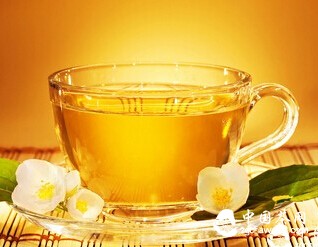
Different types of tea actually have different standards. Some teas are better when fresher, such as Xihu Longjing, which is best selected as Mingqian (tea picked before Qingming Festival). But other teas become more aromatic with age, like Pu'er, which often needs at least five years to bring out its best qualities. Therefore, selecting different teas involves different key points.
Many people have heard the saying, "The older the wine, the better; the newer the tea, the better." In fact, this is not a golden rule for tea tasting.
Selection Key Points
Traditional Chinese tea has six major categories: green tea, black tea, dark tea, white tea, yellow tea, and oolong. When selecting tea leaves, different types of tea also have different standards and methods. Generally, evaluation is based on four aspects: color, aroma, taste, and shape. However, for ordinary tea drinkers, when buying tea, due to limited conditions, they can usually only observe the appearance and color of the dry tea leaves and smell the dry aroma, without being able to brew and taste it on the spot. In fact, if you really want to taste the tea, you can also put a few leaves in your mouth and chew them. When observing the appearance of the tea, you mainly look at five aspects: tenderness, shape, color, completeness, and cleanliness.
Green Tea
Green tea is unfermented tea, characterized by high fragrance, mellow taste, beautiful shape, and good endurance for brewing. Famous varieties include: Xihu Longjing, Suzhou Biluochun, Huangshan Maofeng, Jiujiang Lushan Yunwu, etc.
Good green tea should have a uniform appearance, emphasizing "smooth, flat, straight, and even." The needle-like shape, with white down exposed on the tips, indicates good tenderness and a glossy brightness. For famous green tea like Biluochun, a high and sharp aroma is considered good; spring tea has a strong and fresh fragrance, so it is best to drink new tea.
Black Tea
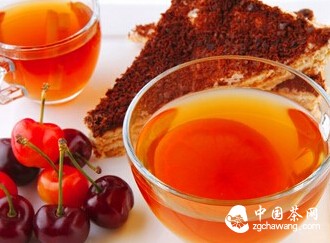
Black tea is a fully fermented tea, including famous varieties such as Yingde black tea, Qimen black tea, and Yunnan black tea. Among them, small-leaf black tea is milder and easier to drink than large-leaf black tea. In terms of appearance, good black tea should have a uniform strip shape with visible golden tips.
Black tea also favors new tea. Good black tea has a sweet and pleasant taste, with a bright red and clear soup color. After brewing, a rich and high aroma that is refreshing indicates good quality tea.
Oolong Tea
Oolong tea, also known as qing tea, is a semi-fermented tea between green and black tea. It has both the freshness of green tea and the sweetness of black tea. Oolong tea comes in granular and strip shapes. Granular types are represented by Fujian Anxi Tieguanyin and Taiwan Dongding Oolong, while strip types are represented by Wuyi Rock Tea, Dahongpao, and Chaozhou Phoenix Dancong.
The simplest way to select Tieguanyin is "the heavier, the better"! The name "Tieguanyin" (Iron Guanyin) comes from its heavy, iron-like quality. Experts describe high-quality Tieguanyin as "tightly knotted and heavy," with an overall shape resembling "frog skin, dragonfly legs, and a spiral body."
Regarding the authenticity of Dahongpao, it is now difficult to find tea from the original ancient trees on the market. However, many Dahongpao teas still meet national standards, as they are second-generation products from the mother trees. The original ancient tree tea once fetched a high price of 156,000 RMB per 20 grams.
Dark Tea
The representative of dark tea, Pu'er, is a tea that improves with age. Generally, it takes at least five years to reach a fine quality. Known for its health and wellness benefits, including lowering blood lipids and aiding weight loss, Liu Yisheng suggests experiencing the subtle differences of Pu'er from different years through dedicated brewing sessions. Nowadays, Pu'er tea is no longer simply "raw tea" or "ripe tea" but is often blended with "half raw and half ripe" or ratios like "30% raw, 70% ripe" and "30% ripe, 70% raw," offering more diverse flavors.
At the end of last year, Pu'er prices in Kunming rose by 20%-25% from a low point, but in Guangzhou, this price trend usually lags by about six months.
White Tea
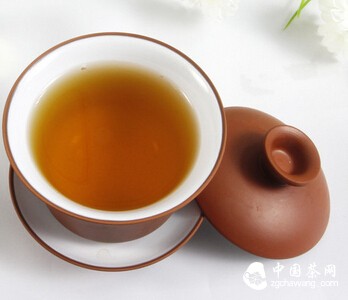
Baihao Yinzhen and Nanshan Shoumei are representative works of white tea. "Plump and tender with abundant down" is the standard for high-quality white tea. White tea is not as cooling as green tea, and its light flavor makes it a choice for many young people.
Baihao Yinzhen has a plump, robust appearance with abundant down, a silver-gray color, and a shiny luster. When brewed, the soup is apricot-yellow, with a mellow and sweet aftertaste. After brewing, the tea buds slowly descend and sink to the bottom, standing upright one by one. Therefore, a glass teacup is recommended to enjoy the brewing process.
Good Nanshan Shoumei should have a tight, round, slightly flat shape resembling a flat eyebrow, a jade-green color with white down, a mellow and refreshing taste, a green and clear soup color, and tender, bright, and uniform leaves.
Yellow Tea
Due to high prices, the premium yellow tea Mengding Huangya is rarely seen. Currently, yellow teas from Sichuan and Hunan are mainly available on the market. For example, Hunan's Junshan Yinzhen is currently priced at around 1,200 RMB.
The brewing process of yellow tea is visually appealing, earning it the nickname "water ballet." Premium yellow tea is very expensive, often costing around 1,000 to 2,000 RMB per catty. However, because the tea leaves are relatively light, yellow tea and green tea are not overly costly per unit weight.
Criteria for selecting yellow tea include: uniform strips, fine and long leaves, sweet and clear taste, and a yellow-green color. The buds and leaves should be "tender, fresh, uniform, and clean."
Tibetan Tea vs. Pu'er Tea
Tibetan tea and Pu'er tea are often confused. Both belong to the dark tea category and are teas that improve with age.
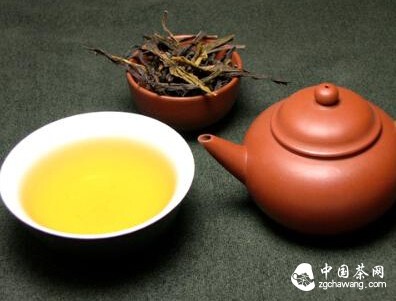
However, Tibetan tea is fully fermented (also called deep fermentation), while Pu'er is post-fermented. In terms of color, Tibetan tea has a reddish hue due to its higher thearubigin content, while Pu'er has a yellowish-red hue due to its higher theaflavin content. Regarding taste and aroma, Tibetan tea is not astringent or bitter and has a sweet aftertaste, while Pu'er has a slight astringency and, due to its fermentation process, often carries a faint "moldy" aroma.
Shuixian, Rougui vs. Dahongpao
Many beginners easily confuse Shuixian, Rougui, and other teas from Wuyi with Dahongpao, so it's important to distinguish them. All three are Wuyi rock teas. Shuixian has a soft orchid fragrance, while Rougui has an aroma similar to cinnamon. However, Dahongpao is the king of Wuyi rock teas and commands the highest price. Being from old tea trees, its leaves are thick, the taste is mellow and profound, and it is very durable, able to withstand eight infusions while retaining its fragrance.
Common Oolong vs. Tieguanyin
Tieguanyin has a lasting aroma that can still be smelled after seven infusions, while common oolong tea's aroma is less persistent, usually fading after three infusions.
Some merchants may sell Huangjingui, a type of oolong, as high-quality Tieguanyin. In fact, Huangjingui has a fresh and sharp aroma with an osmanthus fragrance after brewing. In terms of appearance, Tieguanyin is heavy and tightly knotted, while Huangjingui tea has tightly rolled, fine strips with thin branches and small leaves. The soup color also differs: high-quality Huangjingui has a bluish-yellow-green soup, while Tieguanyin can have an orange-yellow (for roasted type) or golden-green (for light type) soup.