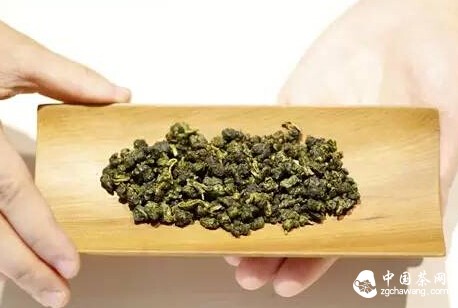
1. Delicate Floral and Fruity Aroma
This is the highest quality category among Oolong teas. Its most distinctive characteristic is having an aroma similar to peach or orchid, with a refreshing, smooth, delicate, and elegant taste. The liquor is orange-yellow and bright, and the main color of the brewed leaves is green and bright, showing green leaves with red edges, indicating a lighter degree of fermentation. The dry tea leaves are heavy and solid, with a deep green and glossy appearance. They are mostly made from spring tea, such as Guangdong Chao'an Phoenix Single Bush, Fujian Anxi Tieguanyin, Wuyi Rock Tea, and Taiwan Dongding Oolong, all of which carry a rich and delicate floral and fruity aroma. The 0.5 kg of Anxi "Guanyin King" (Tieguanyin) auctioned at Guangzhou China Hotel on November 9, 1996, had a rich floral and fruity aroma and a refreshing, delicate taste, feeling clean and smooth in the mouth, truly a top-grade Oolong tea. Such fine tea is rare; among the dozens of Oolong teas evaluated at the first and second China Agricultural Expos in 1992 and 1995, only two teas had an aroma level equivalent to this "Guanyin King" auctioned at 340,000 RMB/kg. This type of product is estimated to account for less than 5% of the total Oolong tea production, but it holds extremely high economic value. Teas costing thousands or even tens of thousands per kilogram belong to this category. Producing an elegant, delicate floral and fruity aroma Oolong tea requires very stringent conditions: the fresh leaves must be of appropriate tenderness and must be picked on sunny days. During processing, the sun-withering requires alternating shade and sunlight, and the air-withering requires a slight north wind, akin to "crisp autumn weather" conditions. Of course, it must also be paired with exquisite processing techniques.
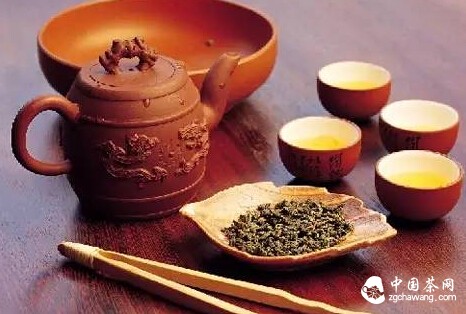
2. Floral and Fruity Aroma
Compared to the delicate floral and fruity type, this type has the same aroma category, exhibiting a peach-like fragrance and a refreshing taste, but it lacks the fresh, smooth, and delicate sensation in the mouth. It belongs to the second category in Oolong tea and also has relatively high economic value. This type of tea is mostly produced during the autumn tea season, under the same processing conditions as the first category, and its output accounts for approximately 23% of the total Oolong tea production.
3. Old-fire Aroma
This type is made from leaves picked on rainy days ("rain leaves") or when the weather conditions for sun-withering and air-withering are unsuitable for normal tea processing. During processing, the spreading and withering time has to be extended, or a withering trough might be used for heated withering. If the "fruity" aroma cannot develop during the shaking (qing) process, the only option is to increase the drying temperature to remove the coarse greenness from the leaves, roasting out an old-fire aroma. If this artificial补救 measure is not taken during drying, the finished tea will have a very astringent and green taste, resulting in poor quality. In refining factories, to eliminate the coarse greenness and develop the old-fire aroma (similar to roasted rice crust aroma) in Oolong teas with a coarse green character, the top of the dryer is often covered during re-firing to increase the temperature, allowing the hot air temperature to reach above 170 degrees Celsius, sometimes even exceeding 200 degrees Celsius. Oolong teas with an old-fire aroma have dull, dark brown, and somewhat withered dry leaves, a deep yellow liquor, and dark green brewed leaves without luster. Although the raw leaves are not extremely coarse and old, the aroma shows the old-fire character without a coarse, aged smell.
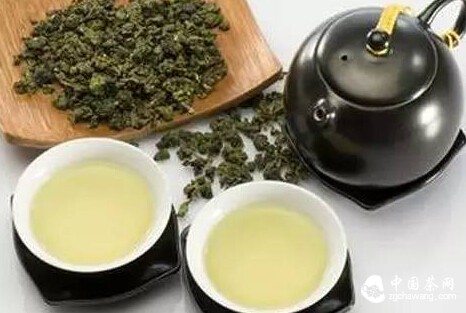
4. Old-fire Coarse Aroma
This is the lowest quality category among Oolong teas. It is processed using the same method as the third type, but the raw material consists of coarse and old stems and leaves, mostly low-grade summer tea leaves. Thus, it possesses both the old-fire aroma and a coarse, aged odor. If dried using conventional methods without developing the old-fire character, the taste would be similar to green tea fannings, which is not easily accepted by consumers. Even with high-temperature baking, the coarse odor cannot be completely removed, making this the poorest quality. When evaluating Oolong tea, it is important to note that teas with an old-fire aroma should not be judged as over-fired or inferior teas according to the standards used for black tea or green tea. In fact, the old-fire aroma in Oolong tea is considered a normal aroma characteristic; it results from a remedial technical measure during processing aimed at improving quality.
The above four-category method for judging Oolong tea quality, approached from the perspective of production quality, is relatively easier for people outside production and sales regions to grasp. However, accurately assessing the quality grade of Oolong tea still requires professional training and long-term practice.