It is often said that some people can judge the mountain village of Pu'er tea only by tasting it. After one cup, they can eloquently list them all: Ban Zhang, He Kai, Ba Da, Ma Hei, Da Xue Shan, etc. Not to mention how much of this is mere talk, but the task of judging which mountain village it is from based solely on tasting is an impossible mission!
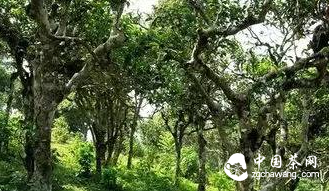
Don't different mountain villages have their own uniqueness? Haven't many experts been able to judge the origin of green tea and oolong tea by tasting?
Due to Yunnan's unique geographical and climatic characteristics, and the diversity of group species tea trees, Pu'er tea exhibits the characteristic of "bitter in the north, astringent in the south, soft in the east, strong in the west" across the geographical scope of the entire Yunnan tea area. Specifically, different tea mountain areas will have their own unique performance. However, the formation of the final quality characteristics of tea leaves is the result of the combined force of "tea variety, growth form, manufacturing process, storage" and other factors.
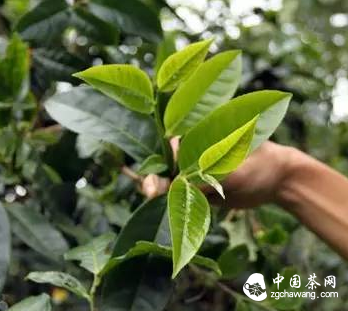
Traditionally, the raw material for Yunnan Pu'er tea mostly comes from sexually reproduced group variety tea trees. Sexual reproduction means that different plants in the same tea garden have different genes and different quality characteristics. This is just like how children and parents cannot be exactly the same. If even two adjacent tea trees cannot be identical, how can we talk about "pure material from a single mountain"? On the other hand, green tea and oolong tea production mostly uses single-variety asexual reproduction and cutting planting. A large area of tea plants may all be "clones" of the same parent. Of course, this will result in very similar quality performance.
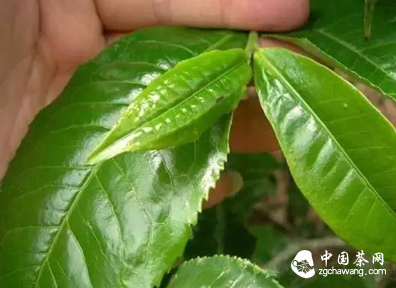
The picture above was taken in Lao Ban Zhang. It can be clearly seen that leaves on the same branch have two forms: some with serrated edges and some without.
In addition to the tea variety, the manufacturing process also has a great influence on the formation of tea quality. Yunnan Pu'er tea, especially high-quality ancient tree tea, is mostly made by hand. Handmade production inevitably brings quality differences. Different tea makers, or even the same tea maker in different batches, find it difficult to guarantee the uniformity of quality. The differences thus brought will inevitably be reflected when tasting the tea.
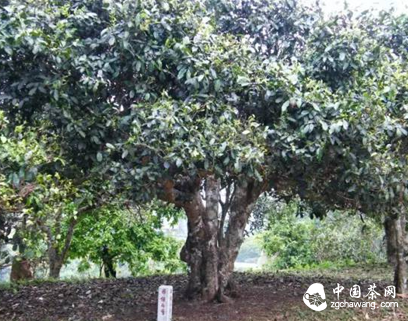
For the taster, the information he receives from this cup of tea is a composite result of the mixed effects of multiple factors such as tea variety, tea area, manufacturing process, storage, etc. Hoping to extract solely the information of a single mountain village just through tasting can really only be described as Mission Impossible. For example, the Yan Pin series from Classic Pu'er can present the characteristics of different tea areas such as Yi Wu, Jing Mai, and Lin Cang respectively, by changing the amount of tea leaves, water temperature, brewing method, etc. Obviously, judging the mountain village solely by tasting is unrealistic.
To judge the origin of a tea product, one must, like Teacher Shi and the Classic Pu'er team, participate in the entire production process of the tea, from raw materials, ecological environment, primary processing, blending, pressing, storage and transportation, etc., personally involved and strictly controlling every link, in order to grasp each key element that composes the quality characteristics of the tea product. Otherwise, merely judging the mountain village source of the tea raw materials based on tasting alone can only be armchair strategy and self-deception.