Among all Chinese teas, Wuyi Mountain's Da Hong Pao tea is perhaps the most controversial. Debate itself is good—truth emerges through discussion. However, upon closer examination, most controversies arise from a lack of understanding about tea and Da Hong Pao tea. Here, we humbly list several common misconceptions:
Misconception 1: Da Hong Pao tea was conferred by an emperor.
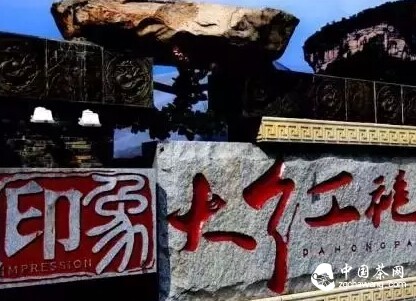
Historical records and local chronicles contain no mention of any emperor bestowing the name "Da Hong Pao." According to veteran tea masters in Wuyi Mountain, Da Hong Pao was previously known as "Qi Dan," but written史料 also lack any reference to Qi Dan. The only evidence for the origin of the name "Da Hong Pao" is the cliff inscription at Jiulongke: "Da Hong Pao, inscribed by Wu Shixian in the 32nd year of the Republic of China." Wu was the county magistrate of Chong'an during the early Republic of China era. It is said that the inscription was carved onto the cliff by monks from Tianxin Temple. The 32nd year of the Republic of China corresponds to 1943—what emperor existed then?
Misconception 2: There is only one Da Hong Pao tea plant, located at Jiulongke.
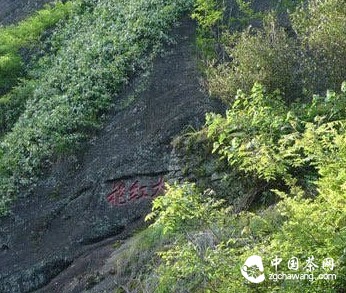
According to Mr. Zhao Dayan's book Chats on Wuyi Tea Culture, which cites "Jiang Shunan's Travel Notes," besides Jiulongke, Da Hong Pao tea was also found at Tianyou Rock and Zhulian Cave. Furthermore, Mr. Yao Yueming recalls that the contemporary Tea Sage, Wu Juenong, conducted tea variety surveys in Wuyi Mountain during the 1940s and discovered Da Hong Pao tea at Beidou Rock as well. Clearly, historically, Da Hong Pao tea was not exclusive to Jiulongke.
Today, thanks to the efforts of old and new tea practitioners in Wuyi Mountain, hundreds of mu of Da Hong Pao tea have been successfully developed using asexual propagation. Although these tea plants are descendants of the mother plant, they possess the same characteristics. Botanically speaking, as long as they share the same traits as the母本, whether they are second, third, or even tenth or twentieth generation, they hold the same varietal significance. Therefore, all Da Hong Pao tea propagated from the mother plant is genuine Da Hong Pao tea. With market economic development, the cultivation area of Da Hong Pao tea will continue to expand.
Misconception 3: Mother-plant Da Hong Pao tea is better than the second generation, and the second generation is better than the third.
This is a typical "each generation is worse than the last" mindset, lacking any scientific basis. In the practice of asexual propagation using mother-plant Da Hong Pao tea trees, some后代 do exhibit trait variations. For those that retain the母本's characteristics, there is no question of being inferior. For变异的后代, it merely means the traits have changed—they could be worse in quality (such后代 are usually quickly淘汰), but they could also变异 for the better, potentially giving rise to new优良品种.
Regarding Da Hong Pao products, while the tea plant variety is an important factor in producing high-quality finished tea, it is not the only one. Product quality is also influenced by growth environment, seasonal climate, processing techniques, and other factors. In fact, many finished teas made from后代 Da Hong Pao tea plants can rival those made from the mother plant.
Misconception 4: All Da Hong Pao tea sold on the market today is fake.
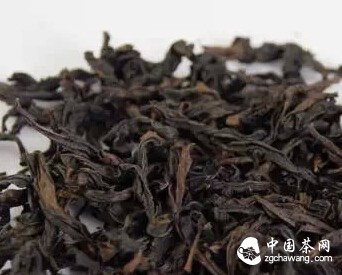
This view stems mainly from not understanding the distinction between Da Hong Pao as a tea plant variety and Da Hong Pao as a tea product. Jiulongke Da Hong Pao tea products are extremely scarce, amounting to only a few liang annually, making them virtually unavailable on the market. The Da Hong Pao seen on the market today consists partly of products made from后代 (also called purebred) Da Hong Pao, but mostly of tea products bearing the Da Hong Pao name—or rather, commercial teas. These commercial teas are typically blended from various high-quality岩茶 raw materials. Although the quality of such Da Hong Pao commercial teas varies, as long as they are registered and inspected, they are legitimate genuine products. Of course, there are indeed many "three-noes" tea products (no商标, no生产厂家, no生产日期) falsely labeled as Da Hong Pao, but the existence of such counterfeit products does not negate all genuine Da Hong Pao products.
Misconception 5: Blended tea must be of poor quality.
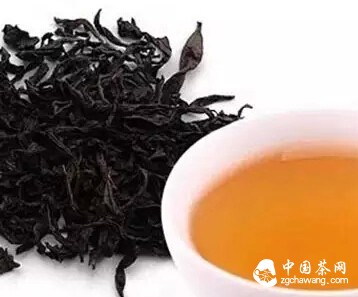
This also results from不了解茶叶生产技术过程. Tea blending, like the blending technique in winemaking, is a necessary technology to ensure consistent quality. Since tea became a commodity, blending technology has existed. The tea production process is unique: variations in tea leaf sources, picking times, and processing techniques—including roasting火候—can all affect the quality of the finished tea. Thus, even within the same tea factory, each batch of finished tea may differ in quality.
Market standards for finished tea, however, are defined by grades:特级,一级,二级, etc. To ensure finished tea meets these market standards, different batches with varying qualities and characteristics must be reasonably blended. Of course, this blending requires considerable technical skill. Therefore, the issue lies in whether the blending is done well or poorly; blending itself is not objectionable.
In summary, the following conclusions can be drawn:
1. Da Hong Pao refers both to the name of a tea plant variety and to tea products; the two are related, but the tea plant is not equivalent to the tea product.
2. Da Hong Pao encountered on the market is primarily tea products. Some are purebred tea, but most are blended teas冠以 the Da Hong Pao name.
3. Distinguishing genuine from fake Da Hong Pao tea mainly involves checking if it is a "three-noes" product: namely, whether it has trademark registration, a manufacturer and production date, and原产地保护标志. Further, check if it has passed green/environmental certification. Generally, Da Hong Pao tea meeting the first three conditions has undergone quality inspection by authoritative departments and complies with national standard sensory indicators.
4. For loose Da Hong Pao tea, the only way to determine authenticity is through personal tasting. Most tea shops offer this service. Whether one gets deceived depends on the purchaser's own鉴别能力. Therefore, if unsure, it's best to buy small packaged tea.