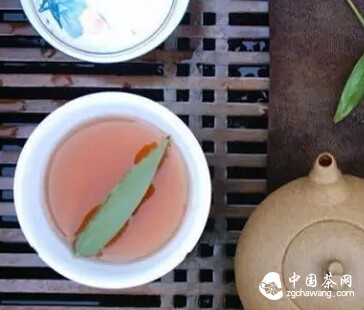
I. Green Tea
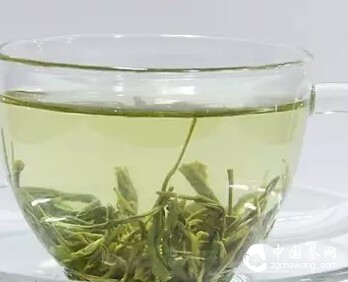
Green Tea is a type of tea that does not undergo fermentation. Fresh leaves are spread out to wither and then directly stir-fried in a hot wok at 100-200 degrees Celsius to preserve their green color.
Famous varieties include: Longjing Tea, Biluochun Tea, Huangshan Maofeng Tea, Lushan Yunwu, Liu'an Guapian, Mengding Tea, Taiping Houkui Tea, Junshan Yinzhen Tea, Guzhu Zisun Tea, Xinyang Maojian Tea, Pingshui Pearl Tea, Xishan Tea, Yandang Maofeng Tea, Huading Yunwu Tea, Yongxi Huoqing Tea, Jingting Lvxue Tea, Emei E'rui Tea, Duyun Maojian Tea, Enshi Yulu Tea, Wuyuan Mingmei Tea, Yuhua Tea, Mogan Huangya Tea, Wushan Gaimi Tea, Putuo Buddha Tea.
II. Black Tea
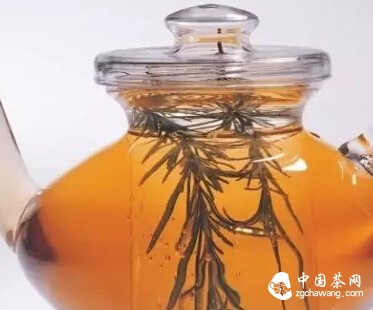
Black Tea is primarily formed through "fermentation." This process involves the oxidation of originally colorless polyphenols in the tea leaves, catalyzed by polyphenol oxidase, to form red oxidative polymers—black tea pigments. Part of this pigment is water-soluble, creating a red infusion when brewed, while the insoluble part accumulates in the leaves, turning them red.
The earliest Chinese black tea was Souchong (Xiaozhong) from the Chong'an area of Fujian, which later evolved into Congou (Gongfu) black tea. The Congou processing method spread to India, Sri Lanka, and other countries, leading to the development of "broken black tea." China also began promoting broken black tea production after 1957. Thus, black tea can be categorized into Souchong, Congou, and Broken Black Tea.
① Souchong is a unique black tea from Fujian Province, characterized by a red infusion, red leaves, a pine-smoky aroma, and a flavor reminiscent of longan soup. The best quality is "Zhengshan Xiaozhong" from Tongmuguan, Xingcun Township, Chong'an, Fujian.
② Congou Black Tea is also a traditional Chinese export, sold to over 60 countries and regions in Eastern and Western Europe. It is mainly produced in more than 10 provinces including Anhui, Fujian, Hubei, Hunan, and Jiangxi. Among them, "Keemun (Qihong)" from Anhui has tightly rolled leaves, a rose-like sweet floral aroma, and a mellow taste; "Dianhong" from Fengqing and Menghai in Yunnan has plump leaves with golden tips, a bright red infusion, and a rich, mellow flavor. Keemun and Dianhong are highly renowned Congou teas overseas. Other major Chinese Congou varieties include Fujian's "Minhong," Hubei's "Yihong," Jiangxi's "Ninghong," and Guangdong's "Yuehong."
③ Broken Black Tea is made by rolling, cutting into granular fragments, fermenting, and drying. It has a fragmented appearance and is also called red fine tea. Broken black tea infuses quickly with a high extraction yield, making it ideal for tea bags. It is very tasty with sugar and milk. Mainly produced in Yunnan, Hainan, Guangdong, Guangxi, etc. Broken black tea made from large-leaf varieties typically yields a strong, brisk, and fresh infusion that turns orange-yellow with milk. After refining, broken black tea produces four categories: leaf tea, broken tea, fanning, and dust. Leaf tea consists of short, strip-shaped fragments; broken tea is granular; fanning is small flaky pieces; dust is fine powder.
Oolong Tea is a semi-fermented tea with a distinctive transparent amber infusion. It is a unique Chinese tea category, mainly produced in northern Fujian, southern Fujian, Guangdong, and Taiwan. The most famous is Fujian's Wuyi Rock Tea. Oolong and green tea come from the same tea plant, differing in the fermentation process.
III. Oolong Tea (Blue Tea)
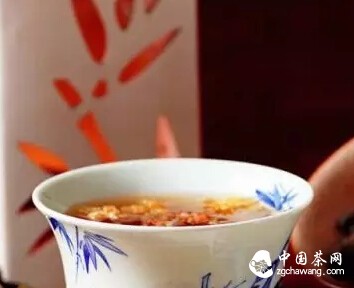
Types: Oolong tea is divided into four major categories based on region: Northern Fujian Oolong, Southern Fujian Oolong, Guangdong Oolong, and Taiwan Oolong. It can be further subdivided into: Shuixian, White Peony, Huangdan (Golden Osmanthus), Benshan, Maoxie, Wuyi Rock Tea, Dongding Oolong, Shuixian, Rougui, Qilan, Phoenix Dancong, Phoenix Shuixian, Lingtou Dancong, and Tieguanyin, etc.
Wuyi Rock Tea: Produced in Wuyi Mountain, Fujian. It has a plump, even, tightly rolled appearance with a glossy color and a frog-belly-like texture on the leaf back. Colors range from green, sand-green, to dense yellow, with red spots or edges on the leaf base and margin, and a light green center. Da Hong Pao is considered the best.
Phoenix Dancong: Produced in the Wudong Mountain tea area of Fenghuang Town, Chaozhou City, Guangdong. The leaves are sturdy and curled, with a light yellow-green color. The infusion is yellow with a green tint, offering a clear, lingering aroma. It remains fragrant over multiple infusions with a lasting sweetness.
Taiwan Oolong Tea: Produced in Taiwan, China. It has curled, copper-brown leaves, an orange-red infusion, a pure taste, and a strong natural fruity aroma. After brewing, the leaves show red edges and green centers. Dongding Oolong Tea from Nantou County is extremely famous and precious.
Tieguanyin: Produced in Anxi, Southern Fujian. "Tieguanyin" is both the tea name and the tea plant variety. The leaves are tightly rolled, some shaped like a steelyard hook or a dragonfly head. As caffeine evaporates with moisture, a white frost forms on the surface, called "sand-green frost."
Phoenix Shuixian: A strip-shaped oolong tea from Fenghuang Township, Chao'an, Guangdong, graded into Dancong, Langcai, and Shuixian. It is praised for its beautiful shape, emerald color, rich aroma, and sweet taste. The tea strips are large and plump, with an eel-skin color that is oily and glossy. The infusion is clear and yellow, with a mellow, refreshing, and sweet aftertaste, lasting aroma, and good infusion endurance.
Benefits: Besides the general health functions of tea—such as refreshing the mind, relieving fatigue, promoting saliva and diuresis, reducing heat and preventing heatstroke, sterilizing and reducing inflammation, detoxifying and preventing diseases, aiding digestion and removing greasiness, and slimming—Oolong tea also has special effects like preventing cancer, lowering blood lipids, and anti-aging.
IV. Scented Tea
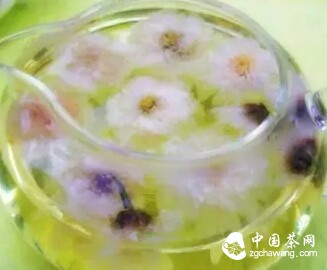
Scented Tea, also known as Xiangpian, utilizes tea's ability to absorb odors. Fragrant fresh flowers are mixed with new tea, allowing the tea to absorb the scent before the dried flowers are sieved out. The resulting tea has a strong aroma and a deep-colored infusion, favored by northerners who prefer robust flavors. The most common is Jasmine Tea made with jasmine flowers. Depending on the flowers used, there are also Magnolia Tea, Osmanthus Tea, Chloranthus Tea, Daidai Flower Tea, etc. Most scented teas use green tea as the base, but some use black tea.
Scented Tea, also called熏花茶 (Xunhua Cha),香花茶 (Xianghua Cha), or香片 (Xiangpian). It is made by scenting tea leaves (green, black, or oolong) with edible, fragrant fresh flowers using a scenting process. Generally categorized by the flower used: Jasmine Tea, Magnolia Tea, Chloranthus Tea, etc., with Jasmine Tea having the largest output. Each sub-category is further graded based on the origin, quality of the raw tea leaves, and processing refinement, typically into six or seven grades: Special, First, Second, Third, Fourth, Fifth, etc.
Scented tea combines tea flavor and floral fragrance, each enhancing the other. It retains the strong, refreshing taste of tea while gaining a fresh, delicate floral aroma. When brewed, the floral scent is captivating, filling the mouth with sweetness and fragrance, refreshing the mind and spirit. Scented tea not only retains the benefits of tea but also incorporates the pharmacological effects of the flowers, benefiting human health.
V. Yellow Tea
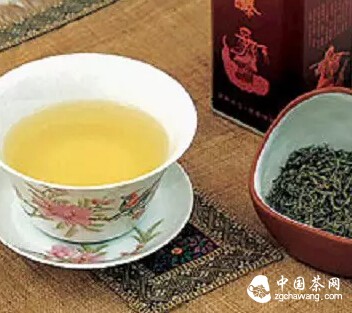
Yellow Tea belongs to the lightly fermented tea category. Its basic process is similar to green tea, but includes a "menhuang" (smothering and yellowing) step, resulting in the characteristic yellow infusion and yellow leaves. Yellow tea has a long history, with many famous teas falling into this category.
Junshan Yinzhen is produced in Hunan and is a bud tea. Due to excellent tea plant varieties with strong branches and sparse growth, the buds are plump, heavy, and substantial, with about 25,000 buds per jin. Junshan Yinzhen has a unique style, limited annual production, and exceptional quality, ranking among the finest Chinese teas. The buds are plump, straight, and firm, golden in color, covered with silvery pekoe. The infusion is clear orange-yellow, with a pure aroma, sweet and refreshing taste, and even, bright yellow leaves. Based on bud plumpness, it is graded into Special, First, and Second grades.
When brewing Junshan Yinzhen in a clear glass cup, one can observe the buds initially pointing upward with the stem hanging down, floating on the water surface. They then slowly sink and stand upright at the bottom, rising and falling up to three times—hence the name "three rises and three falls." Finally, they stand vertically at the bottom like a forest of spears or bamboo shoots breaking ground. The buds and water color merge into one, with layers of green and emerald, creating wonderful interest and has long been praised. Even without tasting its flavor, just watching this spectacle is captivating and refreshing. According to the scientific principle "light objects float, heavy ones sink," the "three rises and three falls" phenomenon is caused by the asynchronous expansion of the bud from water absorption and the instantaneous change in its specific gravity.
Mengding Huangya is produced in Sichuan. Its quality features are flat, straight leaves with a slightly yellow color, fully visible buds and pekoe, a strong sweet aroma, a bright yellow infusion, a fresh, mellow, and sweet aftertaste, and whole buds in the brewed leaves that are even and yellow. It is the finest tea from Meng Mountain.
VI. Dark Tea
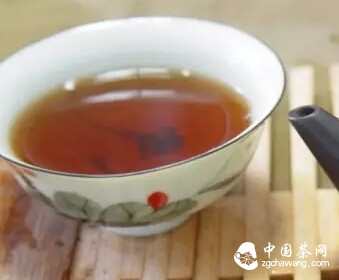
Dark Tea is a post-fermented tea, unique to China with a long history and rich variety. As early as the 11th century, during the Northern Song Xining period (1074 AD), there were records of turning green raw tea black through coloration. Dark tea is the raw material for many compressed teas. Compressed dark teas include Fuzhuan Tea, Heizhuan Tea, Huazhuan Tea, Xiangjian Tea, Qingzhuan Tea, Kangzhuan Tea, Jinjian Tea, Fangbao Tea, Liubao Tea, Round Tea, Tight Tea... etc. Main production areas are Hunan, Hubei, Sichuan, Yunnan, Guangxi, etc. Dark tea has a large annual output, second only to black and green tea, making it China's third major tea category. Dark tea is mainly for border sales, partially for domestic sales, and a small amount for export. Therefore, compressed teas made from dark tea are habitually called "border-sale tea."
Pu-erh Tea is made from high-quality Yunnan large-leaf variety. Its fresh leaves are processed into sun-dried green tea (Dianqing) through fixation, rolling, and sun-drying, which is then used as raw material for a special process involving water sprinkling and pile fermentation (wo dui).
Loose Pu-erh tea has thick, sturdy strips, a dark brown or reddish-brown color (commonly called liver color), a mellow and sweet aftertaste, and a unique aged aroma. Pu-erh tea has long been considered a health-beneficial beverage. Clinical trials by experts at home and abroad have proven that Pu-erh tea has multiple effects: lowering blood lipids, weight loss, inhibiting bacteria, aiding digestion, warming the stomach, promoting saliva, quenching thirst, and sobering up and detoxifying. Therefore, in Japan, France, Germany, Italy, Hong Kong, Macau, and other regions, Pu-erh tea is praised as "Beauty Tea", "Weight Loss Tea", "Longevity Tea", and "Slimming Tea".
VII. White Tea
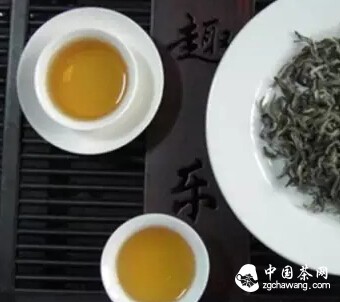
White Tea is a specialty of Fujian, mainly produced in Fuding, Zhenghe, Songxi, Jianyang, etc. The basic process involves withering, baking (or shade-drying), sorting, and re-firing. Withering is the key step determining white tea quality. White tea is characterized by complete buds covered with pekoe, a fresh pekoe aroma, a clear yellow-green infusion, and a light, sweet aftertaste. It is a minimally fermented tea and a special treasure among Chinese tea categories. It is named "white tea" because the finished tea, mostly buds, is covered with white pekoe, resembling silver or snow.
As the name suggests, this tea is white and not commonly seen in many regions. White tea production has a history of about 200 years, first created in Fuding County. The county has an excellent tea plant variety—Fuding Dabai Tea—whose buds and leaves are covered with fine white hairs, making them excellent raw material for tea. Initially, this tea leaf was used to produce white tea. Why is the tea white? This is because people pick tender buds and leaves with many white hairs on the back. During processing, they are neither stir-fried nor rolled but are sun-dried or gently baked, allowing the white hairs to remain intact on the tea's surface, hence its white appearance.