
Many tea friends have reported this situation: sometimes drinking tea can make the mouth feel dry. Is this normal? Does it mean the tea leaves are of poor quality?
The reasons for this are complex. Based on our experience, we summarize and share them here. First, we need to rule out the background of the drinker's own poor physical condition. Normally, the tongue surface is moistened by body fluids, reflected as moisture on the tongue. In Traditional Chinese Medicine, dryness or moisture reflects the state of body fluids. A normal tongue coating is neither too dry nor too wet. Insufficient body fluids lead to a dry mouth and tongue. A dry, coating-less tongue indicates exhaustion of body fluids; in external contraction diseases, it's often due to dryness-heat damaging fluids, while in internal injury diseases, it's mostly due to yin deficiency and insufficient fluids. Frequent dry mouth and tongue is not closely related to tea drinking itself and is a separate matter.

Setting aside pathological reasons, let's look at the relationship between a dry tongue surface and tea drinking:
First, dryness and astringency caused by tea polyphenols. Tea contains polyphenolic substances. When entering the mouth, these substances can form a water-impermeable film on the tongue, making the tongue feel dry and astringent. After this film breaks, it transforms into the commonly experienced 'sweet aftertaste,' which is also a sign of good tea. This sensation is usually more pronounced in teas with higher polyphenol content, such as green tea and raw Pu-erh.
Second, caused by drinking tea too hot. Drinking tea hot or warm is recommended, but overly hot tea can scald the oral cavity, producing a dry, astringent feeling. In fact, drinking overly hot water produces a similar sensation. Furthermore, Li Shizhen's "Compendium of Materia Medica" mentions: "Tea is bitter and cold, most effective at lowering fire. Fire is the root of all diseases; when fire is lowered, the upper body becomes clear. Drinking it warm allows the fire energy to descend due to the cold nature; drinking it hot allows the tea to disperse with the aid of the fire energy, and it also helps resolve the toxins of alcohol and food."
Third, the so-called relatively strong "fire energy" of some teas. On one hand, traditional medicine believes that foods have "four natures and five flavors": cold, cool, warm, hot (the four natures) and sour, bitter, sweet, pungent, salty (the five flavors). Among tea types, green tea and white tea are the coolest; oolong tea and yellow tea are relatively neutral and mild; black tea and dark tea (like Pu-erh) are relatively warm and hot in nature. On the other hand, some newly processed teas, such as green tea just after fixation and drying or teas that have just been roasted, often still have undissipated "fire energy." Drinking them at this time can cause a dry, astringent feeling on the tongue and throat for some people. After a period of time, most tea types will not exhibit this condition.
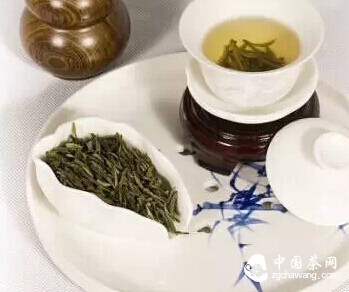
The above are the main reasons for a dry tongue. Additionally, some people are sensitive to tea fuzz (hao). For teas with abundant fuzz like Biluochun or Silver Needle white tea, throat irritation can cause a feeling of itchiness and dryness.
Thus, we understand why sometimes drinking tea can cause a dry sensation on the tongue. In fact, similar to our perception of other tastes, to some extent, it is a normal phenomenon and there's no need to worry.