Among all teas in China, perhaps the most controversial is Wuyi Mountain's Da Hong Pao tea. Debate itself is good, as truth emerges through discussion. However, upon closer analysis, most controversies arise from a lack of understanding about tea and Da Hong Pao tea. Here, I humbly present several common misconceptions:
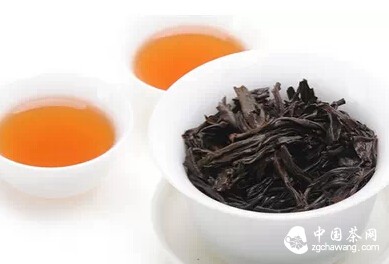
Misconception One: Da Hong Pao tea was conferred by an emperor.
There are no historical records or local chronicles documenting any imperial bestowal of the name "Da Hong Pao" to this tea. According to veteran tea masters in Wuyi Mountain, Da Hong Pao was previously known as "Qi Dan," but there are also no written records about Qi Dan. The only evidence of the name's origin is the cliff inscription at Jiulongke: "Da Hong Pao, inscribed by Wu Shixian in the 32nd year of the Republic of China." Wu was the county magistrate of Chong'an during the early Republic of China period. It is said that the inscription was carved onto the cliff by monks from Tianxin Temple. The 32nd year of the Republic of China corresponds to 1943—by then, what emperor could there have been?
Misconception Two: There is only one Da Hong Pao tea tree, located at Jiulongke.
According to Mr. Zhao Dayan's book Chats on Wuyi Tea Culture, which cites "Travel Notes of Jiang Shunan," besides Jiulongke, Da Hong Pao tea trees were also found at Tianyou Rock and Zhulian Cave. Additionally, Mr. Yao Yueming recalls that contemporary Tea Sage Wu Juenong conducted a tea variety survey in Wuyi Mountain during the 1940s and discovered Da Hong Pao tea at Beidou Rock. Clearly, historically, Da Hong Pao was not limited to Jiulongke.
Today, through the efforts of Wuyi Mountain's tea experts, using asexual propagation methods, hundreds of acres of Da Hong Pao tea trees have been successfully cultivated. Although these trees are descendants of the mother plant, they possess the same characteristics. Botanically speaking, as long as they share the same traits as the mother plant, whether second, third, or even tenth or twentieth generation, they hold the same varietal significance. Therefore, all Da Hong Pao tea propagated from the mother plant is genuine. With market development, the cultivation area of Da Hong Pao tea will continue to expand.
Misconception Three: Mother plant Da Hong Pao tea is better than the second generation, and the second generation is better than the third.
This is a typical "each generation is worse than the last" mindset, lacking scientific basis. In the practice of asexual propagation using mother plant Da Hong Pao trees, some offspring do exhibit trait variations. Those retaining the mother plant's characteristics are not inferior. For variants, it simply means changed traits—they could be worse (and usually such offspring are quickly eliminated) or potentially better, leading to new excellent varieties.
Regarding Da Hong Pao products, while the tea variety is important, it is not the sole factor determining quality. Product quality is also influenced by growing environment, seasonal climate, processing techniques, etc. In fact, many finished teas made from descendant Da Hong Pao trees can rival those made from the mother plant.
Misconception Four: All Da Hong Pao tea sold on the market today is fake.
This view stems from not distinguishing between Da Hong Pao as a tea plant variety and as a tea product. Jiulongke Da Hong Pao tea yield is minimal—only a few ounces annually—making it virtually unavailable on the market. Most Da Hong Pao tea encountered today is either made from descendant (purebred) Da Hong Pao or is a product branded as Da Hong Pao, essentially commercial tea. Such commercial teas are often blended from various high-quality rock tea materials. While quality varies, legally registered and inspected products are genuine. Of course, there are unlabeled "three-no" products falsely using the Da Hong Pao name, but their existence doesn't negate all authentic Da Hong Pao products.
Misconception Five: Blended tea is definitely of poor quality.
This also arises from unfamiliarity with tea production. Tea blending, like liquor blending, is a necessary technique to ensure consistent quality. Since tea became a commodity, blending has existed. Tea production is unique: variations in leaf source, picking time, processing techniques, and even roasting can affect the final product's quality. Thus, even within the same factory, each batch may differ.
Market standards for finished tea, however, are fixed—special grade, first grade, second grade, etc. To meet these standards, teas from different batches with varying qualities and characteristics must be skillfully blended. The technique involved is sophisticated. Therefore, the issue lies in how well the blending is done, not blending itself.
In summary:
1. Da Hong Pao refers both to the tea plant variety and the tea product; they are related but not identical.
2. Market-available Da Hong Pao is mainly tea products—some purebred, most blended under the Da Hong Pao name.
3. To identify genuine Da Hong Pao tea, check for "three certifications": trademark registration, manufacturer and production date, and origin protection labeling. Further, verify green/environmental certifications. Generally, Da Hong Pao tea meeting the first three criteria has passed quality inspections and complies with national sensory standards.
4. For loose Da Hong Pao tea, tasting is the only way to verify authenticity. Most tea shops offer tasting services. Whether one is deceived depends on the buyer's discernment. Thus, if unsure, opt for packaged tea.