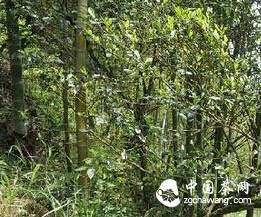
In 1961, many wild tea trees were discovered at Shuitou Bashan in Jiandou Town, which have been verified to have a growth history of 1,000 to 1,200 years. Wild tea trees successively discovered in Lantian, Xiping, and other areas fully demonstrate the richness of Anxi's tea resources.
During the Five Dynasties period, tea cultivation among Anxi folk gradually developed. Historical records show that in the late Tang Dynasty, tea planting and tasting were already practiced in Anxi temples and Taoist monasteries, one of which was Langyuan Rock in Chengxiang Town. Zhan Dunren, the first county magistrate, left behind the exquisite tea tasting verse: "With a lively fire, I newly brew tea from the stream at the foot of the ravine, spending the whole day with you in profound discussion."
By the early Song Dynasty, the art of roasting tea had become widespread among the people in Anxi. During the Song Dynasty, in addition to famous teas from renowned rocky areas such as Qingshui and Shengquan, folk tea making in Anxi was also very common. The brick carving of the tea mat at the Anxi Confucian Temple shows the sophistication of tea drinking in Anxi at that time.
In the Yuan Dynasty, with the prosperity of Quanzhou's Citong Port, Anxi tea exports increased significantly.
In the Ming Dynasty, the cultivation and production techniques of Anxi tea entered a period of flourishing development. During the Chenghua period of the Ming Dynasty, tea farmers in Xiping invented the Oolong tea production technique, which made China the world's leading tea-producing country with its rich diversity of six major tea categories. In the ninth year of the Chongzhen reign of the Ming Dynasty, people in Xiping invented the whole-plant layering propagation method for tea trees, which was later improved into the short-cutting propagation method, the most advanced and widely used tea tree propagation technique in the world.
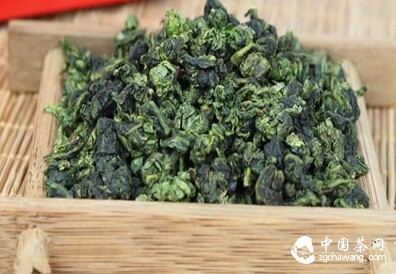
During the Qianlong reign of the Qing Dynasty, the finest among Oolong teas—Anxi Tieguanyin—emerged, ushering in a glorious era for Anxi's tea industry. From then until the Republic of China period, a large number of tea merchants from Xiping, Daping, and Huyu Luoyan expanded their tea business to Southeast Asian countries. Tea became the main source of income for the people of Anxi.
During World War II, tea exports were interrupted, and the Anxi tea industry stagnated.
After the founding of New China, the government restored and developed tea production, vigorously promoted new tea production technologies, and the Anxi tea industry gradually recovered. However, production and sales were still strictly controlled by China's planned economy, and private tea trading was once regarded as "speculation and profiteering" and banned.
Wisdom and ingenuity create the "No. 1 Tea-Producing County"
As the wheel of time moved into the late 1970s, the spring breeze of reform and opening up allowed Anxi Tieguanyin to create countless legends.
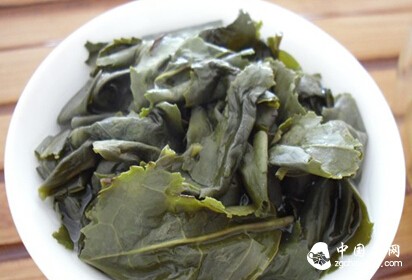
In 1984, a tea merchant from Guangdong bought 2 jin of Anxi Tieguanyin from Xianghua tea farmer Chen Shuangshuan for 2,400 yuan. From then on, thousands of new-generation Anxi people began, like Chen Shuangshuan, to use Tieguanyin tea trees to draw their own life blueprints.
The county party committee and government regarded the tea industry as a livelihood industry and formulated the strategic measure of "enriching the people through the tea industry." Anxi people of all generations inherited tea-making techniques and improved tea quality. Anxi people who went out traveled thousands of miles to promote Anxi tea culture, and tea enterprises innovated marketing and expanded territories, making tea shops spread all over the world.
Anxi Tieguanyin, with its unique "orchid fragrance" and "Guanyin charm," captivated countless Chinese and foreign merchants, achieving the title of "Top 500 Chinese Brands Influencing the World." Anxi ranks as a national leading tea industry development demonstration county and has been ranked first among the top 100 key tea-producing counties in China for many consecutive years.
"Step out of tea to build a bigger tea industry, step out of Anxi Tieguanyin to build a greater Chinese Tea Capital." In recent years, the county party committee and government have called on the entire county to strengthen and expand the Anxi tea industry with a higher conceptual stance.
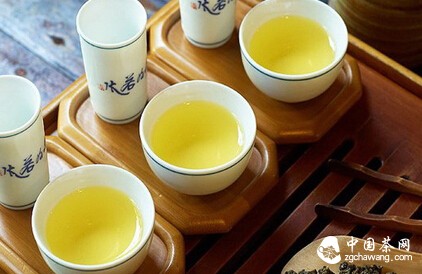
Hundreds of thousands of skilled tea farmers in the county cultivate intensively on 600,000 mu of ecological tea gardens. Thousands of brands and tens of thousands of tea enterprises respond to the call of Anxi Tieguanyin franchise stores. With 48 tea association branches, over 4,000 members, and more than 100,000 Anxi Tieguanyin marketing troops spread across the country, Anxi Tieguanyin has made "one leaf" flourish "a hundred industries," transforming gracefully into a powerful livelihood pillar industry, accelerating Anxi's progression from "China's No. 1 Tea-Producing County" to "China's No. 1 Strong Tea County."
In 2013, the county's tea output reached 68,000 tons, continuing to rank first among "national key tea-producing counties"; the total tea-related output value reached 11.5 billion yuan; the total investment in tea-related projects was estimated at nearly 20 billion yuan, covering multiple fields such as tea industry, tea tourism, tea exhibitions, and tea accessories. In 2014, Anxi was honored as one of "China's Top Ten Tea Industry Transformation and Upgrade Demonstration Counties" and was again awarded the title of "National Key Tea-Producing County," ranking first. Thus, Anxi County has been rated as the top national key tea-producing county for six consecutive years.