In May, the aromatic and delightful spring tea is already steaming in citizens' teacups. Tea can not only be sipped but also eaten. Nowadays, tea-infused foods have become a new dietary trend. While tea foods are gradually gaining popularity in developed countries like the United States and Japan, they are just starting to emerge in China. Tea foods are known for their refreshing taste and health benefits. On a scorching early summer day, enjoying a cup of spring tea while savoring tea snacks in the cool breeze is undoubtedly one of life's greatest pleasures.
The Functions of "Tea Food"
Supplementing Nutrition and Stimulating Appetite
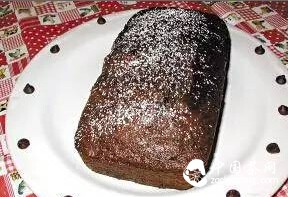
Tea bread is not only fragrant, delicious, and uniquely flavored but also very fluffy with good shelf life.
China is the earliest country to discover and utilize tea leaves. In ancient times, tea was first used for medicinal purposes. As medicine and food share the same origin, dietary supplementation is often better than medicinal supplementation. In ancient China, tea was already mixed with food to create tea dishes, snacks, and meals. The ancient trend of matcha was introduced to Japan, leading to the development of "Japanese matcha cuisine." Currently, tea is evolving from traditional "drinking" and "sipping" into a new method—"eating tea," which refers to tea-infused foods. This has become a new global trend.
It is understood that tea contains various vitamins, which can be divided into water-soluble and fat-soluble vitamins based on their solubility. Since fat-soluble vitamins are difficult to dissolve in water, they are not easily absorbed by the body when tea is brewed with boiling water. Therefore, it is now recommended to appropriately "eat tea" to compensate for this deficiency. This involves grinding tea into ultra-fine powder and adding it to various foods, such as tea-infused tofu, tea noodles, tea pastries, tea candies, and tea ice cream. Consuming such tea foods allows the body to absorb the fat-soluble vitamins and other nutrients in tea, fully realizing its nutritional value. At the same time, it supplements the body's need for proteins, amino acids, and mineral elements.
Various tea foods are nutritious, tea-scented, delicious, and uniquely flavored, stimulating the appetite while promoting health.
The Popularity of "Tea Food"
Natural Health Benefits: Chewing Health in "Tea Food"
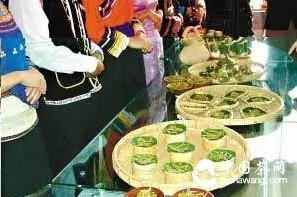
Ethnic minorities also have a rich variety of tea foods, such as the Dai people's bamboo tube tea, the Bulang people's pickled sour tea, and the Hani people's clay pot tea.
Currently, a trend is gradually emerging in the market, primarily using mid-to-low-grade tea as raw material, extracting effective components from tea as natural food additives, and directly adding ground tea powder or tea juice to foods to create natural health foods.
It is introduced that tea foods on the market mainly include several categories: tea candies, tea noodles, tea pastries, tea mooncakes, tea biscuits, tea bread, and tea-filled chocolates made with ultra-fine tea powder; tea popsicles, tea jellies, and tea preserves made with tea extracts.
The production of tea foods is not complicated. The addition of tea, a healthy element, adds a unique characteristic to these foods. For example, tea jelly is delicately infused with four different types of tea—black tea, green tea, jasmine tea, and oolong tea—without adding any pigments or preservatives, resulting in a unique flavor. Tea soft candies are made from high-grade steamed green tea and high-calcium, low-fat milk powder, offering a delicate, smooth texture that does not stick to the teeth. They are green tea foods that are high in calcium, low in fat, and low in calories. Green tea melon seeds are made from high-quality pumpkin seeds and green tea powder, featuring thick, crispy, and delicious kernels. They can be shelled and eaten or enjoyed whole. Since they contain green tea powder and various tea elements, they are non-heating and represent a healthy snack for leisure time.
Green tea steamed cakes mainly contain steamed green tea powder and an appropriate amount of Yunnan walnuts. Walnuts, a type of traditional Chinese medicine, resemble the human brain in shape and are crispy and delicious. Consuming an appropriate amount of walnuts is beneficial for the brain. Green tea contains various tea elements such as catechins and vitamins. The combination of walnuts and green tea in steamed cakes results in a fragrant and soft texture, embodying a typical local characteristic—simple to make and delicious to eat.
The Taste of "Tea Food"
Elegant and Fragrant, with a Long-Lasting Aftertaste

Visiting tea houses is a favorite pastime for people in the Lingnan region. With family or a few friends, brewing a pot of high-quality spring tea at a tea house, ordering several exquisite tea snacks, and chatting about daily life evoke a sense of tranquility and comfort in civic life. Lingnan tea snacks are quite diverse, and pairing them with snacks made from good tea undoubtedly adds to the delight.
Flower tea pastries are visually appealing. Pastries made with flower tea take the shape of flowers and retain their natural colors, appearing semi-transparent like various types of amber. Upon smelling, the pastries still carry a subtle floral fragrance. When placed in the mouth and slowly chewed, the cool, smooth, and light sweetness of the flowers lingers in the oral cavity—the fragrance is elegant, and the sweetness is refreshing. Paired with a cup of green tea, the experience leaves a lasting fragrance and a long-lasting aftertaste.
Tieguanyin tea noodles combine the aroma of tea with the texture of noodles. Noodles cooked with Tieguanyin tea broth look no different from ordinary noodles on the surface—one must taste them to discover their secret.
Tieguanyin tea noodles have a refreshing taste, cutting through greasiness and adding a tea fragrance. Taking a hot bite immediately spreads a warm and fragrant feeling throughout the abdomen, satisfying both the stomach and the senses.
Tea Food
So-called tea food refers to a全新 type of food made using molecular membrane technology or ultra-micro grinding high-tech processes to turn oolong tea, black tea, or green tea into extremely fine tea powder, or to extract effective components from tea leaves, which are then used as raw or auxiliary materials.