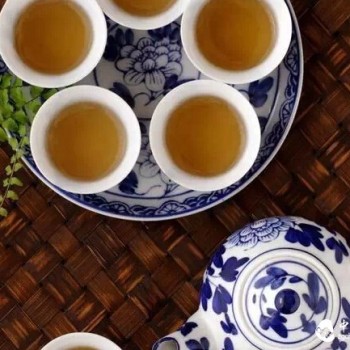
Tea Should Not Be Drunk Casually! The Six Most Common Mistakes in Daily Tea Drinking, Correct Tea Drinking Starts Now
Tea drinking is a common daily habit, but many people unknowingly make mistakes that can negate its health benefits and even harm the body. This article highlights six frequent errors: using a large cup with tea leaves steeping all day, skipping the 'awakening' step for tea, consuming overnight tea,...
Tea News · Apr 14, 2026
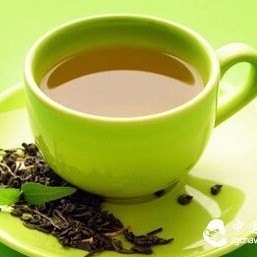
Can These Teas Really Help with Weight Loss?
Many tea enthusiasts are familiar with the pharmacological functions of drinking tea, but did you know certain teas can also aid in weight loss? This article introduces several teas believed to support weight management, distinct from commercially marketed 'slimming teas.' For example, Lotus Leaf Te...
Tea News · Apr 14, 2026
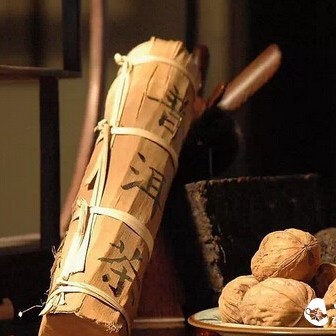
Several 'Big Moves' to Identify Pu-erh Tea
This article provides guidance on distinguishing authentic Pu-erh tea. It emphasizes checking the origin (specifically from Yunnan's Xishuangbanna region and the clarity of the brewed tea. The piece discusses the recent price surge of Pu-erh, framing it largely as a 'value correction' rather than p...
Tea News · Apr 13, 2026
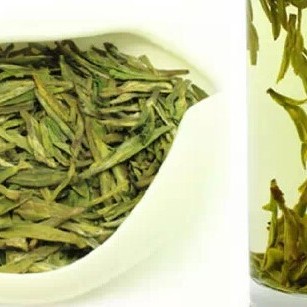
Drinking Tea This Way Will Definitely Keep You Healthy
Chinese tea culture is extensive and profound. For thousands of years, there have been many records about drinking tea and health. As early as ancient times, tea was often used as medicine. In the treasure trove of Chinese medicine, tea is commonly used in both single and compound prescriptions. Wit...
Tea News · Apr 13, 2026
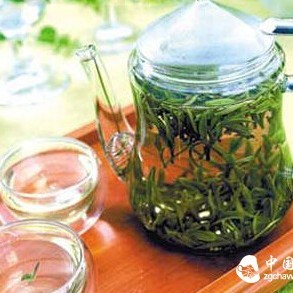
The Four Principles of Tea Drinking: "Early, Little, Light, and Warm"
Tea drinking is a long-standing tradition in China, offering numerous benefits due to its rich composition of over 600 chemical compounds. It aids in health preservation, wellness, beauty, weight loss, and even disease prevention. However, misconceptions about tea can pose health risks, especially f...
Tea News · Apr 11, 2026
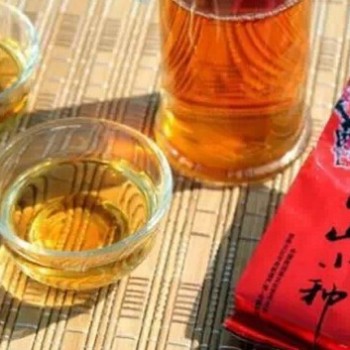
The Origin of the World's Earliest Black Tea "Lapsang Souchong"
Lapsang Souchong, recognized as the world's earliest black tea and the progenitor of all black teas, originated over 400 years ago in Tongmu Village, Wuyishan City, Fujian Province. Legend recounts that its creation was accidental: after soldiers camped on tea leaves, causing unintended fermentation...
Tea News · Apr 11, 2026
Want to Buy Authentic Da Hong Pao? Teach You How to Identify Authenticity and Quality
The quality of Wuyi Da Hong Pao is determined by the characteristics of the tea leaves, which are evaluated based on four factors: color, aroma, taste, and shape. High-quality tea typically exhibits uniform color, a rich and pleasant aroma, a mellow and full-bodied taste, and well-formed leaves. In...
Tea News · Apr 10, 2026

Chinese Tea History, Culture, and Cultivation Introduction
The origin of tea drinking in China is widely debated, with theories tracing it back to the mythical Shennong, the Zhou, Qin, Han, or Three Kingdoms periods. The character for 'tea' evolved from '荼' to '茶', a simplification formalized by Lu Yu in the Tang Dynasty in his Classic of Tea, though the ch...
Tea News · Apr 10, 2026

Learning to Cook Some Tea Cuisine, Even When Tired, Brings Joy!
In Eastern aesthetics, there is the concept of 'Zen and tea sharing the same flavor.' Incorporating tea into dishes not only adds the fragrance of tea but also brings an ethereal quality to the 'flavor of worldly life.' Eating tea is less about savoring its aroma, sweetness, and bitterness, and more...
Tea News · Apr 10, 2026
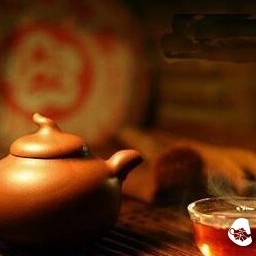
Five Essential Aspects to Get You Started on Dark Tea Appreciation
Getting started with dark tea appreciation is straightforward if you focus on five key aspects. First, observe the tea liquor's color, which should be a clear, bright red or orange-yellow. Second, identify the aroma: authentic dark tea has a distinctive fermented, sweet wine-like scent, with Fu Bric...
Tea News · Apr 07, 2026